
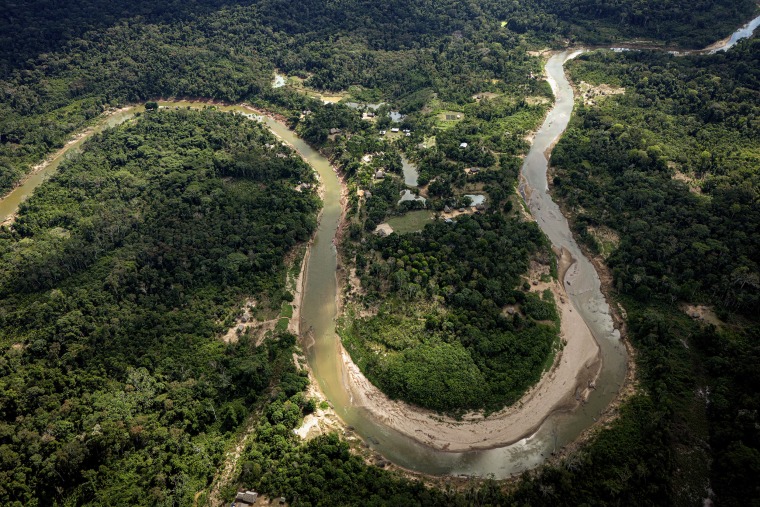
The Ashaninka Indigenous community, once celebrated for recovering their ancestral lands on the Brazil-Peru border and sustaining themselves through self-governance and agriculture, now faces a serious threat. Criminal gangs and drug traffickers encroach on their territory, using Amazonian rivers as drug routes. Ashaninka leaders report multiple violent incidents, seeking government intervention following a recent meeting with officials in Brazil’s capital. Although security forces are temporarily deployed, Indigenous groups claim these efforts are inadequate against ongoing threats.
The Solimoes River has become a key route in the expanding Amazon border for drug trafficking. Experts emphasize that Indigenous territories along these routes are vital for protecting rainforest land. Preserving the Amazon is crucial for regulating the global climate. However, its dense forests, though beneficial, also provide cover for traffickers. Despite appeals, Indigenous leaders feel governmental support falls short.
Maj. Jonatas Soares from Brazil’s Amazonas state acknowledges governmental recognition of Indigenous territories. Yet, he criticizes the lack of tailored security measures to meet their specific needs, underscoring a critical gap in public security services for Indigenous peoples.
The Ashaninka territory in Acre state became a flashpoint after armed intruders threatened families and searched for leaders. The intrusion sparked formal complaints and temporary security deployment. The Brazilian government, faced with demands for stronger actions, remains largely unresponsive to public inquiries.
Indigenous groups remain vulnerable due to isolation, lack of oversight, and other barriers, according to Col. César Mello, a retired Amazonas state police officer. He highlights criminal organizations’ recruitment tactics within Indigenous communities, often exploiting youth with promises of economic opportunities or resorting to violence.
Piyãko, a community leader, reiterated the Ashaninka’s historic opposition to illegal activities. “We have consistently rejected such approaches,” he stated.
Recent tensions included reports of Spanish-speaking armed men seeking to eliminate leadership within the territory. This incursion represents a significant escalation beyond usual resource theft. Security forces were only deployed after high-profile complaints, a delay frustrating the community.
Brazil’s Supreme Court Justice Flávio Dino has mandated increased federal action against criminal entities threatening Indigenous communities. Despite the threats, the Ashaninka community is resolute. Piyãko emphasizes it’s not their duty to confront armed criminals but that of the state, attributing responsibility to Brazil and Peru for their lack of presence and intervention.
Yet, in the face of these violent threats, the Ashaninka remain determined to protect their land and preserve their way of life.