
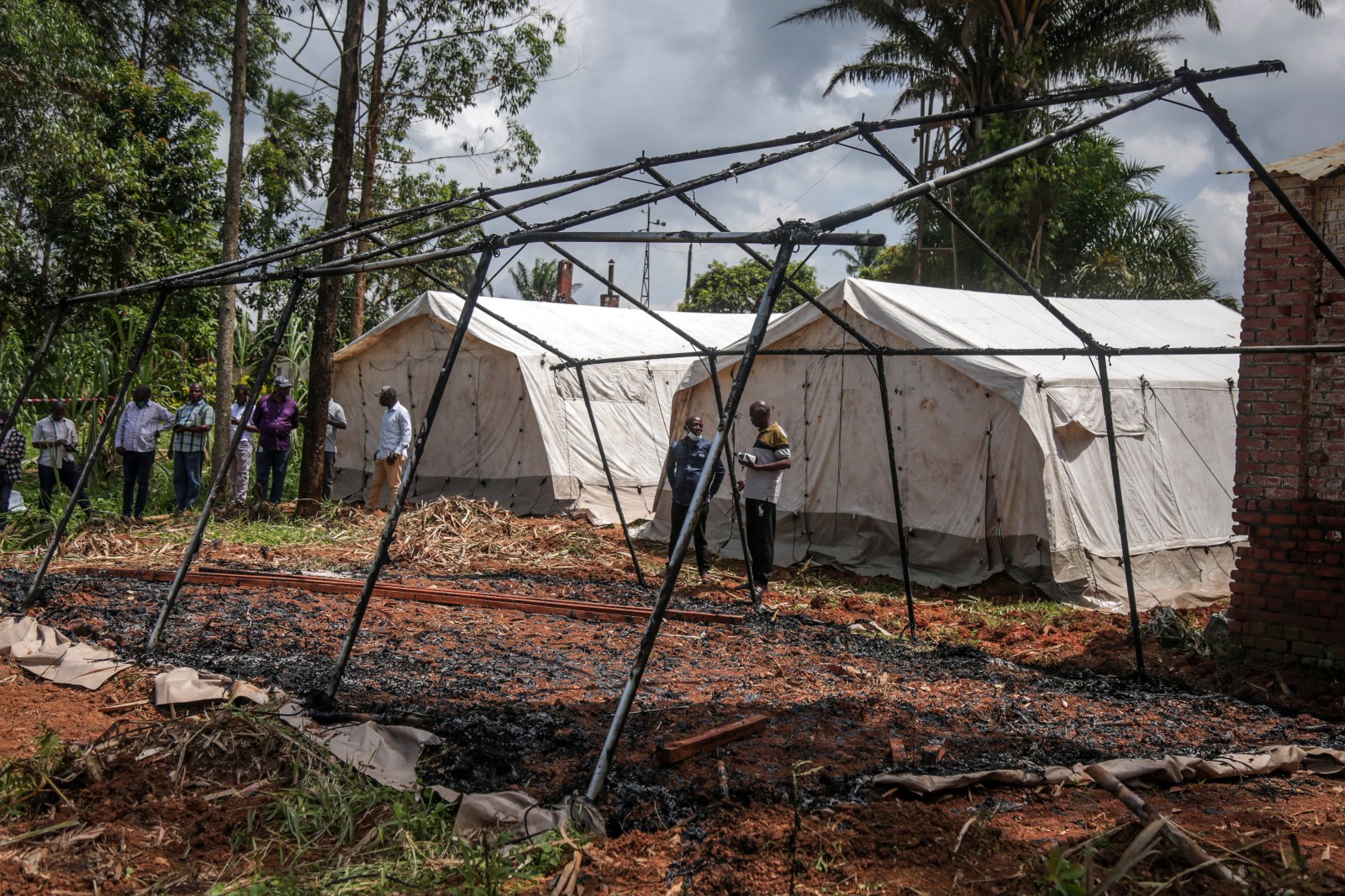
In the eastern Democratic Republic of the Congo (DRC), tension has escalated as more than a dozen individuals with suspected Ebola cases fled when residents set fire to a treatment tent. This incident occurred shortly after authorities in Mongbwalu refused to release an Ebola victim’s body. Dr. Richard Lokudi, director of the Mongbwalu hospital, voiced strong condemnation of the act, noting that it induced panic and led to the escape of 18 suspected cases into the community.
The tent, donated by Médecins Sans Frontières (MSF), was unoccupied at the time, ensuring no injuries occurred. A spokesperson from MSF shared this information with Newsweek. The World Health Organization (WHO) has deemed the outbreak’s risk level in the DRC as ‘very high,’ with the Bundibugyo virus, a rare Ebola strain lacking approved vaccines or targeted treatments, at its core. Global health officials caution that these escapes heighten community transmission risks as efforts continue to curtail infection and mortality rates.
Impact of Medical Tent Attacks
On Friday evening, Mongbwalu residents, where the Ebola outbreak centers in Ituri province, set fire to a medical treatment tent. While the blaze did not cause injuries, 18 individuals with suspected Ebola cases fled the facility and remain unaccounted for. The MSF spokesperson stated, ‘MSF has recently begun activities in Mongbwalu, working with the Congolese Ministry of Health and local communities to address the Ebola outbreak.’ They acknowledged community fears and uncertainties during this rapidly changing situation, stressing that sustainable community engagement and trust-building are crucial components of any Ebola response.
Despite this setback, MSF continues its commitment to establish a 60-bed Ebola treatment center, alongside ongoing patient care, community outreach, and vital health services.
Civil Unrest Linked to Burial Protocols
The incident in Mongbwalu followed similar events in Rwampara, where local authorities prohibited families from retrieving a suspect’s body, resulting in another treatment center being set ablaze. Health officials emphasize the importance of conducting burials with proper precautions, as Ebola patients can remain contagious post-mortem. Large funeral gatherings can become significant transmission sources.
In Rwampara, security forces employed tear gas and warning shots to disperse crowds after a medical center operated by ALIMA caught fire. Demonstrators set two medical tents alight, as reported by Reuters, with a body awaiting burial consumed in the fire.
Scale of the Outbreak
On Friday, WHO Director-General Tedros Adhanom Ghebreyesus reported 82 laboratory-confirmed cases and seven deaths in the DRC, with concerns that the outbreak’s actual scope is significantly larger. The Associated Press recorded 750 suspected Ebola cases and 177 suspected deaths, projecting figures to rise with expanded surveillance.
The DRC Ministry of Health reported 160 suspected deaths among 670 suspected cases by Thursday.
Commencement of the Ebola Outbreak
The outbreak, beginning late last month, identified a cluster of unexplained deaths in Ituri province, displaying symptoms of viral hemorrhagic fever. The initial case involved a Bunia-based nurse who died on April 24. Retrospective epidemiological studies suggest the virus circulated undetected weeks before lab confirmation. The DRC Ministry of Health, with the WHO, declared the outbreak in early May after the Bundibugyo virus was diagnosed. Mid-May saw regional alerts issued and the CDC enhance airport screenings in the U.S.
Ebola was first identified in 1976 near the Ebola River in the DRC, leading to over 40 documented outbreaks in the past five decades, according to NIH.
Ebola’s Lethality
Ebola remains among the deadliest viruses globally, with mortality rates dependent on viral strain, healthcare infrastructure, and timely case identification. Historically, mortality rates range from 25 to 90 percent, bundibugyo virus typically holds a 30 to 50 percent mortality rate. Delays in specialized medical care significantly reduce survival outcomes.
The current outbreak demonstrates increased severity, with PAHO estimating a mortality rate of 55 to 60 percent. Ebola prompts severe illness through immune system overload and blood vessel damage, leading to organ failure, shock, and internal bleeding. Early supportive care like IV fluids, oxygen, and complication management notably boosts survival chances, yet rapid medical access remains challenging in many communities.