
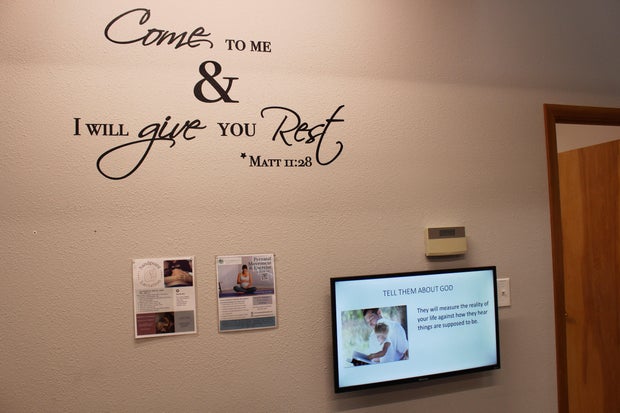
On the outskirts of Sandpoint, Idaho, the 7B Care Clinic greets visitors with a Bible verse: “Come to me & I will give you rest.” Operating since 2001, this center, previously known by other names, is part of the Care Net network of Christian evangelical centers. It offers free resources like pregnancy tests, limited ultrasounds, parenting classes, and children’s clothing. Donations from individuals, businesses, and over 40 churches fund its operations, according to Executive Director Janine Shepard.
These centers, known as crisis pregnancy centers, aim to deter abortions. They offer limited resources and medical services. Critics, including the American College of Obstetricians and Gynecologists, accuse them of using deceptive practices to lure women.
Since the local hospital closed its labor unit three years ago, leaving Sandpoint, a town of over 10,000, without these essential services, 7B’s traffic has surged. “We are seeing a lot more people,” said Shepard. The clinic, a faith-based organization, prominently displays scripture. In the wake of the Supreme Court’s Dobbs decision, Idaho lost a third of its OB-GYNs by December 2024. In response, 7B plans to expand and possibly partner with a hospital 30 miles away to bring in an OB-GYN weekly.
Rural hospital closures mean crisis pregnancy centers gain influence. Some states have granted them protections and funding, raising concerns about their agendas. Sandpoint resident Jen Jackson Quintano’s nonprofit, the Pro-Voice Project, advocates for abortion rights, criticizing these centers for misleading clients. She described their services as “ministry-first,” rather than comprehensive medicine.
Shepard counters by inviting people to tour 7B for clarity, explaining they discuss abortion, adoption, and parenting, hoping clients make “life-affirming” decisions. Andrea Swartzendruber, a University of Georgia professor, notes the centers expand where women’s healthcare gaps exist, warning they lack the necessary infrastructure.
Swartzendruber’s 2024 research found over 2,600 crisis pregnancy centers in the U.S., outnumbering abortion clinics. Concerns arise over their questionable practices. Recent support from the Trump administration includes a Health and Human Services website listing these centers for expectant mothers.
“The perfect place for this,” said Amelia Huntsberger, a former Sandpoint OB-GYN, referring to 7B’s expansion.
Nonetheless, the benefits in underresourced areas are acknowledged. Lori Sabin, a midwife in nearby Bonners Ferry, appreciates their free services and baby items. Huntsberger also sees value in the support they offer but worries about their resemblance to medical facilities.
Lisa Battisfore of Reproductive Transparency Now believes that despite some help, their overall impact is negative. Legal protections let these centers operate without regulation, avoiding scrutiny while potentially disseminating misinformation.
Critics cite errors, such as a Texas case where a woman was misdiagnosed by one such center. Yet federal and state courts often favor the centers, allowing further expansions and ambiguous roles.
In Sandpoint, locals felt the loss when Bonner General Health closed its labor unit three years ago. Efforts to rebuild trust, like forming a women’s health committee, continue. Yet, skepticism lingers.
Sandpoint resident Makayla Sundquist, considering starting a family, voices concerns about traveling for birth services and doubts about 7B’s information accuracy. “I wish that wasn’t my reality,” she said.
KFF Health News delivers comprehensive health journalism as part of KFF, an independent health policy research and journalism organization.