
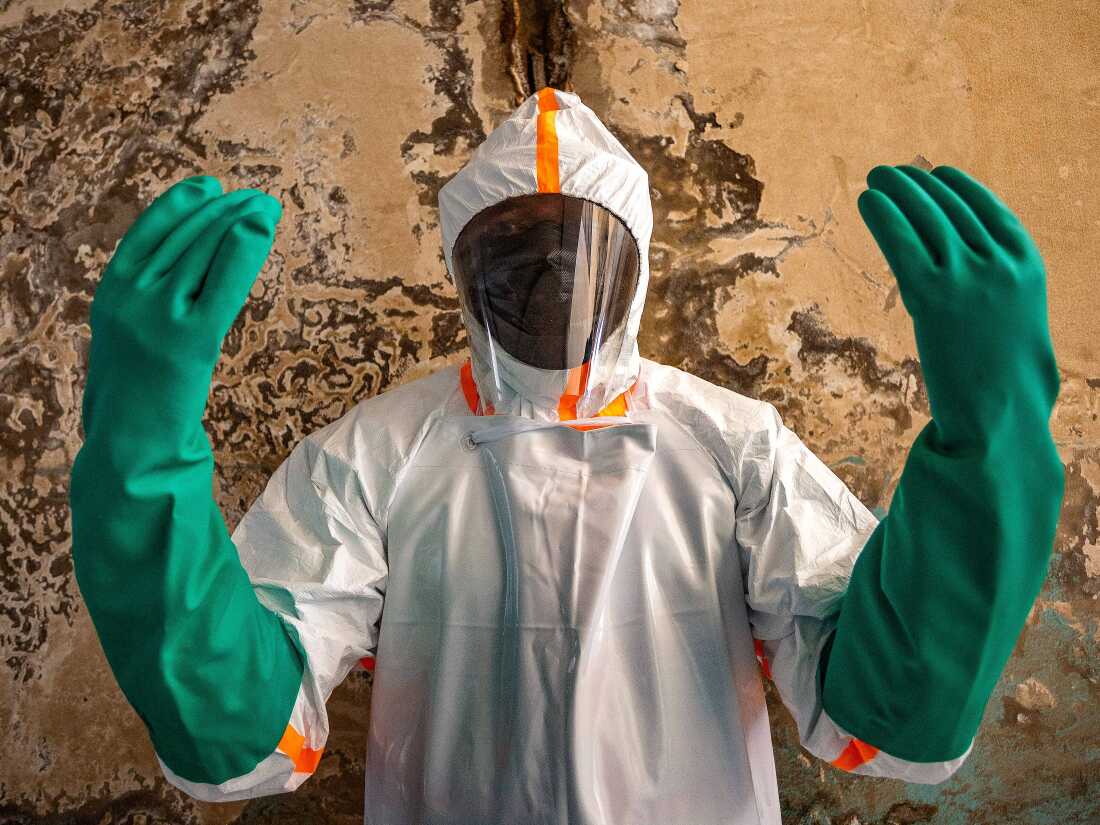
In Bunia, a nurse waits to be disinfected amid mounting concerns over Ebola in eastern Congo. Healthcare workers face threats during this crisis, leading many to withhold their identities. Moise Bulabantu, a community nurse, grapples with the fear of contracting the virus. Since the government’s outbreak declaration on May 15, Bulabantu has been in relentless contact with infected individuals. ‘We lack protective equipment,’ says the 38-year-old at his clinic in Bunia’s poverty-stricken suburbs. ‘We’re extremely afraid.’
Bulabantu, the sole state health worker for approximately 40,000 residents, is one of many braving the frontlines against Ebola with limited resources. The Democratic Republic of Congo ranks among the world’s poorest nations, severely impacting health infrastructure.
His clinic consists of basic rooms in a wooden structure. Foam mattresses lack sheets. The building has a single entrance, complicating efforts to isolate potential Ebola patients seeking help. Every day, Bulabantu receives around 15 alerts of individuals with symptoms like fever or vomiting. About two or three usually test positive.
Despite receiving aid from CARE, an international NGO, Bulabantu asserts that protective gear remains insufficient. Across Ituri, many health workers echo his concerns, though exact figures on equipment shortages are unavailable. This province is the outbreak’s epicenter, with the Congolese health ministry reporting over 91% of confirmed cases there. By June 30, authorities documented over 1,307 infections and 377 deaths.
Ituri’s struggles extend beyond poverty. For decades, armed groups have complicated responses to outbreaks. Such difficulties explain equipment shortages, despite hundreds of tons of supplies flown in by the United Nations and aid organizations.
The logistics are challenging as Ebola spreads through 22 out of 36 health zones in Ituri, reaching North Kivu and South Kivu. Uganda, sharing a porous border with Ituri, reports 19 cases. Disposable protective gear, such as medical gloves, increases demand, adding to shortages. Aid workers, speaking anonymously, mention coordination challenges with Congolese authorities.
Protection gaps lead to healthcare worker fatalities. The World Health Organization notes 17 health worker deaths, out of 75 infections. Shannon Hamilton of Samaritan’s Purse highlights the risk to caregivers and families. ‘That’s what makes this disease so terrible,’ she says. ‘It’s easily spread through touch.’
At Nyankunde hospital, 20 miles southeast of Bunia, challenges persist despite improvements. The facility requires full decontamination to operate safely. Patients with unrelated ailments risk infection, as isolating cases poses challenges. Eight medical staff contracted Ebola, with one medical student succumbing.
‘Caring for the ill demands courage,’ states Désiré Duabu, head doctor at Nyankunde. ‘But of course, we do it.’