
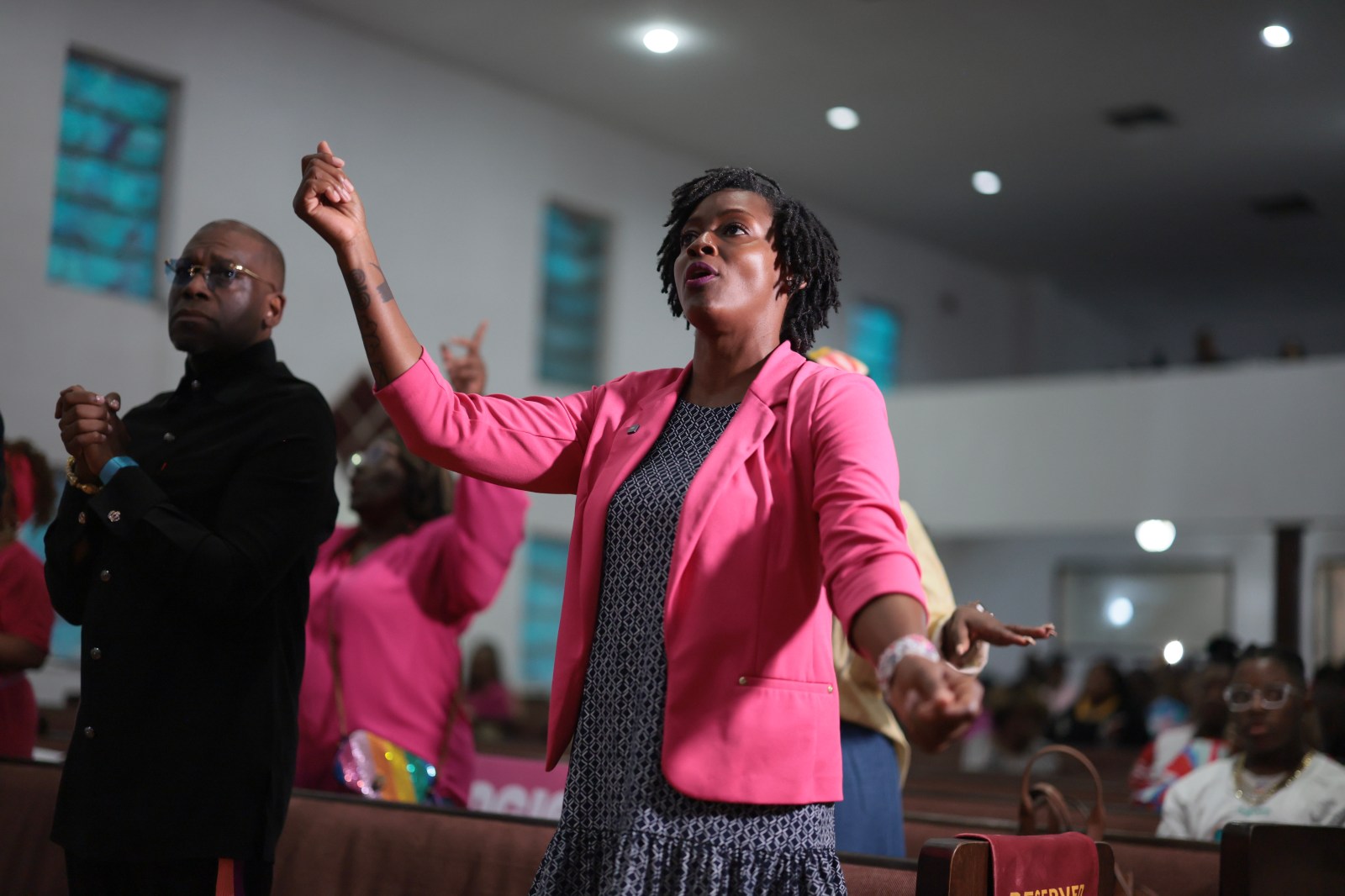
Angie Nixon, a state representative from Jacksonville and a self-proclaimed member of the Democratic Socialists of America (DSA), won Florida’s Democratic Senate primary against retired Army Lieutenant Colonel Alex Vindman. This unexpected result took political operators in both parties by surprise. If Nixon wins the general election in November, she will become the first DSA member elected to the U.S. Senate, a significant achievement in a state with a history of rejecting socialism.
Nixon’s victory brought a democratic socialist candidate to the ballot in a state with the highest concentration of Cuban Americans, a community historically shaped by opposing socialist ideologies. Prior to the primary, Nixon campaigned in Miami’s Little Havana, engaging with voters over Cuban coffee and in local parks and establishments.
In the general election, Nixon will face Republican Senator Ashley Moody, who was appointed to the seat in 2025 following Marco Rubio’s departure to become secretary of state. Moody has already shown her stance by co-sponsoring the DEMOCRACIA Act with Senator Rick Scott. This legislation sought to freeze assets and deny entry to Cuban officials, criticizing past administrations for their policies towards Havana.
Nixon holds a contrasting opinion. She argues that the U.S. embargo on Cuba has been ineffective, leaving ordinary Cubans in need, and advocates for restoring the Obama administration’s engagement policy with Havana. While Nixon criticizes the Cuban government, calling for change and a return of power to the Cuban people, she has also accused Moody of prioritizing deportation over other issues by reallocating Department of Homeland Security funds.
Nixon’s primary success raises questions about how socialism affects Democratic campaigns in Florida.
A University of North Florida poll conducted before the primary showed Moody leading Nixon by 8 points, 46 to 38 percent, with 14 percent undecided. However, election forecasters moved the race into the safely Republican category after Nixon’s primary win.
Nixon’s ability to carry Miami-Dade County, with its large Cuban American population, by a significant margin highlights complexities within the state’s politics. While Cuban-American voters often lean Republican and did not participate in the Democratic primary, Nixon’s success in Osceola and Orange counties with large Puerto Rican populations further complicates the narrative.
Nixon’s campaign team has yet to comment on her strategy but her primary victory reveals insights into Florida’s Democratic electorate.
Voters’ Perceptions on Socialism
Florida has approximately 1.9 million Cuban Americans, with a substantial number residing in Miami-Dade County. A Miami Herald poll in April found that 79 percent of South Florida’s Cuban Americans support some form of U.S. military intervention in Cuba, with 36 percent backing government overthrow. Another survey from March revealed support for tough policies toward Venezuela, Cuba, and Latin America among Cuban and Latino voters in Florida.
Florida Democratic Party Chair Nikki Fried acknowledged the challenge, noting that socialism is not a politically viable label in Florida given the Cuban and Venezuelan population dynamics. Data from FIU’s long-running Cuba Poll indicated that by 2020, support for the embargo reached 60 percent, with 72 percent favoring maximum pressure on Cuba’s regime. Yet, a UnidosUS survey found that the cost of living ranked as a more pressing concern for Cuban voters than immigration enforcement or deportation.
The Miami Herald poll highlighted that while there is significant support for tougher policies on Cuba, 68 percent of respondents disapproved of deporting Cubans.
Implications for Democrats in Florida
Political analyst Eduardo Gamarra from FIU believes Nixon’s victory indicates key shifts within Florida’s Democratic electorate. He argues primary dynamics allow candidates like Nixon to mobilize committed support bases rather than appealing to the broader voter majority. Nixon capitalized on selective embrace of DSA proposals that resonate nationwide, such as Medicaid for all.
Gamarra emphasizes that the primary win does not equate to Florida embracing socialism but rather shows candidates can win support by attaching left-wing policies to critical issues like healthcare and economic opportunities.
While Nixon’s campaign has the potential to be impactful in shaping the Democratic strategy, it faces an uphill battle to overcome Florida’s entrenched Republican advantage.
Florida’s Strong Republican Lean
The Republican stronghold extends beyond Nixon’s primary victory. Florida has not elected a Democrat as governor in over three decades, with Governor Ron DeSantis winning re-election in 2022 by a large margin. Republicans maintain a significant voter-registration advantage.
Cuban American politicians further underscore Republican dominance in Washington, with most representatives favoring tougher policies toward socialist regimes.
Polling indicates socialism remains a contentious issue. A March Fox News survey showed increasing interest in socialism but revealed 61 percent remain opposed. Similar trends appeared in CBS and Washington Post polls.
Nixon’s Campaign and Democratic Strategy
Despite doubts about Nixon’s chances in November, her primary campaign offers insights for Democratic strategy. Andrea Pringle, president of March On PAC, emphasized Nixon’s fight for working people and her opposition to powerful interests as strategic lessons for Democrats. Nixon’s coalition of Black voters, young people, and Hispanic voters could influence future elections. Gamarra suggests the coalition could form the basis for Democrats’ long-term strategy heading into 2028.
The effectiveness of Nixon’s approach in a state resistant to Democratic governance remains unanswered, with her campaign now assessing its potential impact.