
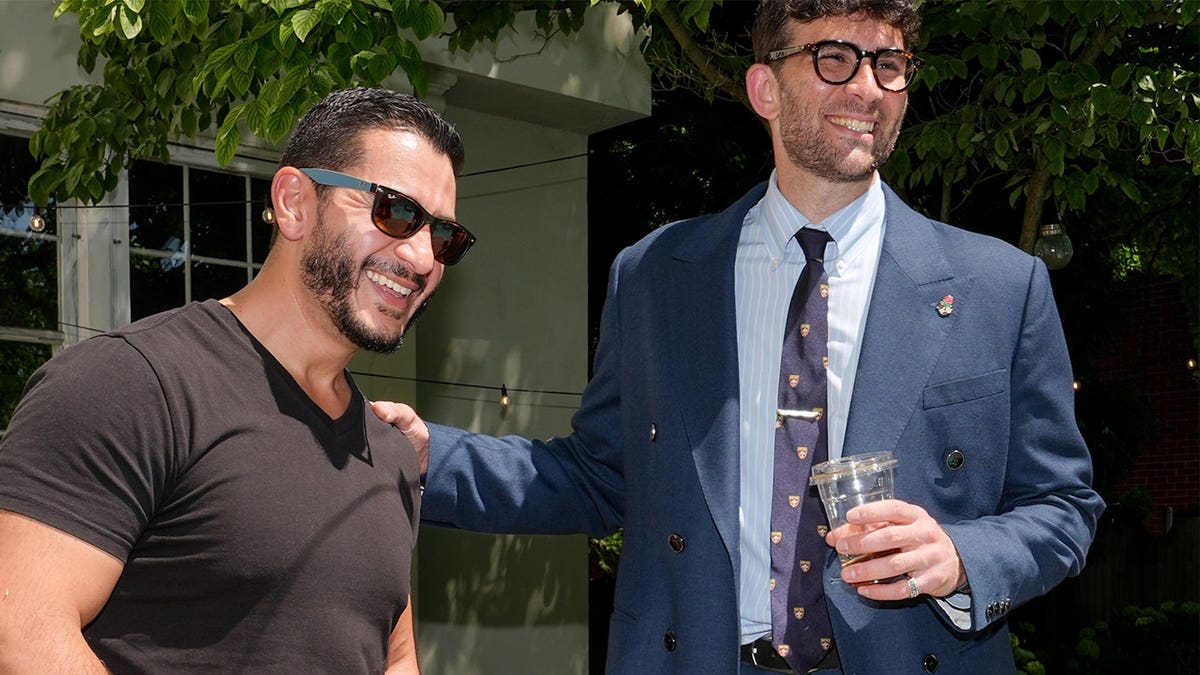
Abdul El-Sayed, a Democratic candidate for the U.S. Senate in Michigan, addressed remarks by streamer Hasan Piker regarding 9/11, describing them as “dumb.” Despite distancing himself from Piker’s comments, El-Sayed criticized what he described as the country being “stuck” in cancel culture. This discussion arose during an interview on NBC’s “Meet the Press.”
El-Sayed was asked by NBC’s Kristen Welker whether he would continue to associate with Piker during his campaign efforts. Piker has previously campaigned alongside El-Sayed and attended his victory celebrations. He has also been outspoken in urging for punitive measures against Democrats opposing El-Sayed.
When pressed about Piker’s controversial remarks that suggested America deserved 9/11, El-Sayed identified them as “of course, a dumb statement.” He added that Piker himself had disavowed the comments. El-Sayed expressed his preference to be judged by his actions and statements rather than engaging in what he labeled as “gotcha politics.” He alluded to the broader issue of cancel culture, which he suggested was deemed problematic in 2020 but persists.
Previously, Senator Bernie Sanders commented similarly on Piker’s statements, labeling them “dumb” while advocating for inclusivity within the Democratic Party, even for voices from the far-left. Sanders highlighted his opposition to cancel culture, acknowledging that people often make mistakes, especially in extensive media engagements.
Jonathan Alpert, a psychotherapist and author, critiqued El-Sayed’s stance, suggesting that referencing cancel culture was a diversion. He argued El-Sayed was aware of the problematic nature of Piker’s comments. Alpert noted it is reasonable for observers to question the candidate’s affiliation with Piker if the remarks were sufficiently objectionable to warrant distancing.
Alpert also remarked that labeling all criticism as “cancel culture” dismisses the complexity of public discourse, where legitimate scrutiny of one’s judgment can occur.