
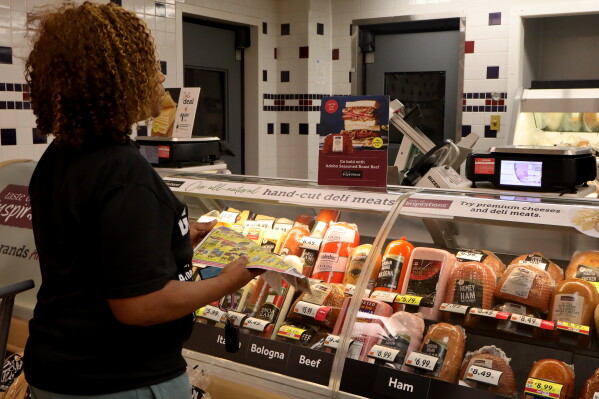
Apral Jack has developed a new routine for grocery shopping at her home in Lexington, Massachusetts. She uses an app to find supermarket deals before leaving the house, and grabs the weekly circular upon arrival to ensure she doesn’t miss any coupons. If prices are high, Jack adjusts her shopping list or finds better prices elsewhere. ‘The apples went up here, the ones I eat, so now I’m not going to get them here. I’ll go to Market Basket, where I can get them cheaper,’ Jack, 50, explained as she navigated a Stop & Shop near her home.
Jack’s approach reflects a broader trend among Americans grappling with the biggest surge in grocery prices in 50 years. Government data shows that the cost of buying food for home consumption in U.S. cities has increased by 33% since early 2019, in stark contrast to a 6.4% rise over the previous 7.5 years. This historic spike is attributed to multiple factors, including pandemic-related supply chain disruptions, climate events, and geopolitical tensions like Russia’s war in Ukraine and the conflict in the Middle East.
You might find some respite as average weekly earnings for full-time workers have slightly outpaced grocery price increases since 2019. However, the memories of stable prices linger, making current expenses more stressful, especially as other costs like housing and utilities rise. Jared Bernstein from the Stanford Institute for Economic Policy highlighted this concern, noting that while wages may outpace grocery receipts, the overall cost of living squeezes family budgets.
The economic strain is evident in regions across the U.S. where residents adapt their shopping habits. In St. Louis, food costs increased by 2% compared to the previous year, whereas they surged by 6% in San Francisco. Across urban areas, people described shifting their buying patterns by hunting discounts, switching brands, and relying more on food banks, reducing nonessential purchases, and consuming less meat. These strategies form part of a broader household approach to managing ongoing financial pressures.
Texas Families Forego Beef
In Texas, beef has become a symbol of escalating grocery prices. The price of ground beef soared to $6.82 per pound in June, marking a 79% increase since 2019. Factors like a dwindling cattle herd and droughts contribute to this trend. Ada Torres, living near Houston, recounts how meat turned into a luxury for her family of five. With her daughter as the main provider, Torres shops for groceries and prepares meals, yet rising costs mean $100 barely covers essential family-size items.
To save money, Torres swaps pricier brands for Walmart’s Great Value alternatives, with chicken and cold cuts replacing beef as the family’s protein sources. Yet, deli meats prompt health concerns for her grandchildren. Beef favorites like lasagna and fajitas have become rare treats.
Shopping Challenges in Boston
Grocery shopping in Boston also demands careful planning. Apral Jack previously shopped at Whole Foods, but now focuses on discount offers and spends more cautiously. Using digital coupons and a special-offers app, she plans meals around sales. Chicken recipes frequently feature when deals are available, though Jack skips high-cost snacks without opting for cheaper versions she finds unsatisfactory.
Consumers like Jack navigate grocery expenses by adjusting store loyalty and finding cheaper alternatives if current stores become too expensive. Matt Hamory from AlixPartners notes, ‘If I’m shopping at Stop & Shop and they’re getting more expensive, I’ll start splitting my trips with cheaper places.’
Costly Groceries in San Francisco
For San Francisco’s Jack Chang, navigating food costs affects his entire family. With three young children, his partner, and often his mother, the self-employed barber feels the financial weight. Despite working five to six days a week, rising costs and debts challenge the household budget.
Chang relies on generic food brands and occasionally uses school-provided leftover lunch items. The family benefits from SNAP assistance, though recent tightening of eligibility has reduced aid access for many.
Rising costs burden Chang’s mother as well, prompting regular food bank visits to share supplies with the family. Chang stays optimistic, prioritizing family well-being despite financial hardships.
Hawaii’s Expensive Grocery Reality
In Hawaii, Amanda Tabadero grapples with steep grocery prices. As a pastry chef on Oahu, she recalls Maui-grown berries selling for $7.99 per pound, a price now reaching $11. Given shipping vulnerabilities and rising interisland costs, she opts for more affordable imported produce from Costco.
Local ingredients like lychee and butter mochi essentials have grown prohibitive, with milk alone costing $9 per gallon. Tabadero adjusts her shopping habits, favoring Target or local supermarket alternatives to balance family meals.