
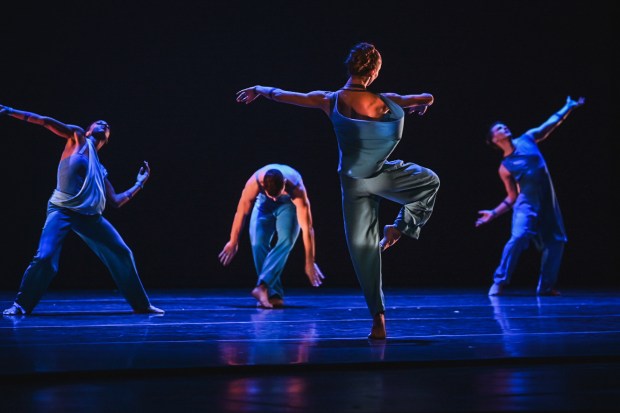
The Auditorium Theatre’s fall season promises a dynamic lineup of dance performances. At the helm is Marisa Santiago, the producing director of artistic programming. Her influence is evident as she orchestrates the return of Dance Theatre of Harlem to Chicago. This historical Black ballet company, established nearly 60 years ago, will grace the Auditorium with a single performance this October, marking a decade since their last visit.
November Debut: Ballets Jazz Montréal
The Canadian dance company Ballets Jazz Montréal will make its Chicago debut in November. Their performance, titled “Dance Me,” celebrates the music of Leonard Cohen and is part of their farewell tour. Santiago’s selections continue to resonate with audiences, ensuring a series of performances that seem tailor-made for the historic venue.
Recently, the Auditorium hosted the Martha Graham Dance Company during its centennial, the return of Parsons Dance Company, and the dynamic show Tiler Peck and Friends, showcasing the talent of the New York City prima ballerina. Alvin Ailey American Dance Theater remains a cornerstone of the Auditorium’s programming, reinforcing a longstanding partnership.
Celebrating North American Dance
The upcoming dance season at the Auditorium will focus on North American talent. The lineup includes Dance Theatre of Harlem, Ballets Jazz Montréal, Alvin Ailey American Dance Theater, Les Ballets Trockadero de Monte Carlo, and Ballet Folklorico de Mexico. Santiago’s decisions reflect an understanding of the venue’s historical identity.
The risks involved in presenting dance are notable. Smaller audiences and higher costs mean breaking even is an accomplishment. Complicating factors include competition with the Joffrey Ballet, which has a strong presence in Chicago.
The Joffrey Ballet: An Evolving Presence
The Joffrey Ballet’s relationship with the Auditorium dates back to when the company called New York home. They relocated permanently to Chicago in 1995. The Joffrey performed at the Auditorium regularly, contributing significantly to its cultural offerings.
In 2017, the Joffrey announced plans to move performances back to the Lyric Opera House, providing a larger stage and backstage area. This transition, delayed by the pandemic, was completed in 2021. The loss of this anchor tenant posed challenges for the Auditorium.
Strategic Adaptations
Santiago remarks, “Dance belongs here. Dance has a history here, and we need to continue that.”
Strategically, Santiago has adapted programming to address potential audience gaps. The venue’s capacity of 4,000 seats can be excessive for dance events. A new system, called “curtain cap,” reduces the seating capacity by closing off balconies, enabling a more intimate audience experience.
The approach also encourages ticket purchases closer to the stage. Increased sellouts lead to reopening balcony seats, providing flexibility and satisfaction for Santiago in her role as a presenter.
Engaging Community and Donors
Dance Partners, an affinity group of donors, played a key role in bringing “Dance Me” to Chicago. Santiago’s interactions with Ballets Jazz Montréal reinforced the demand for showcasing this company at the Auditorium.
A noticeable shift in programming involves favoring broader themes over Chicago-centric works. While Santiago maintains advocacy for local dance through her role at See Chicago Dance, her programming must consider audience demands and artistic quality.
Deeply Rooted Dance Theater serves as an exception, consistently performing at the Auditorium as its home venue once a year, garnering comparisons to Alvin Ailey.