
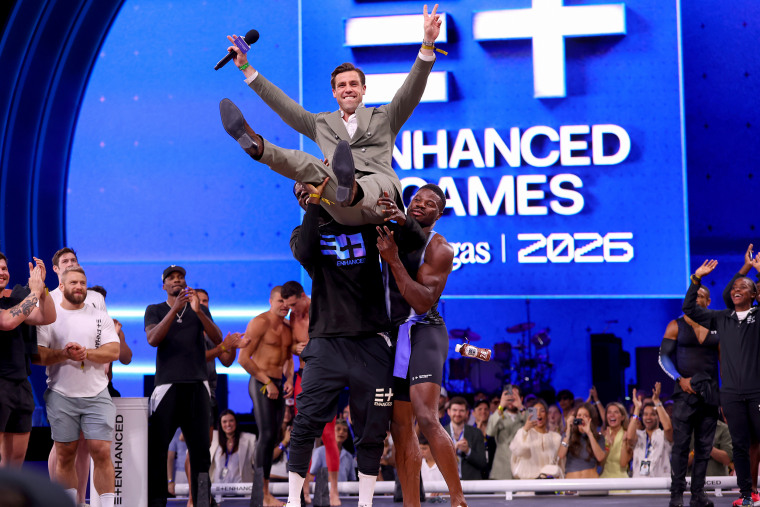
LAS VEGAS — Shania Collins experienced a crossroads in her career path when she was approached about using performance-enhancing drugs. Feeling uncertain, she turned to her parents, both members of the Drug Enforcement Administration (DEA), for advice. Collins, previously a successful sprinter with sponsorships from Puma and Adidas, found herself retiring at 29 due to stagnant career progress and reduced earnings. Her new path led to the DEA, until the controversial Enhanced Games made her an offer she couldn’t ignore.
The Enhanced Games, a one-day event in Las Vegas encouraging doping, promised lucrative gains. Athletes stood to earn six-figure salaries, with winners potentially collecting up to $250,000 and $1 million for setting world records. Initially concerned about health risks and her future with the DEA, Collins consulted her parents who were supportive once she assured them the drugs were legal and medically supervised.
The Games and Their Supporters
Over two months, Collins prepared with a personalized drug regimen managed by Enhanced. Despite side effects like acne and hair growth, she felt no regret. On the day of the games, she joined 41 other athletes in a competition challenging traditional perceptions of sports ethics. The Enhanced Games faced both praise and condemnation, with many divided over its moral implications.
Max Martin, Enhanced’s CEO, emphasized the idea of exploring human potential through unrestricted means. Co-founder Christian Angermayer compared restricting performance-enhancing drugs (PEDs) to denying miner helmets, arguing for ethical necessity.
Opposition and Ethical Concerns
The International Olympic Committee and the World Anti-Doping Agency (WADA) criticized the games for sending dangerous and irresponsible messages. They suggested the primary agenda was supplement sales. Concerns were plentiful about the health risks involved, likening the event to exploitation.
Dr. Guido Pieles oversaw Enhanced’s medical commission, initially considering unrestricted drug use but later approving only FDA-approved substances. The clinical trial for 34 doping athletes showed high usage of testosterone and human growth hormone. These findings prompted a five-year observation period for the participants.
Personal Journeys with Doping
Athletes expressed mixed emotions about entering the world of doping. British swimmer Ben Proud reflected on the irreversible step away from clean sport. Meanwhile, Australian swimmer James Magnussen adjusted his regimen after gaining excessive muscle. Concerns about fertility were addressed by freezing eggs, as in Colombian swimmer Isabella Arcila’s case.
Financial Incentives and Challenges
Money was a significant factor driving participation. Greek swimmer Kristian Gkolomeev earned $1 million for breaking a freestyle record. U.S. sprinter Marvin Bracy-Williams, already banned, switched to Enhanced’s lucrative offer. The potential earnings surpassed typical Olympic rewards, creating a compelling draw for athletes.
The Enhanced Games attracted four non-doping athletes despite risks to their future eligibility. U.S. swimmer Hunter Armstrong earned $375,000, hoping not to sacrifice his Olympic dreams. While participating, he banked on World Aquatics’ case-by-case evaluation for sanctioned event eligibility.
The Business and Broadcast
Enhanced was initially funded by figures like Peter Thiel and Donald Trump Jr. Now public, it aims to market its product lineup, including drugs by prescription. CEO Martin equated customer offerings to consumer cars compared to Formula 1 models, addressing concerns about customer safety and access.
Some athletes, like Cody Miller, advocate caution for younger athletes considering PEDs, highlighting rapid natural recovery in youth. Miller reclaimed competition success post-retirement with a $500,000 win. Enhanced aimed to appeal to relatable audiences, refocusing retirement on engaging rather than reducing audience interest.
The Competition and Spectacle
The Enhanced Games, with a $50 million venue near the Vegas Strip, featured invite-only attendance. Attendees enjoyed complimentary refreshments despite the heat. Precautionary measures, like measuring tape for the track, ensured legitimate performances.
Athlete performances varied, with non-doping runners winning key events. Track winner Fred Kerley, facing a doping charge, affirmed the need for improvement among peers. Women’s sprinter Tristan Evelyn touted clean performance success. Each athlete, despite varied methods, left the games with notable achievements and earnings.
Martin concluded that personal bests and online presence defined the event’s success despite moderate world record outcomes. Gkolomeev setting a world record reinforced the potential of Enhanced’s vision to revolutionize sports through new arenas.