
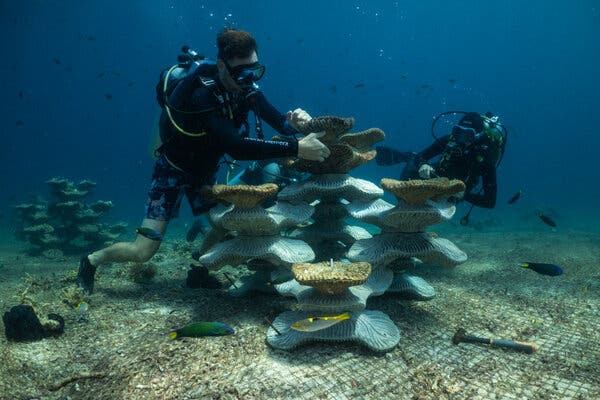
In an area of the Coral Triangle in the Pacific Ocean, conservation efforts focus on rebuilding ruined coral reefs. The Tropical Research and Conservation Center is spearheading these efforts by installing artificial reefs.
Robin Philippo, managing director of the center, leads the project near Pom Pom Island in Malaysia. The team uses concrete structures, molded to mimic white lotus leaves, to create new habitats for marine life.
The process begins with a small boat carrying 60-pound concrete pieces to the site. Once there, crew members throw them overboard. Divers then descend to the seabed with tools to secure the pieces together. This action attracts local marine life, including damsel fish and green turtles, which investigate the ongoing construction.
In less than an hour, a new artificial reef forms. The structure measures about 3 feet in height and spans 10 feet across. It aims to replace lost habitats due to destructive human activities, such as bombing and climate change.
The concrete used in these projects is crafted with 3-D printed molds, offering a tailored texture to encourage coral growth. The project underscores an innovative approach to marine conservation, seeking to restore ecosystems damaged by past actions.