
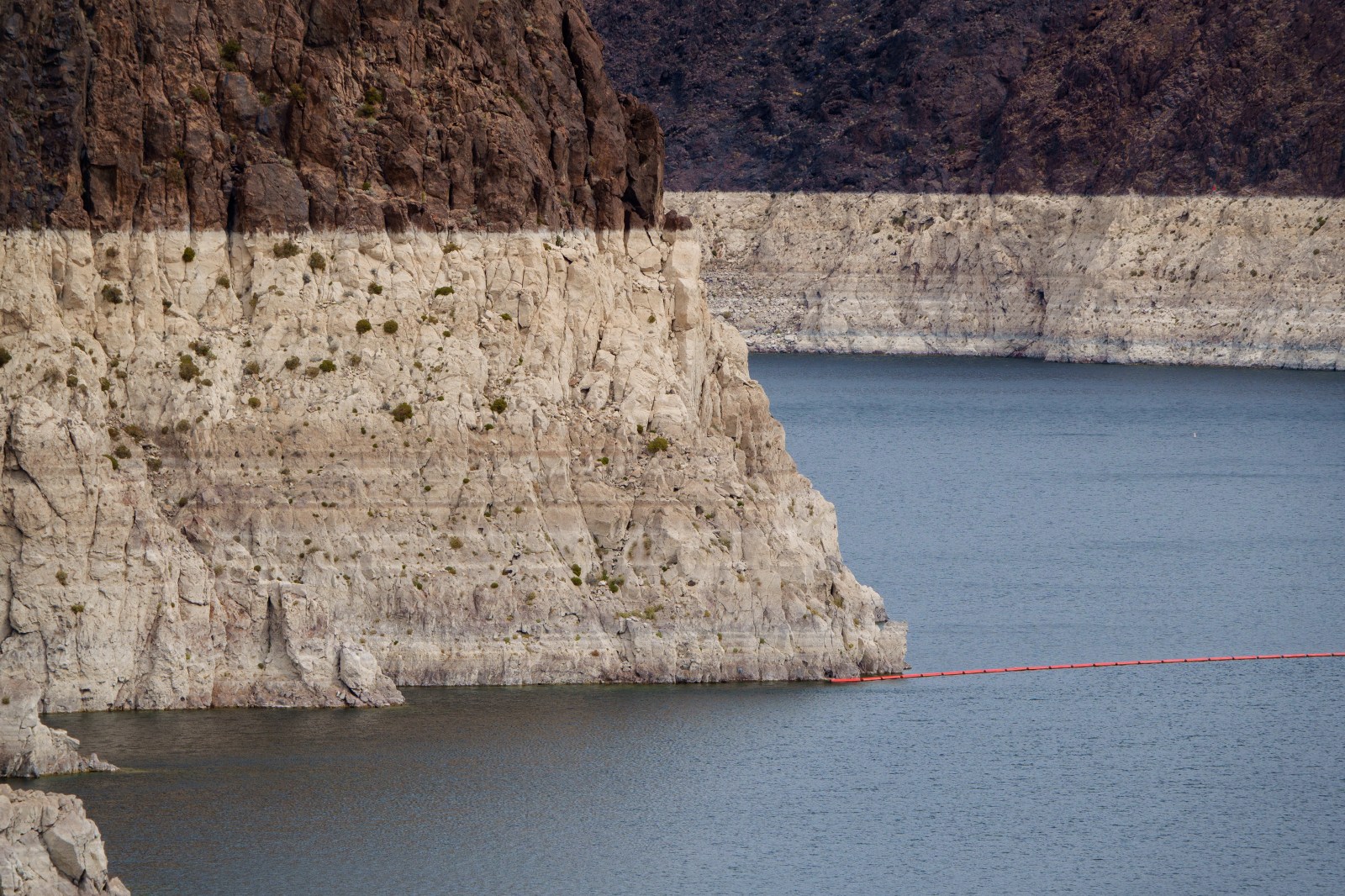
The U.S. federal government has agreed to pay up to $65 million to a major Southern California water cooperative to conserve water in Lake Mead. This effort aims to slow down the reservoir’s decline and sustain hydropower generation at Hoover Dam. The Metropolitan Water District of Southern California’s board approved this deal with the U.S. Bureau of Reclamation.
According to the agreement, Reclamation will pay Metropolitan $325 per acre-foot for up to 200,000 acre-feet of Colorado River water conserved in Lake Mead by 2026. One acre-foot equals approximately 326,000 gallons, which can supply around three Southern California households. The funding comes from the Lower Colorado River Basin System Conservation and Efficiency Program, supported by the 2022 Inflation Reduction Act.
Metropolitan Board Chair Adán Ortega Jr. highlighted that long-term water investments have strengthened the district’s resilience and enabled them to assist in stabilizing the Colorado River. Since 1990, the district and its ratepayers have invested $1.7 billion in water conservation, recycling, and groundwater recovery, resulting in over 8.8 million acre-feet of water.
Metropolitan also approved related agreements with the Quechan Tribe and Bard Water District. These agreements will allow annual contributions of 19,000 acre-feet of conserved agricultural water to Lake Mead in 2027 and 2028. Similar water conservation agreements were implemented with these agricultural partners and Reclamation in 2023.
The initiative responds to Lake Mead’s critical levels, exacerbated by drought and low runoff in the Colorado River Basin. The reservoir is approaching its lowest level since its initial fill. The Colorado River supports seven U.S. states, parts of Mexico, and provides water to approximately 35 to 40 million people.
The Lake Mead agreement also aims to sustain Hoover Dam’s hydropower generation. A decline in reservoir levels could decrease power generation by up to 70%, impacting a crucial electricity source for the Southwest. Metropolitan General Manager Shivaji Deshmukh stated that while these agreements provide short-term relief, a lasting solution will necessitate long-term commitments from the seven Colorado River Basin states when current guidelines expire in 2026.
Metropolitan serves nearly 19 million residents across multiple counties including Los Angeles and San Diego, through a network of 26 cities and water agencies.