
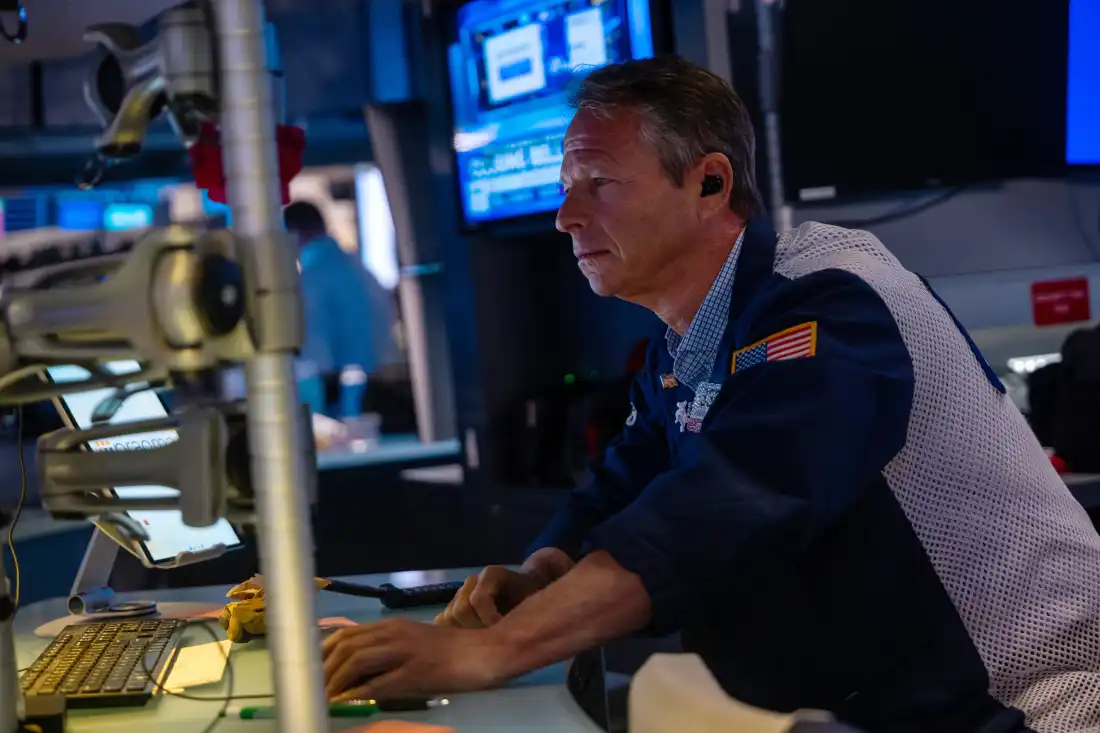
This week, the financial markets experienced significant turmoil, largely due to fears surrounding AI investments. A potential bubble in the AI sector seems to be bursting, which could have broader financial repercussions.
Stock Market Events
Investors anticipated a positive impact from AI giant Anthropic’s debut, hoping it would invigorate the stock market. Instead, markets suffered a sharp downturn on Friday, marking one of the toughest weeks for Wall Street in recent memory. The Nasdaq index plummeted by 10% for the week, its worst showing since the initial COVID-19 lockdowns in March 2020. Anthropic, despite a 17% gain at its debut, closed the week down more than 8% near its IPO price. Both the S&P 500 and Dow Jones Industrial Average entered a correction phase with a 10% decline from recent highs.
Reasons for Decline
Several factors contributed to the market’s steep declines. Recent fears about AI investment sustainability have intensified. The Federal Reserve increased interest rates for the first time in over three years, affecting AI companies that rely heavily on borrowing to fund infrastructure like data centers. Higher rates make borrowing more costly. Additionally, Democrats gained control of Congress and have pushed for tougher regulations on the AI sector, potentially slowing data center growth, which some voters oppose. Political changes in states pivotal to data center development, such as Texas, also play a role. Moreover, the resignation of Nvidia’s CEO, Jensen Huang, amid controversy added to market anxiety. His departure from the leading AI chip company has unsettled investors.
Potential Financial Consequences
The possibility of an AI sector bubble bursting resembles the dot-com bust of 2000, when tech stocks collapsed. However, this AI surge involves established companies like Meta and Apple, which are less likely to fail. Nvidia, despite current challenges, has shown solid financial results. Nonetheless, there are concerns about expected returns for investors. Another significant worry is the intricate financial interdependencies within the AI ecosystem. Companies like Nvidia have substantial investments in other AI entities. For instance, Nvidia holds shares in and provides loans to Anthropic, which in turn purchases Nvidia’s chips. This interconnected system raises fears that troubles at a few companies could trigger a broader financial crisis.
Implications for the U.S. Economy
The potential reversal of the AI boom carries substantial economic risks. AI has become an integral part of the U.S. economy. Although data center construction may face voter opposition, it generates employment, benefiting local economies. AI investments have contributed to a 3.4% annual growth rate for the U.S. economy in the latest quarter. AI-related stocks also form a significant portion of the S&P 500, influencing many investment portfolios, including retirement funds. Thus, a downturn in AI investments could have widespread effects beyond the tech sector.
Note: Anthropic financially supports NPR.