
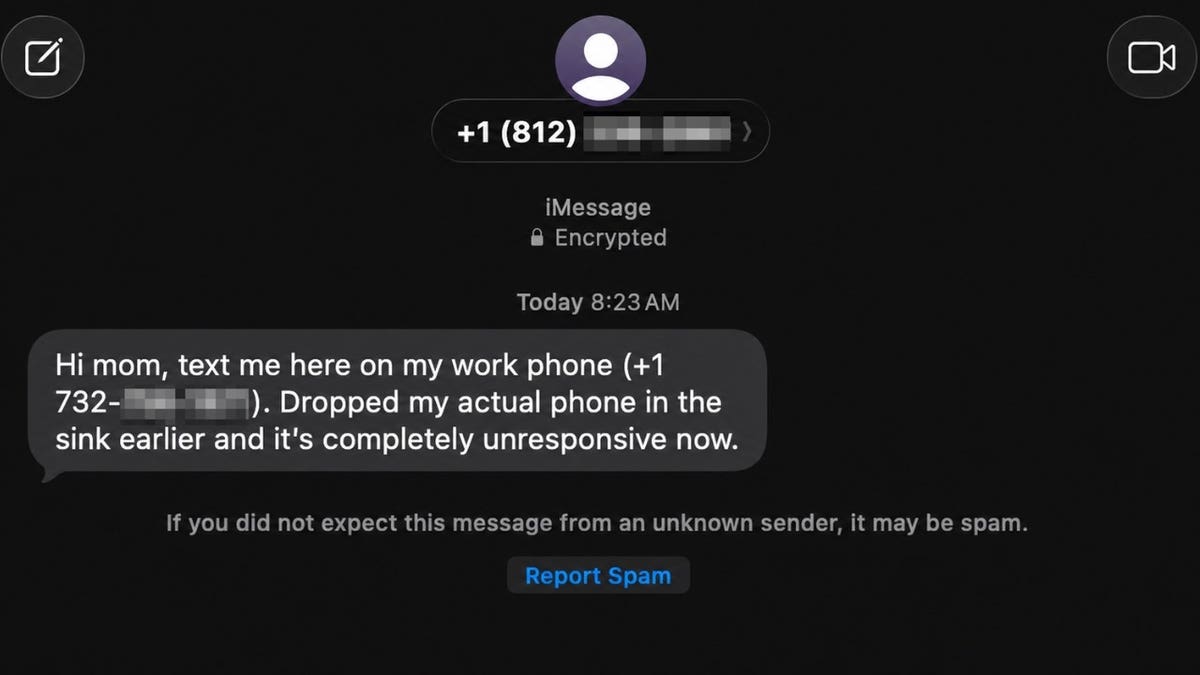
A new scam text is making its rounds, potentially catching parents off guard. The message reads: ‘Hi mom, text me here on my work phone. Dropped my actual phone in the sink earlier and it’s completely unresponsive now.’ It feels personal at first glance, coming from an unknown number.
The scam asks to text a different number, a crucial detail that serves to draw you into a separate conversation without verification. There’s no suspicious link or immediate money demand. Instead, it uses a relatable family panic and a plausible excuse, making it a deceptive scheme.
How the Scam Works
The ‘Hi Mom’ scam works because it mimics everyday situations. A child texting from a work phone seems feasible, and a phone dropped in a sink is a common mishap. We often react quickly without questioning the validity in such situations.
Once you reply, the scammer tries to prolong the conversation. The requests may evolve into asking for funds to replace the phone or stating immediate financial needs.
Each element of the text plays a role:
“Hi mom”: By avoiding real names, it allows mass messaging, but if you identify as a mother, it instantly feels intimate.
“Text me here”: It shifts the interaction towards text messages where scammers can adjust the narrative.
“On my work phone”: Justifies the unfamiliar number, allaying doubts about the legitimacy.
“Dropped my actual phone in the sink”: Capitalizes on common accidents among mobile users.
“Earlier”: Implies recent occurrence without providing checkable details.
“Completely unresponsive now”: Preempts verification steps, making you more likely to use the new number.
Potential Consequences of Responding
The initial message might seem innocuous, but subsequent texts often carry the true scam. Questions about financial aid and urgent payment options can follow, involving platforms like Zelle, Venmo, Cash App, cryptocurrency, or gift cards.
The scammer might request one-time security codes under the guise of account restoration or fixing payment issues. Sharing such codes jeopardizes your bank, email, Apple ID, Google account, or phone carrier account security.
Why The Scam Targets Parents Effectively
Parents naturally respond to a child’s distress. Scammers exploit this instinct by crafting messages that are concise and seemingly authentic. Short, hurried family texts sound legitimate.
The defining red flag is the use of a two-number tactic, guiding you deeper into the scam without your knowledge.
Tips to Avoid Falling Victim to the Scam
- Do not reply to the message: Avoid any interaction. A response confirms your number’s validity.
- Call the real person directly: Use familiar contacts, not the suspect number. Persist if unanswered.
- Ask a personal verification question: Ensure specificity in your inquiry to prevent guesses from publicly available information.
- Refrain from sending money: Exercise caution with fast-payment options.
- Do not share verification codes: Family members shouldn’t need private security data.
- Employ strong antivirus software: Protect devices from malicious links and scams. Find top recommendations at CyberGuy.com.
- Utilize a data removal service: Reducing online personal data helps inhibit convincing scam attempts. Explore data service options on CyberGuy.com.
- Report and block the message: iPhone users can report or delete suspicious texts, while Android users should block and report as spam.
Actions to Take if You Already Replied
If you’ve engaged, focus on halting the conversation, securing accounts, and preserving evidence.
- Stop messaging immediately.
- Avoid explanations, confrontations, or verifying authenticity.
- Screen capture the interaction, then contact the legitimate family member.
- If shared, change the associated account password swiftly.
- If money was sent, quickly reach out to banks or payment apps.
Key takeaway: The ‘Hi Mom’ text is insidious due to its familiarity. Opt for cautious verification over quick responses. Contact trusted family members, and proceed only when assured of authenticity. Reporting and blocking potential scams saves your or your family’s finances.
Have you encountered a similar scam? Report your experience at Cyberguy.com.
Download the Fox News App for more updates.
Stay informed with CyberGuy’s tech insights. Subscribe for alerts at CyberGuy.com.