
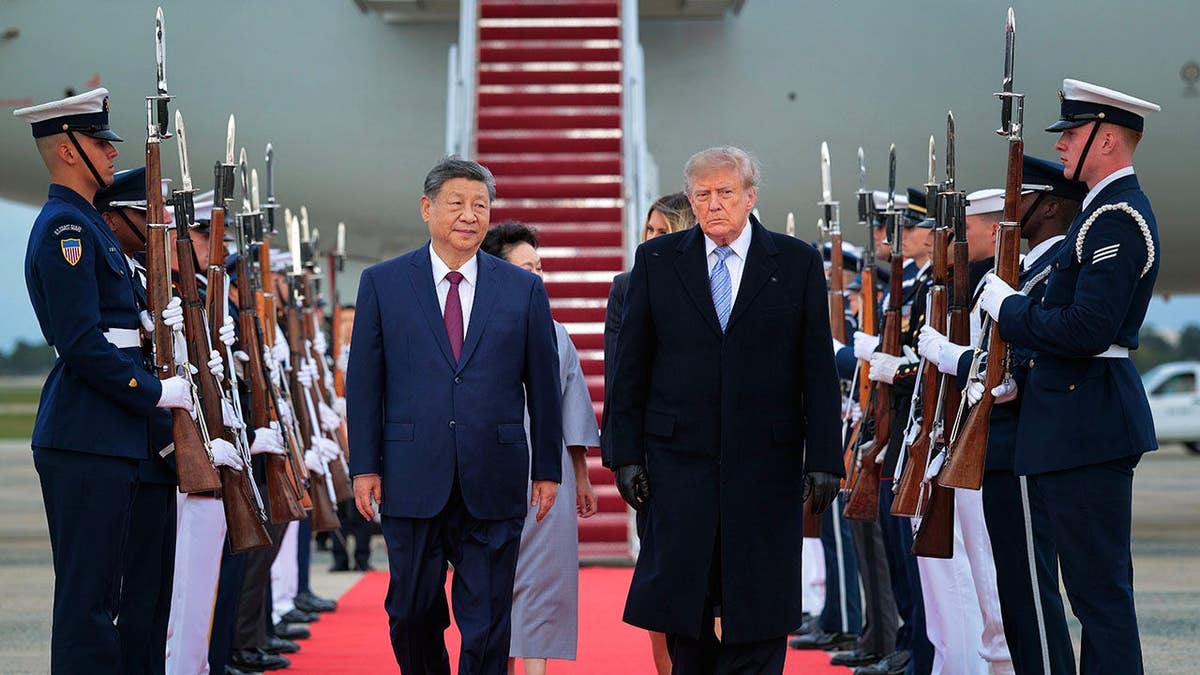
Today, President Donald Trump will meet with President Xi Jinping in China to discuss trade relations between the two nations. This meeting follows what some experts describe as years of broad promises with few concrete actions. Ryan Yonk, a scholar from the American Institute for Economic Research, notes that topics such as tariffs, agricultural purchases, and rare earth minerals may be discussed, as they are interconnected.
In a prior summit in Beijing, China committed to purchasing 25 million metric tons of American soybeans annually. Additionally, China planned to buy $17 billion worth of other U.S. agricultural products over the coming years. This purchasing decision was significant, given that China struggles with domestic soybean production.
As part of their ongoing talks, U.S. Treasury Secretary Scott Bessent announced an extension of a tariff truce, with a promise to reduce trade restrictions on specific goods. Yet, according to Yonk, without a substantial change in the trade agreements, China may hesitate to make large purchases from the United States.
Yonk emphasized that the situation is both economic and political. Neither Trump nor Xi wants to appear as if they are conceding. Substantial progress requires negotiations beyond just the two leaders, involving detailed discussions at various levels of government.
Trump has committed to challenging China’s dominance in rare earth minerals, crucial for technology and defense. He announced the U.S.’s plan to match China’s rare earth production within ten months. However, mining and refining these minerals pose environmental challenges that the U.S. approaches more cautiously than China.
Yonk explains that both nations face economic pressures, with inflation affecting the U.S. and broader economic issues troubling China. If the U.S. experiences economic discomfort, China’s situation can be even more severe, thus increasing the urgency for proper trade arrangements.
Success in trade negotiations often involves addressing issues item by item, to create effective bilateral agreements. This detailed approach, rather than broad promises, is key for progress.
Reporter Peter D’Abrosca notes the complexity of these discussions.