
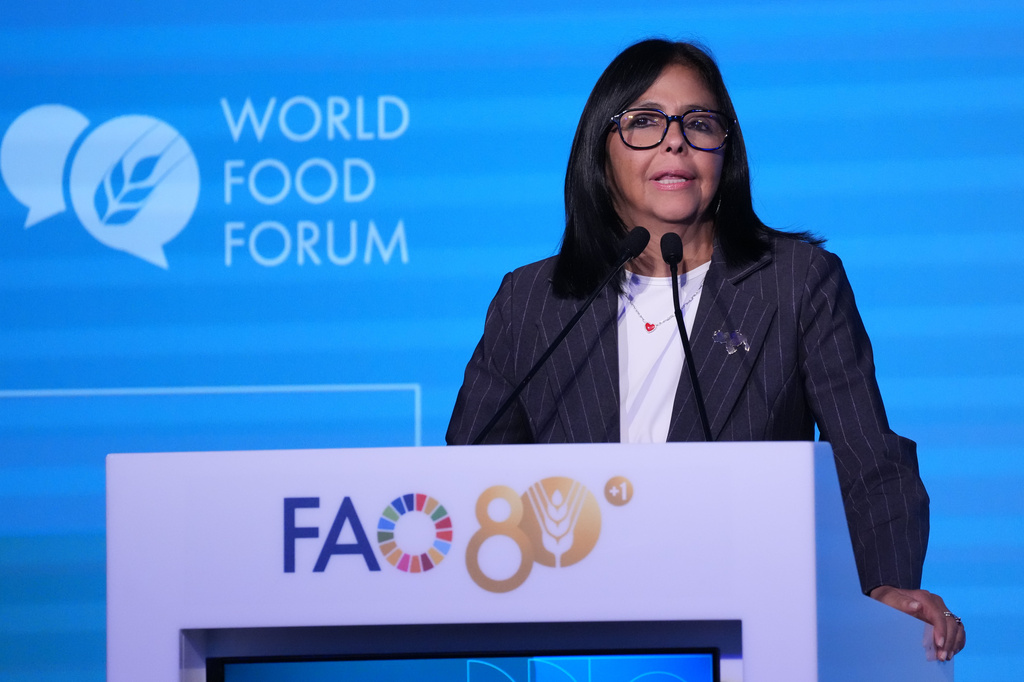
Delcy Rodríguez, acting president of Venezuela, delivered a notable address at the World Food Forum 2026 in Rome on October 12. However, the most significant armed presence in Venezuela today doesn’t belong to Venezuela at all. Instead, Colombian militias ELN and FARC exert control over large areas along the border, waging a brutal conflict for territory.
These groups finance their operations by plundering Venezuela’s critical mineral resources, selling them to Chinese buyers for substantial profits. The violence has displaced over 56,000 people, forcing them to flee the region. Last month in Barranquilla, Colombia, Secretary of State Marco Rubio highlighted the impunity with which these organizations operate. He noted their criminal activities, including murders and attacks, often crossing into Colombia and then retreating to safe havens in Venezuela.
To support Colombia’s efforts in combating terrorism, the Trump administration must apply pressure on the corrupt Venezuelan officials who shield these militant groups. Rubio’s remarks offered a stark clarity often missing from an administration that has, at times, treated the Rodríguez government more as an ally than the enabler of the region’s most dangerous terrorist haven.
Venezuelan cartels such as Tren de Aragua are also profiting greatly from gold and critical minerals. Officials and military leaders in southern Venezuela’s Orinoco region collaborate with terrorists, cartels, and crime syndicates known as “sindicatos.” These groups receive trading permits, fuel, and equipment in exchange for bribes, allowing unfettered access to extract mineral resources such as tin, rare earths, and coltan, which are vital for various critical systems.
The extracted minerals don’t make their way to the U.S. defense sector. Instead, they are sold to Chinese buyers. Armed factions smuggle these minerals to ports, particularly the port of La Guaira, with corrupt officials facilitating shipments through falsified export documentation. Most minerals cross the Colombian border, transported in official vehicles or canoes loaded with raw ore, while military officials are bribed along the route.
Every shipment boosts China’s mineral processing dominance and undermines America’s economic security. While Venezuela’s mineral wealth could help break China’s monopoly and attract American investment, these possibilities are diminished if the Trump administration overlooks the nexus between corrupt Venezuelan officials and terrorism.
The situation deteriorates further due to U.S. regulations aimed at fostering investment. Although Washington has sanctioned exceptions allowing American companies to purchase Venezuelan minerals, these licenses presume the existence of a legitimate market. In reality, all minerals are illicitly produced, with funds intended under these licenses diverted to criminal organizations, veiling terror financing with false legitimization.
The Treasury Department has even exempted U.S. banks from the Bank Secrecy Act in Venezuela, acknowledging that the economy is too opaque. Despite this, American businesses await clearer conditions. A U.S.-mediated deal to transport Venezuelan gold worth millions to the U.S. stalls due to criminal connections, leaving taxpayers footing the initial costs while criminal groups benefit.
Until meaningful U.S. private sector investment becomes plausible, the Trump administration’s policy toward Rodríguez inadvertently aids Chinese buyers who avoid scrutiny while protecting criminal networks. These policies foster widespread bribery and permit the illicit mining industry to finance regional terrorism and violence.
Washington faces a pivotal decision: continue supporting Rodríguez’s regime, effectively sheltering terrorists, ignoring Beijing-directed minerals, or target Venezuela’s corrupt and criminal framework. As Rubio reiterated, the current state is unsustainable and demands confrontation.
Josh Birenbaum serves as deputy director of the Center on Economic and Financial Power at the Foundation for Defense of Democracies. Cristina Vollmer Burelli founded SOSOrinoco, an advocacy organization exposing illegal mining in Venezuela.