
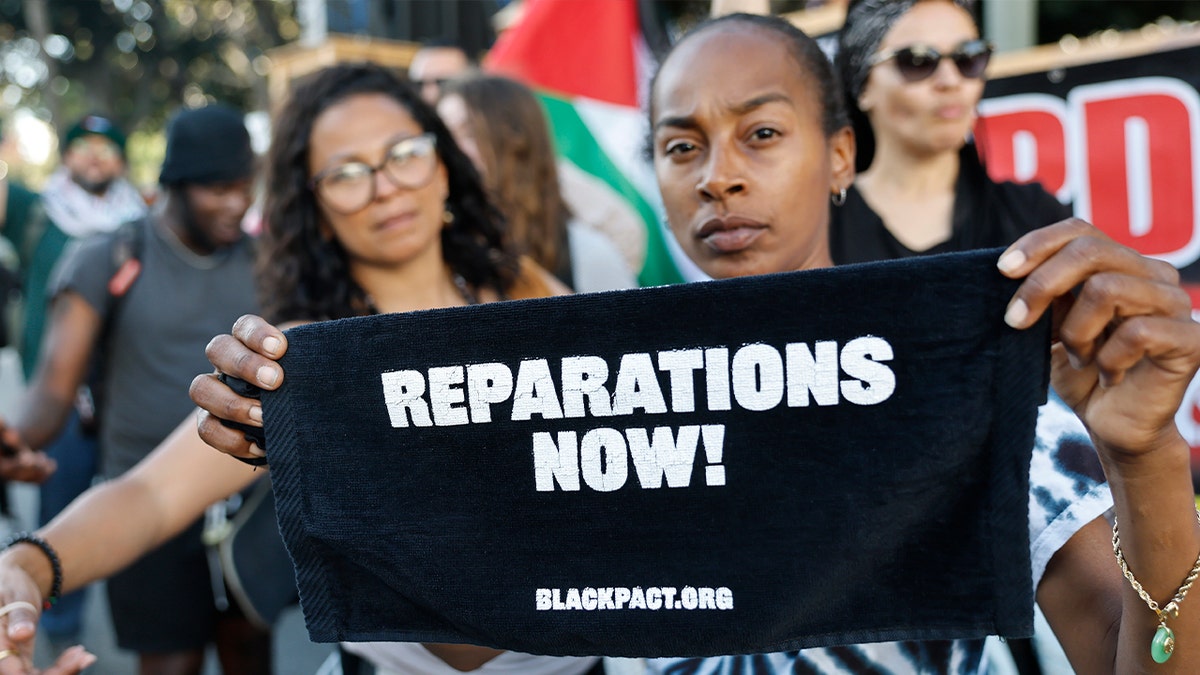
An activist with the U.S. Freedmen Project expressed doubts about receiving financial reparations from New York officials after a study’s postponement on historical remedies. Devine Prince, President of the U.S. Freedmen Project, criticized the delay in comments to Fox News Digital.
Prince noted that their group’s mission is to educate on the distinctions between African Americans who are descendants of enslaved individuals in the U.S., contrasted with recent African or Caribbean immigrants. He argued the delay is part of a broader effort to dilute the reparations movement.
What the mainstream reparations movement is really about … is spinning your wheels until [those] to whom the debt is owed tire out, give up, and give in,Prince stated.
The U.S. Freedmen Project has criticized the New York State Community Commission on Reparations Remedies for extending its report deadline. Initially set for 2025, the final report is now not due until 2029. This move, embedded into the state budget, has drawn backlash, including from the New York Civil Liberties Union (NYCLU).
Chantelle Williams, NYCLU’s Assistant Director of the Racial Justice Center, emphasized that the postponement raises questions about when Black New Yorkers will see reparations. Williams highlighted ongoing discrimination’s impact as a significant issue still plaguing communities.
The nine-member commission, established by Governor Kathy Hochul in 2023, is tasked with examining the state’s historical links to slavery and discrimination, including redlining. The commission is expected to recommend financial compensation and policy changes. The recent deadline extension was justified by Assemblymember Michaelle C. Solages as necessary due to evolving national legalities related to diversity, equity, and inclusion.
Advocates from the U.S. Freedmen Project, attending a Harlem hearing, criticized both the delay and the commission’s broader framework. They argue that reparations must specifically target direct descendants of U.S. enslaved people to avoid constitutional issues under the Equal Protection Clause.
Despite public consultations, Prince remained skeptical about the possibility of reparations payments being made by New York. He contended that the authorities are more concerned with maintaining the status quo than delivering definitive outcomes.
In Illinois, Evanston has become notable as the first city to offer reparations in the form of housing grants to eligible Black residents. However, Prince doubts New York will follow, expressing uncertainty about future payments for enslaved descendants.
Realistically, I’m expecting the same thing that I expected going into this: nothing,Prince declared. He believes the state’s approach will eventually lead to distancing themselves from achieving reparations.New York officials did not respond to requests for comment. The ongoing discourse reflects broader efforts in the U.S. to reconcile historical injustices through local initiatives, despite complex legal and logistical challenges.