
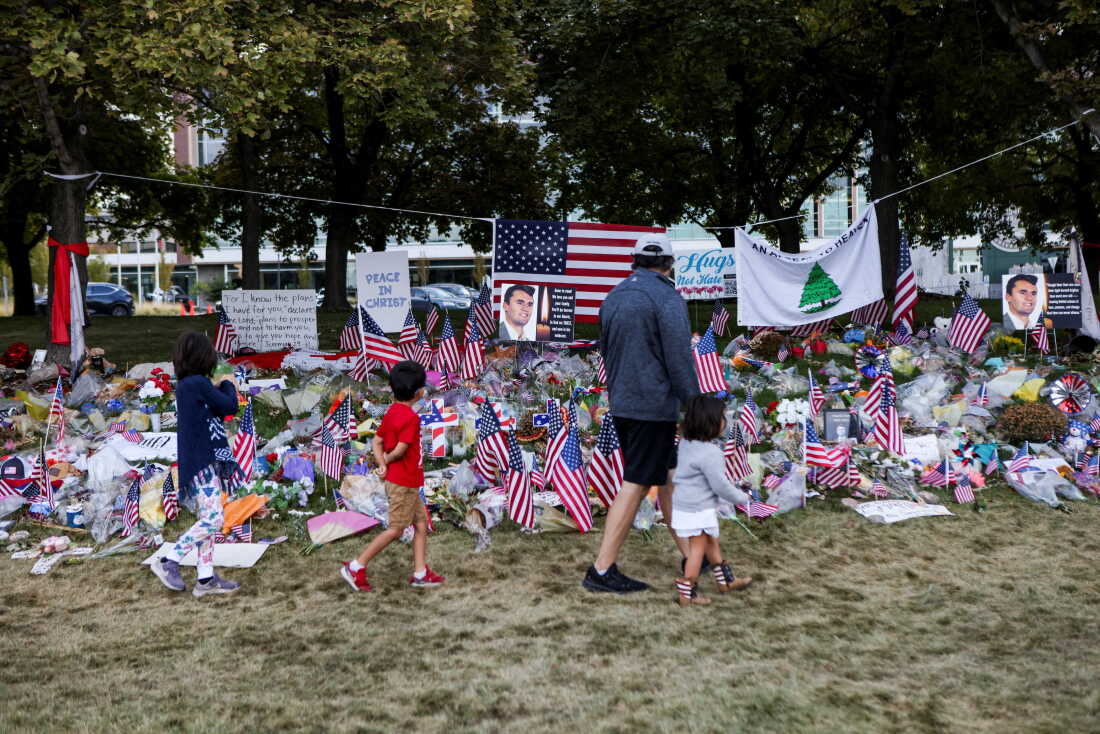
On September 29, 2025, people gathered at Utah Valley University in Orem, Utah for a memorial dedicated to slain conservative commentator Charlie Kirk. The atmosphere on campus, particularly in the courtyard, has experienced a notable shift since the tragic incident. The once vibrant area, filled with students socializing or relaxing, has become notably quieter.
Collin Grannis, a recent graduate, shared his observations about the change, recalling how lively the courtyard used to be. People would gather to do homework, enjoy meals outdoors, and even nap on the grass. However, these activities have diminished since Kirk’s assassination, which has left a lasting impact on those associated with the space.
During a debate with a progressive student in front of thousands, Kirk, a prominent figure of the conservative youth movement and co-founder of Turning Point USA, was assassinated. This event not only disrupted the sociability of the courtyard but also ignited a wave of intimidation, harassment, and threats across the country.
“It used to be very lively. People doing homework, people taking their food to eat outside, people hanging out. I remember people taking naps on the grass, like right in that area.” – Collin Grannis
Political violence and personal attacks have characterized the decade’s erosion of political norms. These dynamics have affected various civic actors, including elected officials, judges, teachers, and librarians. The assassination intensified these issues, making everyday Americans more vulnerable even without direct targeting by high-profile social media accounts.
Security experts, like Shauna Dillavou from the doxing prevention service Brightlines, noted a significant shift post-assassination. Doxing, the release of someone’s personal information without consent, became more widespread and democratized. Dillavou explained that the focus moved to neighbor-on-neighbor violence, with people’s private conversations becoming public threats.
Kat Green, from the doxing mitigation nonprofit Endora, highlighted the emergence of websites aiming to expose Kirk critics. These sites listed personal information of individuals voicing unsympathetic opinions, making them targets for abuse. The demand for experts in doxing prevention skyrocketed as result.
Vice President Vance addressed Kirk’s podcast audience post-assassination, urging listeners to call out individuals celebrating the murder and inform their employers. This call to action further intensified the online threats, according to Shannon Hiller from Princeton’s Bridging Divides Initiative.
Dillavou described doxing as stochastic terrorism, where influential calls for violence increase lone wolf acts. The removal of the “Expose Charlie’s Murderers” site did little to quell the environment, with mirrored sites persisting online.
“Doxing is stochastic terrorism.” – Shauna Dillavou
The cultural shift towards suppressing opposing political views via doxing raised concerns. Dillavou warned that any tolerance for doxing endangers everyone. Green differentiated between doxing and unmasking individuals for accountability, emphasizing broader community safety.
Hiller noted the technology’s role in evading direct dialogue on opposing views, challenging the reduction of barriers online compared to face-to-face discussions. Green explained how younger audiences used memes to end doxing attacks months after the assassination, reflecting technology’s dual role in the aftermath.
As the anniversary approached, discussions on the assassination remained guarded. Kevin Haslem, a sophomore at the university, reflected on the difficulty adults encountered when navigating these heated emotions.
“Professors, especially around this time of year, as it’s the first anniversary, are kind of a little bit uneasy or a little bit guarded on how to talk about it.” – Kevin Haslem
The Pulitzer Center on Crisis Reporting contributed to this story, emphasizing its broader implications on social and political dynamics.