
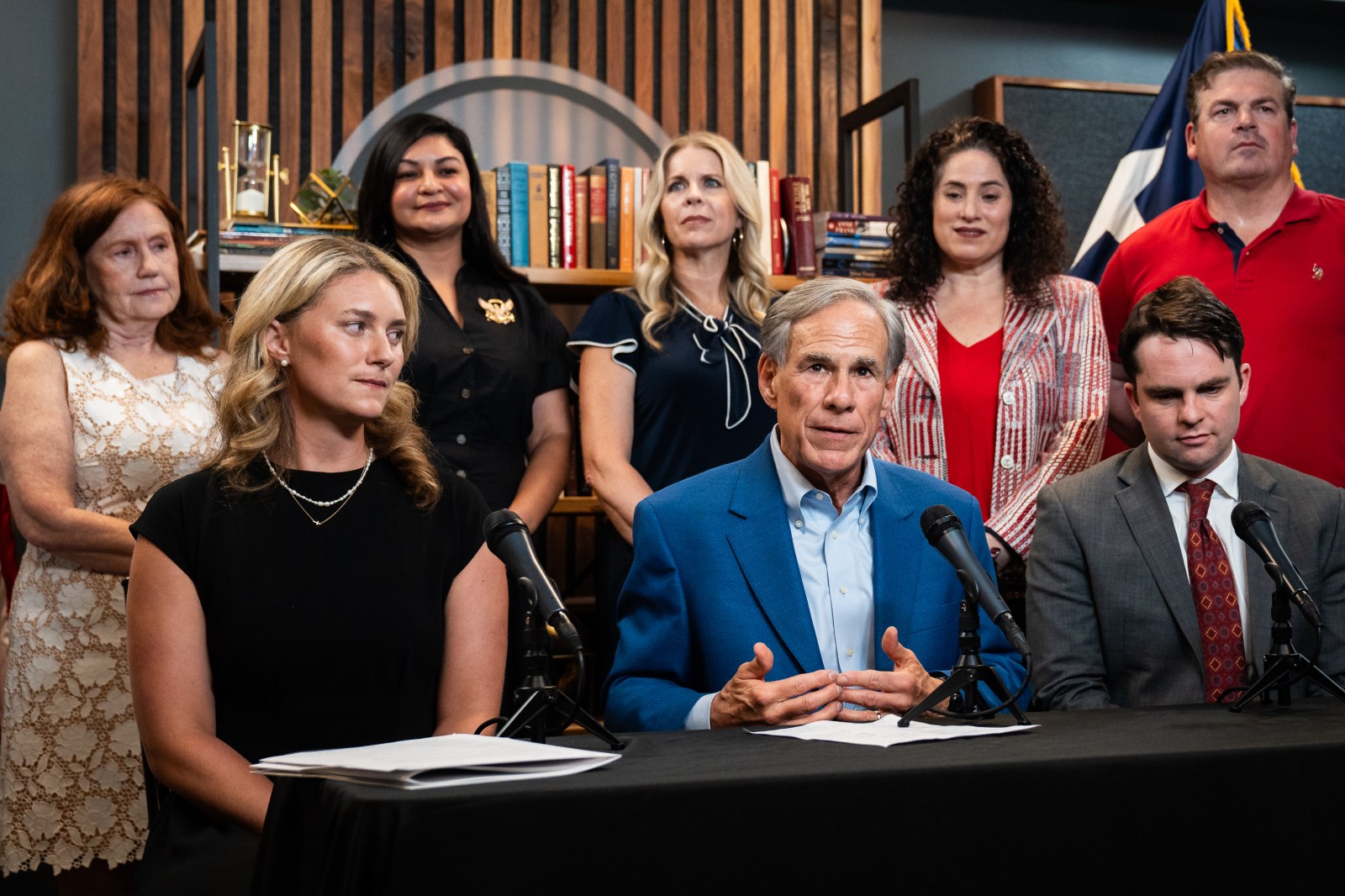
Texas Governor Greg Abbott and Democratic state Representative Gina Hinojosa are locked in a tight race for the governorship, coinciding with President Donald Trump and leading Republicans arriving in Texas for significant midterm campaigns. Historically, Texas has been a bastion for the Republican Party, with no Democratic governor elected since Ann Richards in 1990. Republican presidential candidates have consistently won Texas since 1980.
Democrats hope economic concerns, Trump’s declining approval ratings, and international issues like the conflict with Iran could sway voters, potentially impacting races for both governor and U.S. Senate. Despite their optimism, ratings from Cook Political Report and Sabato’s Crystal Ball classify the governor’s race as ‘Likely Republican’, though recently downgraded from ‘Solid Republican’.
The poll coincides with the GOP’s “Trump-a-Palooza” gathering, designed to stimulate voter engagement for the upcoming November elections.
Governor Abbott, a staunch conservative and Trump supporter, first won the governorship in 2014 and was reelected in 2018 and 2022. A fourth term could make him the longest-serving Texas governor, surpassing Rick Perry. Hinojosa, an accomplished lawyer, entered the Texas House in 2017 and clinched her party’s nomination in March. Despite forecasts favoring Abbott’s reelection, polls indicate a tighter race compared to his last contest against Beto O’Rourke.
A N+ Univision/YouGov poll surveyed 1,000 Texas voters, revealing a deadlock between Abbott and Hinojosa, both securing 47%. Undecided voters account for 5%, with 1% opting for other candidates. Hinojosa’s support is strong among Latino voters, with a 12-point lead over Abbott, and especially among Latina women, with an 18-point advantage. The competition tightens among Latino men, with Hinojosa leading by a two-point margin. Hinojosa also enjoys higher favorability at 49% compared to Abbott’s 41%, though she lags in name recognition.
The poll, conducted from August 27 to September 4, 2026, includes a margin of error of ±3.6 percentage points, and ±5 points among the Latino voter sample.
Hinojosa tweeted about the poll stating her commitment to addressing Texans’ issues, with remarks on education and economic relief. Polling data shows voter preference for Democrats over Republicans on most issues, except for border security where Republicans hold a slight trust advantage. Democrats lead on cost of living, inflation, gas prices, and immigrant rights, demonstrating broader voter trust in these categories.
Other polls also show Abbott in the lead, albeit narrower than his victory margin against O’Rourke. An Overton Insights/Texas Public Policy Foundation poll of 1,167 likely voters shows Abbott ahead by 1 point, 46.9% to 45.8%. Including leaners, support rises slightly for both. Trump’s job performance disapproval stands at 56%, impacting voter sentiment.
A Texas Public Opinion Research survey reports Abbott leading by 7 points, while a Texas Southern University poll from late July records Abbott at 49%, leading Hinojosa 43%. Polling indicates demographic divides, with Abbott favored among white voters, while Hinojosa garners substantial support from Latino and Black voters as well as women.
Additional surveys such as the New York Times/Siena College poll show Abbott with a 51% backing versus Hinojosa’s 44%. Furthermore, a University of Texas/Texas Politics Project survey indicates a 7-point lead for Abbott.
As of September 8, national approval for Trump stands at 35% according to Civiqs’ online poll, with 59% disapproval. Economic issues, notably rising oil prices due to ongoing conflicts, challenge the President. Economic strategy debates continue as tariffs impact trade and growth.
The GOP’s unconventional midterm convention in Dallas aims to bolster Republican prospects amid presidential low approval ratings, historically tied to party losses. With Democrats poised to potentially gain in the House and contend for the Senate, the convention seeks to amplify Trump’s policies directly to voters.
Republicans plan significant efforts in Texas, a traditional Republican stronghold, yet central to Democratic ambitions.