
In the vast boreal forests of western Ontario, scientists conduct experiments that might seem unconventional. Within secluded lakes, they release different pollutants and observe the consequences. Initiated in the late 1960s, these research efforts led to significant environmental changes, such as the bans on phosphorus-rich detergents, which were causing algae blooms in the Great Lakes. These studies highlighted how mercury from coal plants taints fish, how fossil fuel emissions cause acid rain, and how bitumen spreads during oil spills.
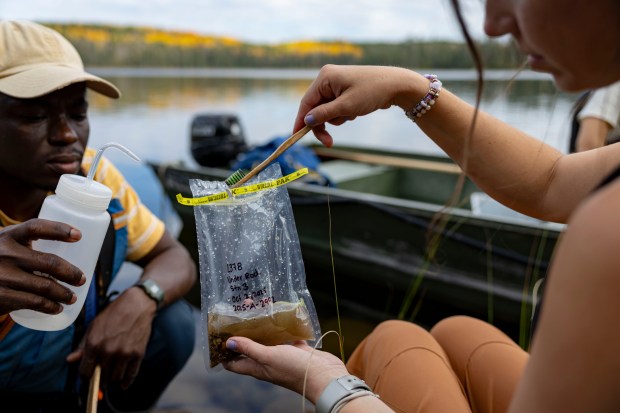
A recent experiment focuses on Lake 378, surrounded by jack pine and spruce trees. Spearheaded by Chelsea Rochman, a biologist from the University of Toronto, researchers have introduced microplastics to the lake over the past three years to simulate urban run-off. The team monitors where these plastics travel, discovering that some sink, while others end up on shore. Dissecting fish, they found that microplastics move from the stomach to the filets.
Rochman’s research at the Experimental Lakes Area (ELA) aims to prompt action from U.S. and Canadian leaders to address the growing threat of microplastics, which contaminate the water supply for millions. The team gathers microplastic samples from various sources, such as plants and rocks, and is urging policymakers to consider the impact of these pollutants.
Microplastics are pervasive across the Great Lakes, especially in heavily populated areas like Lake Michigan and Lake Erie. The series ‘Great Waste in the Great Lakes’ details these environmental and health concerns. At least 22 million pounds of plastic trash enter these lakes every year from various sources.
Seth Moore from the Grand Portage Band of Lake Superior Chippewa pilots a research boat along the clear shores of Lake Superior. He studies threats like microplastics, which pose risks to both fish and humans who rely on these waters for food. At isolated locations like Apostle Islands National Lakeshore, microplastics persist despite their remote nature.
Challenges in Regulation and Monitoring
Plastic waste regulation is insufficient in both the U.S. and Canada. Recent policy changes in Illinois and Michigan show some progress, but more comprehensive actions are needed. Initiatives to reduce plastic production and manage waste are being considered globally.
The extraction of fossil fuels for plastic production contributes to severe environmental damage, particularly in areas like Sarnia, Ontario. This region mirrors industrial zones like ‘Cancer Alley’ in the U.S. INEOS Group Ltd. and other companies face scrutiny for their pollution, which has negatively affected local indigenous communities.
Despite some closures of polluting plants in Sarnia, the region still suffers from extensive industrial activity. Research continues to better understand the impact of microplastics on ecosystems and public health, using data from Rochman’s projects and new studies in the Great Lakes.