
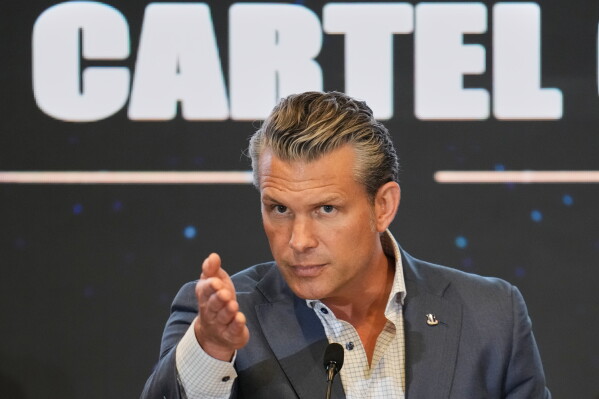
The U.S. military has targeted boats believed to ferry drugs off the Caribbean and Pacific coasts in Latin America, with hundreds of deaths reported in the past year. Now, the Trump administration aims to extend the campaign onto land, arranging deals for U.S. forces to operate in allied countries throughout the region. Defense Secretary Pete Hegseth announced that Colombia, Guatemala, and Honduras agreed to joint military operations, following Ecuador in March. However, Guatemala denies any such agreement.
During a military drill in Panama, Hegseth compared potential land operations to earlier boat strikes, emphasizing collaboration with regional partners such as Colombia and Ecuador. The expansion showcases the Trump administration’s strategy to align Latin American nations with U.S. security concerns.
“It projects power, demonstrates military superiority, and enables Washington to impose its agenda.” — Michael Shifter, Inter-American Dialogue think tank
The U.S. has maintained a military presence in Latin America for generations, providing allies with resources for anti-drug efforts. Under Trump’s administration, this presence shifted to a more interventionist strategy. U.S. forces have entered Venezuela to arrest its president and engaged CIA agents in drug busts in Mexico, conducting over 60 boat strikes resulting in more than 200 deaths.
In Colombia, where Trump-supported leader Abelardo de la Espriella is in power, U.S. forces might join operations against groups like the National Liberation Army (ELN). Hegseth stated the U.S. would target those who threaten its interests, equating drug traffickers with past security threats like ISIS.
Concerns grow over civilian risks and a potential backlash against U.S. presence. Ecuador’s cooperation in joint military efforts with the U.S. occurred despite public opposition to foreign bases. However, not all regional governments have agreed. Guatemala’s President, Bernardo Arévalo, dismissed claims about military operations, citing potential legal issues without Congressional approval.
Mexico, a significant drug transit point, stands apart. Progressive President Claudia Sheinbaum resists U.S. military intervention, even as she works closely with Washington on security matters.
There is skepticism about the long-term effectiveness of increased militarization in addressing security issues. Experts like Jeremy McDermott from InSight Crime warn that targeted groups could adapt quickly, moving operations among civilian populations, complicating future efforts.
“There is only so much sovereignty they can cede before public opinion begins turning against them.” — Adam Isacson, Washington Office on Latin America
The extent to which Latin American voters will support heightened security interventions might limit the actions of even the most Trump-aligned leaders. Any U.S. military involvement poses challenges for balancing security aims with national sovereignty and public sentiment.
The Associated Press contributed to this report from various cities in Latin America.