
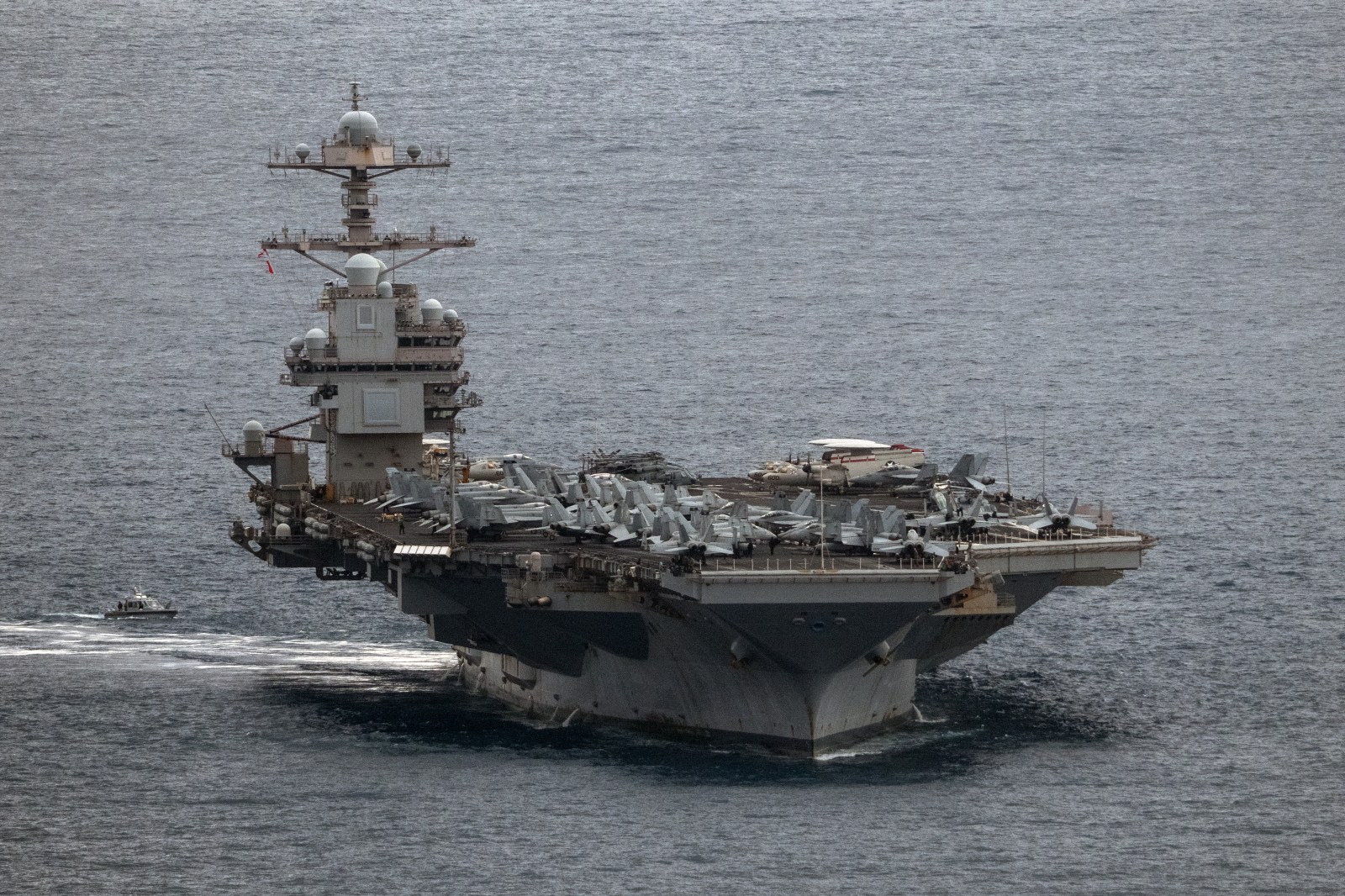
President Donald Trump’s initiative to revamp the newest U.S. Navy aircraft carriers has sparked warnings from defense analysts, contractors, and former officials. They warn that these planned changes could elevate costs, delay construction, and reverse long-standing design decisions implemented by the Navy.
Proposed Changes and Potential Impact
Trump signed a memorandum directing the Pentagon and Navy to devise a plan within 60 days to substitute the Electromagnetic Aircraft Launch System (EMALS) and Advanced Weapons Elevators on the USS Doris Miller with steam catapults and hydraulic systems. The Ford class carriers are designed to gradually replace the older Nimitz-class fleet.
The debate intensified after reports indicated that Navy officials are contemplating moving the island, or command tower, on Ford-class carriers farther forward to align with Trump’s preferences. Such a redesign could require extensive time and funding, according to current and former officials.
Bryan Clark, a former Navy officer and defense analyst, stated that moving the island would be “a major redesign” and “very disruptive.”
Operational Changes and Challenges
Navy officials assert the current island placement on Ford-class carriers optimizes operational functions such as parking space, launch efficiency, turbulence reduction, and safety. A previous analysis during Trump’s first term suggested relocating the island would involve billion-dollar costs and significant program delays.
The Ford-class fleet includes USS Gerald R. Ford, USS John F. Kennedy undergoing sea trials, and USS Enterprise and USS Doris Miller under construction.
Debate Over Steam Catapults
Trump’s longstanding criticism of EMALS centers on its complexity compared to traditional steam catapults. The new memorandum favors “proven, reliable and affordable technologies.” The Navy, however, highlights EMALS benefits, including higher launch rates and reduced personnel needs, as noted by the Associated Press. EMALS reduces the sailors required for catapult operations to two aboard the USS Gerald R. Ford.
Globally, both China’s latest aircraft carrier and France’s future carrier plans involve electromagnetic catapults.
Risks of Redesign
General Atomics, the EMALS manufacturer, warns altering systems on USS Doris Miller poses substantial risks due to the current production stage. Work is approximately 50% complete, and transitioning to steam catapults may result in costs and delays.
Defense analyst Clark noted such changes could disrupt ship construction aspects significantly, impacting a fleet already facing shipbuilding delays and maintenance backlogs.
Trump’s memorandum cites procurement reforms to address cost growth and delays stemming from design complexities.
Operational and Logistical Concerns
The Navy confronts broader operational and shipbuilding issues, with carriers heavily utilized in Iran-related operations. Concerns over extended USS Abraham Lincoln deployments have been raised by lawmakers and military families. Trump dismissed deployment concerns, while Defense Secretary Pete Hegseth deemed reports about carrier conditions as “misrepresented.”
Criticism from Analysts and Officials
Critics question the merit of Trump’s proposed changes. Todd Harrison, a defense budget analyst, describes them as “unusual and disruptive,” noting the Navy did not request such modifications.
Senator Mark Kelly, previously a Navy pilot, criticized the proposal, and emphasized it could potentially cost billions. Kelly remarked: “Donald Trump knows nothing about this stuff.” He noted that reversing modernization efforts might elevate costs and prolong timelines.