
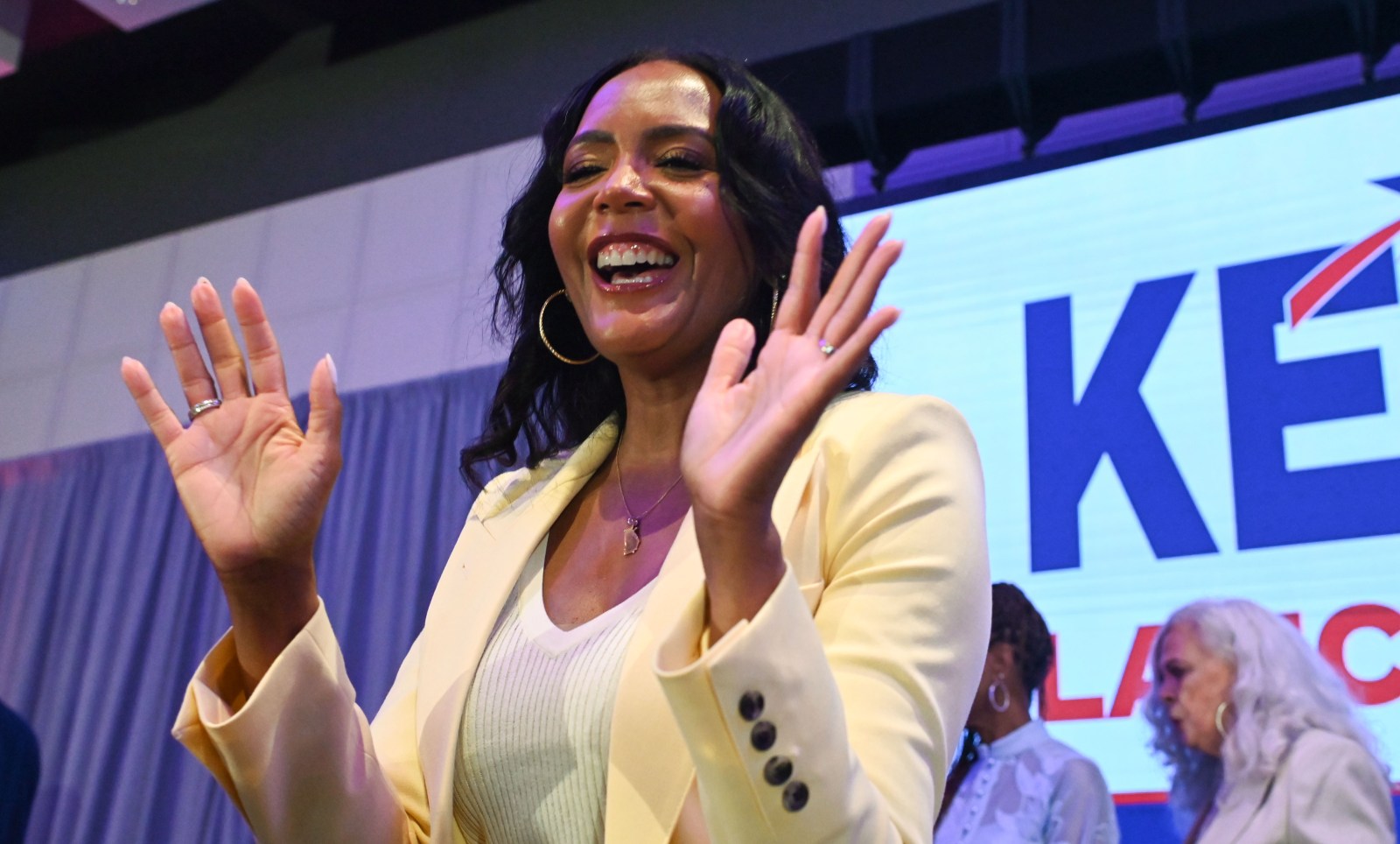
The governor race in Georgia between Democrat Keisha Lance Bottoms and Republican Rick Jackson is drawing significant attention. A recent poll indicates that Bottoms holds a narrow lead, though the difference is within the survey’s margin of error.
After more than 20 years of Republican rule, Democrats are eager to reclaim the governor’s office. Current Republican Governor Brian Kemp cannot run again, setting the stage for an open contest.
If Bottoms wins, she would become the first Democrat elected as Georgia governor since Roy Barnes in 1998. Achieving this requires not just strong Democratic turnout but also support from independents and moderate Republicans, which has proven challenging in past elections.
The governor’s race is part of 36 gubernatorial contests nationwide in 2026, including other key open races in states like Michigan, Alaska, Iowa, Wisconsin, and Nevada.
Primary and Election Details
Bottoms, the former mayor of Atlanta, secured over 56% of the vote in the Democratic primary. Jackson, a business executive, won the Republican nomination by defeating Lieutenant Governor Burt Jones in a runoff, gathering about 53% of the vote. Former President Donald Trump endorsed Jackson.
Georgia has increasingly become a political battleground. Though Republicans retained the governor’s office, Democrats have secured important federal positions, such as the Senate seats won by Jon Ossoff and Raphael Warnock. Governor Kemp’s reelection victory over Democrat Stacey Abrams in 2022 by 7.5 percentage points underscores the Republicans’ stronghold.
The Cook Political Report classifies Georgia’s race as a “toss-up” with a voting index of R+1. Despite becoming more competitive, Georgia’s conservative leanings persist.
Poll Insights
A Quantus Insights survey suggests that Bottoms leads slightly; the results fall within a margin of error of 3.6 percentage points. The poll includes likely voters, with 7.7% undecided and 1% backing another candidate. It was conducted with 815 participants sponsored by the Natural Gas Association of Georgia.
Another poll by AARP’s Georgia Voter Survey also shows a tight race, with Bottoms at 48% and Jackson at 46%. Conducted by Fabrizio Ward (R) and Impact Research (D), the margin of error is 3 percentage points.
Earlier surveys have depicted a larger lead for Bottoms. A State Navigate poll involved 448 likely voters, showing Bottoms leading Jackson. Accounting for undecided voters who leaned towards a candidate, Bottoms had 51% support. Without such leaners, support was 50% for Bottoms and 43% for Jackson, with 7% undecided. This survey’s margin of error is 4.6 percentage points.
A survey conducted by Beacon Research and Shaw & Company Research sponsored by Fox News revealed Bottoms holding 52% of voter support compared to Jackson’s 47%.
A Wick Research poll, sampling 1,175 likely voters, found the race tied, with a margin-of-error lead for Jackson. The poll had Jackson with 43.2% against Bottoms’ 42.7%.
Georgia’s Political Transformation
Georgia has transformed from a steadfast Republican state to a competitive swing state, driven by rapid demographic and economic changes around Atlanta. The suburbs, key to this transformation, are shifting Democratic, which contributes to hopeful Democratic performances in 2026.
In the previous presidential cycle, Trump won Georgia by 2.2 points after Biden’s narrow win in 2020. Historically, Republicans like Mitt Romney and John McCain also captured Georgia by notable margins in earlier elections.
Moreover, Democrats have seen promising signs. In a special election to replace former Representative Marjorie Taylor Greene, the GOP margin dramatically narrowed, signaling potential shifts.
Voter Engagement and Senate Race Implications
Besides the governor’s race, Georgia voters are also determining their next senator. Democrat Jon Ossoff is a standout fundraiser in this cycle, significantly outpacing Republican challenger Mike Collins.
Ossoff’s Senate seat is key as Democrats look to protect their gains in states won by Trump. The Senate race, like the gubernatorial race, is under close watch, with potential impacts on Washington’s political landscape.
Upcoming Key Dates for Voters
- October 5, 2026: Voter registration deadline.
- October 13-30, 2026: Early voting period.
- November 3, 2026: Election Day (Governor and statewide offices).
- December 1, 2026: Possible runoff if needed.