
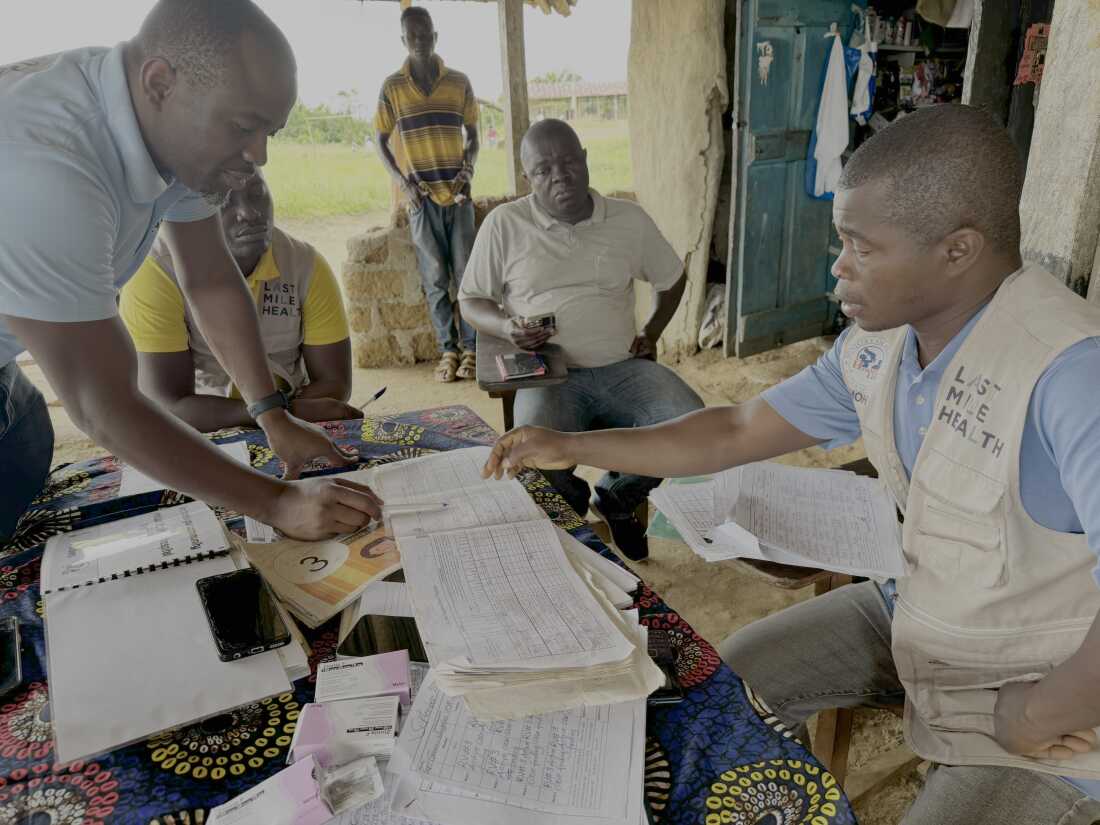
Genesis Whegelee, a community health worker in Rivercess County, Liberia, has served under Last Mile Health since 2018. He performs vital health checks for households, focusing on sick children, expectant mothers, and diagnosing various health issues.
Dr. Raj Panjabi founded Last Mile Health (LMH) in 2007. After graduating from Brigham and Women’s Hospital in Boston, he returned to his birthplace, Liberia, with $6,000 of wedding donations to launch a healthcare initiative for the country’s remote areas.
Last Mile Health operates on the belief that everyone deserves access to life-saving medical care. The nonprofit has been recognized with the Conrad N. Hilton Humanitarian Prize, accompanied by a $3 million award. This prize underscores the organization’s substantial efforts in reducing human suffering.
Training Community Health Workers
Last Mile Health employs community health workers, mostly with primary school education. They receive eight weeks of training to diagnose and treat diseases like malaria, pneumonia, and diarrhea. They also assist pregnant women in planning clinic deliveries and monitor emerging illnesses.
The initial funding covered salaries for 17 workers. Over time, governmental, philanthropic, and nonprofit contributions have expanded their activities. By 2010, LMH was treating HIV/AIDS in 12 Liberian counties through partnerships with the Government of Liberia and the Global Fund.
Impact and Expansion
During the 2014-16 Ebola crisis, LMH equipped over 1,300 workers to manage the outbreak. Throughout the COVID-19 pandemic, they delivered 6.2 million PPE pieces and promoted vaccinations, achieving an 81% vaccination rate in Liberia.
Today, LMH supports 20,000 health workers reaching 32 million individuals in Liberia, Ethiopia, Malawi, and Sierra Leone. They have also developed digital training to enhance efficiency. CEO Lisha McCormick points out that two billion people still lack healthcare access, aiming to bridge this gap.
Last Mile Health’s work is crucial today.
states Peter Laugharn, CEO of Hilton Foundation. Health systems in isolated regions remain strained, with LMH addressing these challenges.
A Global Perspective
Panjabi, now LMH’s president emeritus, stresses a critical point in global health. The Lancet suggests millions might die by 2030 if funding from the US and European entities continues decreasing. Cuts to foreign aid could result in 14 million more deaths, including 4.5 million children under five.
Panjabi explains, We cannot cut healthcare funds without impacting care unless we tackle diseases early.
Community health workers play an integral role in early disease detection and management.
A 2025 SSRN study reviewed 255 reports, showing community health workers often provide care at a median cost of $0.59 per person annually. Their efficiency leads to significant cost savings.
The Role of Community Health Workers
Genesis Whegelee’s work illustrates their impact. He covers 42 households, conducting daily assessments, maintaining medication kits, and delivering education on mosquito nets and hygiene.
His efforts include using diagnostic tools and responding to emergencies like feverish children, assessing conditions like malaria, and ensuring continued treatment.
On occasion, he directs patients to clinics for severe issues or advises hospital births to avoid complications. Regular visits emphasize breastfeeding and vaccinations.
Panjabi highlights the significance of these workers, asserting, Community health workers are often the first healthcare contact.
With plans to reach 50 million people by 2028, LMH will allocate the Hilton grant to continue its mission across existing regions and support the Africa Frontline First initiative. Lisha McCormick explains, Health workers are crucial, trained professionals offering diagnostics and treatments.
Diane Cole contributes to various outlets, including The Wall Street Journal and The Washington Post, and is the author of After Great Pain: A New Life Emerges. Her works are at DianeJoyceCole.com.