
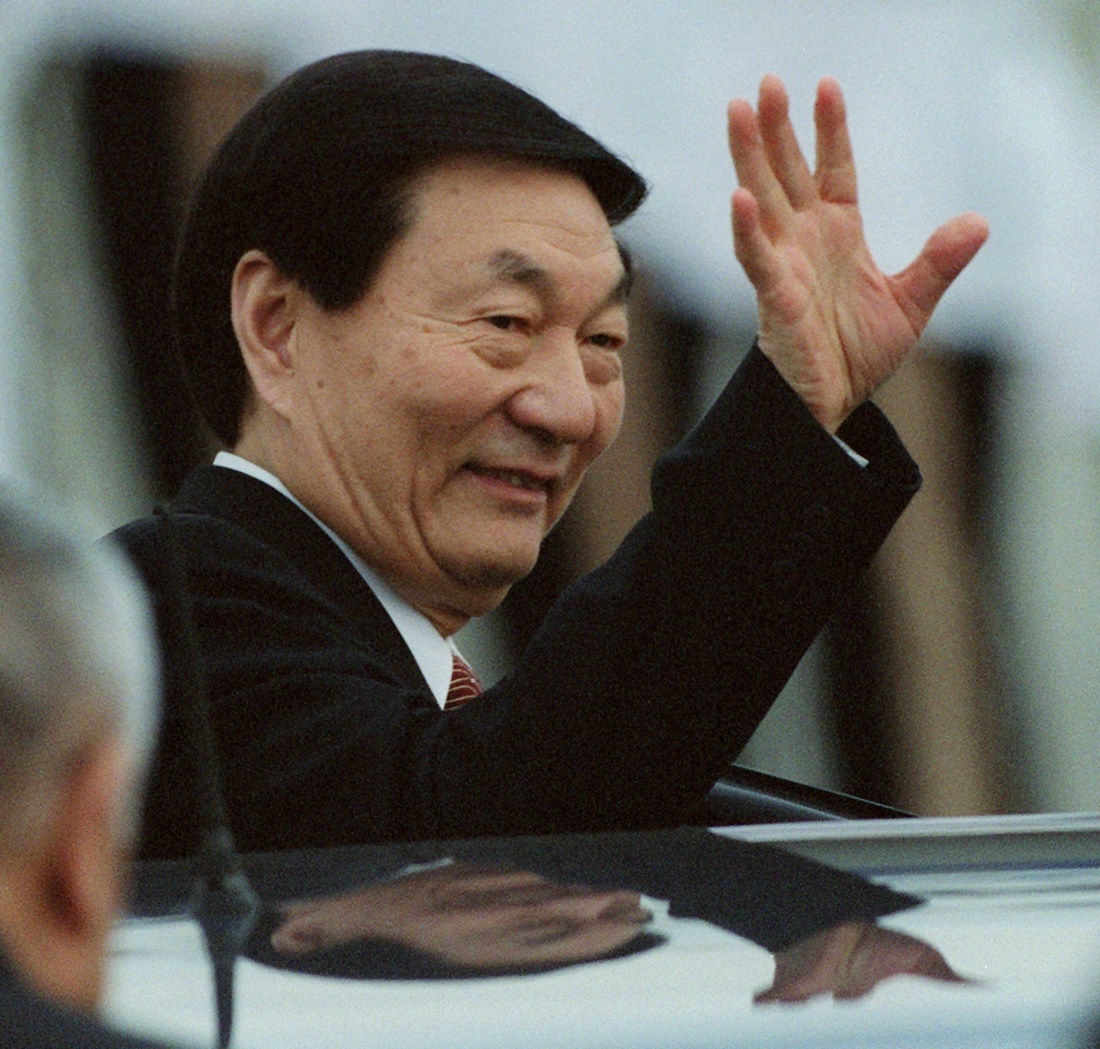
Zhu Rongji, the former Premier of China, has passed away at the age of 97. According to state media, his death was attributed to illness. As a technocrat and trained engineer, Zhu was celebrated for implementing significant economic reforms in the 1990s. These efforts aimed to steer China away from the disorder of post-Maoist years and toward a global market-oriented financial system, while maintaining the Communist Party’s influence over the economy.
Despite his retirement from public service in 2003, Zhu’s impact on the nation remains complex, with both admiration and criticism directed at his reform legacy. By liberating China’s vast labor and financial resources, Zhu facilitated the creation of substantial wealth, although some institutions were left with vulnerabilities.
Charlene Barshefsky, a former U.S. trade representative, noted, “From a policymaker’s viewpoint, he embraced a vision of China whose economic system aligned more with Western practices, which meant fewer interventions from the state.” During this period, Zhu engaged in extensive negotiations for China’s entry into the World Trade Organization (WTO), requiring preferential trading status with the United States.
In 2000, the U.S. Senate granted China this status, leading to its accession to the WTO the following year. This was a boon to China’s burgeoning economy, transforming it into an export powerhouse and attracting foreign businesses.
“This wasn’t scripted; it involved substantial exchanges,” stated Kenneth Lieberthal, a China expert and national security adviser for then-President Bill Clinton, reflecting on Zhu’s negotiation style.
Zhu, born in 1928 in Changsha, Hunan province, graduated from Beijing’s Tsinghua University with a degree in electrical engineering just before the Communist Party seized power in China in 1949. His direct, independent approach often led to clashes within the Party.
In 1989, when Beijing witnessed the Tiananmen Square tragedy, Zhu was unafraid to acknowledge the incident, contrary to official propaganda. His straightforwardness led to periods of political expulsion, notably in 1958, and again during the Cultural Revolution in 1970.
Following Mao’s death, Zhu’s pragmatism facilitated his return to higher office. As central bank governor, he curbed rampant inflation and later, as vice premier, centralized the tax system, sparking significant economic growth.
Zhu’s tenure as premier starting in 1998 was marked by a bold commitment to state reform, often generating both opposition and support. His most debated achievement was the restructuring of state-owned enterprises, resulting in unemployment for roughly 30 million workers.
“The laid-off worker issue was effectively ignored,” commented Dorothy Solinger, a professor emeritus at the University of California, Irvine. Despite the challenges, Zhu initiated fundamental welfare and healthcare improvements.
Zhu remained open in addressing criticism, employing humor during intense scrutiny. He once quipped about anti-corruption efforts, “I’ve prepared 100 coffins: 99 for corrupt officials and one for myself.” Despite some setbacks, such as stalled debt and pension reforms, Zhu maintained his candid public persona.
Charlene Barshefsky remarked, “Zhu Rongji represented a different era, when China aimed to integrate Western economic and regulatory standards.” Zhu spent his later years in Beijing, enjoying Peking Opera and offering counsel to emerging Chinese technocrats.