
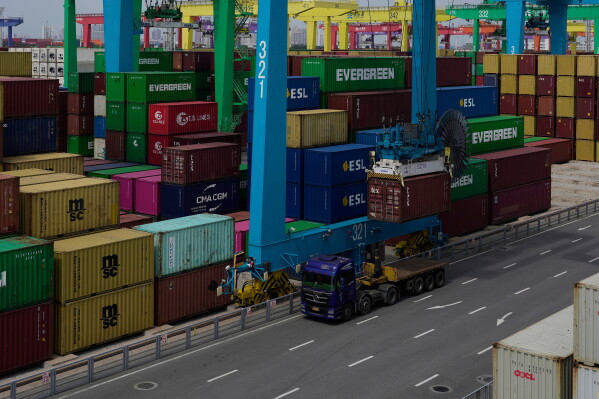
The U.S. president, Donald Trump, has initiated new double-digit tariffs on imports from 60 countries, representing 99% of goods entering the nation. These tariffs range from 10% to 12.5% and follow from accusations that these countries are not effectively prohibiting goods produced by forced labor. The decision aligns with the expiration of temporary 10% tariffs on Friday, previously implemented after a Supreme Court ruling against broader tariff policies.
For nearly a century, the United States has rigorously enforced a ban on importing goods made with forced labor; it’s time for our trading partners to do the same,said Jamieson Greer, the U.S. trade representative.
The new tariffs are based on Section 301 of the 1974 Trade Act, which allows actions against countries with unjustifiable or discriminatory trade practices. Trump previously used this law to impose tariffs on China, successfully overcoming legal challenges. More tariffs under Section 301 might follow, as an investigation into 16 countries responsible for 70% of U.S. imports is ongoing, focusing on overproduction issues and their global market effects.
Trump’s decision marks a shift from longstanding U.S. trade policies favoring lower tariffs and freer trade. After a Supreme Court ruling, which invalidated tariffs enacted under the International Emergency Economic Powers Act (IEEPA), the administration had to refund importers. Trump’s response was to impose global tariffs under Section 122 of the 1974 Trade Act, initially set for 150 days, expiring Friday.
Some countries increased measures against forced labor, qualifying for reduced tariffs. For instance, India’s import tariff was lowered to 10% from an initial 12.5%. Exceptions exist for goods like oil, gas, and fertilizers, and products under the USMCA remain tariff-free.
Immediate criticism followed the announcement. Richard Neal, a leading Democrat on the House Ways and Means Committee, criticized the use of forced labor as a pretext for questionable tariff policies. Brazil plans to use its reciprocity law, potentially imposing counter-tariffs against the U.S., and may file a complaint with the World Trade Organization. The Brazilian government accused the U.S. of weaponizing the serious issue of forced labor.
The tariffs will affect U.S. businesses importing foreign goods, with importers likely passing costs to consumers, increasing living costs amid existing frustrations. Analysts suggest the tariffs might address forced labor issues but approach with skepticism regarding their true intent.
The International Labour Organization (ILO) defines forced labor as work demanded under threat and without voluntary consent. In 2021, an estimated 27.6 million people globally were in forced labor, as per ILO data. Martina Vandenberg of The Human Trafficking Legal Center acknowledges tariffs’ potential in combating forced labor but urges caution and gradual implementation to allow countries to establish comprehensive import bans.
Dominic LeBlanc, Canada’s Minister for Canada-U.S. Trade, expressed a readiness to work with the U.S. towards excluding forced labor from supply chains, assuring continued constructive collaboration.
Kenya Davis from Boies Schiller Flexner highlighted the U.S. Uyghur Forced Labor Prevention Act in 2021 as significant legislation prior to current tariffs, increasing awareness of labor exploitation issues. However, Isabelle Glimcher from NYU Stern Center highlights the need for transparent investigations and support systems for enforcing bans, cautioning against immediate enthusiasm for the tariffs.
Despite some countries, like India, responding to tariff threats by modifying trade policies, comprehensive trade practice amendments require further international commitment.