
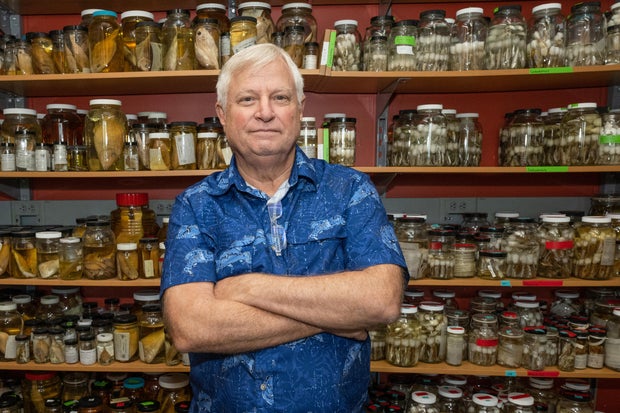
On Sunday night, prominent American marine biologist Kent Carpenter, 73, was shot dead by three masked men who invaded his home in Sibulan, a coastal town in Negros Oriental province, Philippines. Police report that Carpenter was with his Filipina companion when a gunman shot him in the head, causing immediate death. The attackers fled with a laptop, cash, and a backpack.
Regional police spokesperson Lt. Col. Joem Malong stated that Carpenter’s companion suffered injuries and is receiving medical treatment. Authorities are investigating motives and working to identify those responsible.
Professor Carpenter significantly contributed to marine biology as a lecturer at Silliman University in Dumaguete City and a professor at Old Dominion University in Norfolk, Virginia, since 1996. His work influenced conservation efforts worldwide, particularly in the Coral Triangle between the Indian and Pacific oceans.
“His scholarship and passion impacted and inspired many individuals locally, nationally, and internationally.” – Old Dominion President Brian Hemphill
Carpenter focused on biodiversity in the Philippines’ Verde Island Passage, advocating for its World Heritage Site designation. He was on an extended research trip in the Philippines and planned retirement in September. Emphasizing the urgency, regional police director Brig. Gen. Romano Cardiño assured that justice would be pursued.
Several Philippine biodiversity centers expressed sorrow for his loss. Silliman University paid tribute to Carpenter’s pioneering contributions, stating his legacy inspires future scientific advancements and marine conservation.
“Dr. Carpenter made ground-breaking contributions that transformed global understanding of Philippine marine biodiversity.” – Silliman University
Carpenter’s dedication to marine conservation biology assessed extinction risks from global warming, predicting a dire future for coral reefs and marine environments. His initial involvement with the Philippines began with his Peace Corps service in the 1970s.