
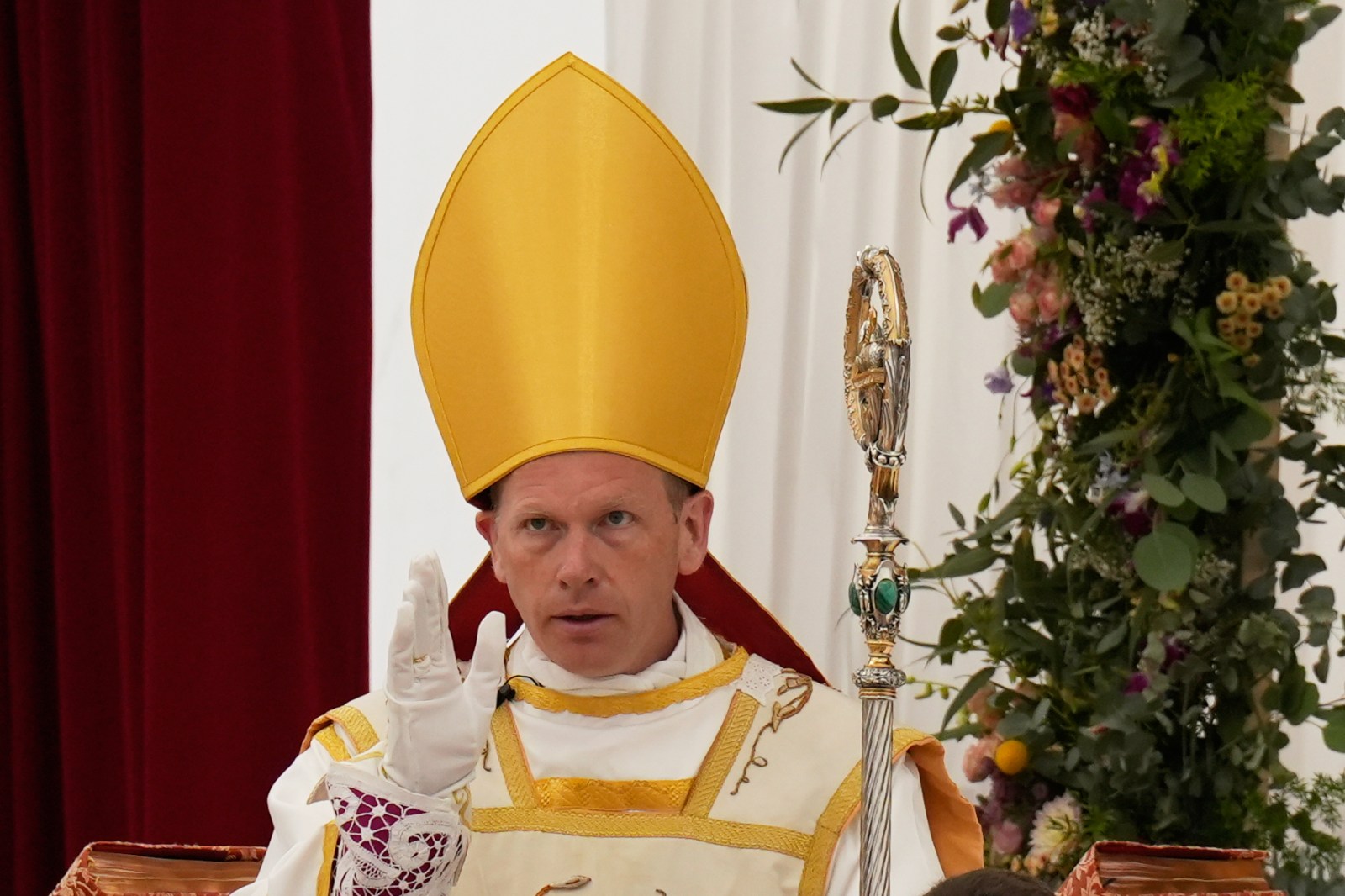
A priest from the Society of St. Pius X (SSPX), known for its traditionalist views, expressed optimism about a possible future reconciliation with the Roman Catholic Church. This came after the Vatican declared the group excommunicated. During a Mass in Wil, Switzerland, the Reverend Georg Kopf stated that a future pope might mend the division, as seen during Pope Benedict XVI’s tenure. Kopf highlighted a past reconciliation as a precedent for his hope.
The Vatican announced the SSPX’s excommunication following the unauthorized consecration of four bishops without the approval of Pope Leo XIV on July 1. Church officials argued that canon law automatically imposed excommunication, deeming it a severe breach of papal authority.
This division underscores persistent tensions between Rome and traditionalist Catholics opposing reforms from the Second Vatican Council in the 1960s. The SSPX, active in Europe, North America, and beyond, presents a significant challenge for the global church. In the U.S., it affects approximately 30,000 SSPX members and 124 priests across 115 chapels, according to 2024 data.
Background on SSPX
The Society of St. Pius X originated in 1970, founded by French Archbishop Marcel Lefebvre. He argued that post-Vatican II reforms strayed from authentic Catholic teachings. Based in Switzerland, the group staunchly defends pre-reform practices, such as the traditional Latin Mass, and opposes modern initiatives like dialogue with non-Catholic faiths. Despite criticisms of changes, SSPX has maintained its loyalty to the papacy.
The current situation parallels a significant split from 1988. Lefebvre’s unauthorized consecrations back then led to excommunications. These sanctions were lifted in 2009 by Pope Benedict XVI, an event Kopf referenced in his sermon.
Reasons for Excommunication
The recent issue arose during a ceremony at SSPX’s seminary in Écône, Switzerland. Under canon law, only the pope can authorize bishops’ consecrations to ensure church unity and apostolic succession. Bishop Alfonso de Galarreta conducted the consecrations, with Bishop Bernard Fellay as co-consecrator. Both had previously been excommunicated in 1988 until Benedict XVI lifted those sanctions.
Michael Goldade from the U.S. was the first to take an oath of obedience to the church and pope during the ceremony. He was followed by Pascal Schreiber of Switzerland and Frenchmen Michel Poinsinet de Sivry and Marc Hanappier. The Vatican deemed that SSPX’s actions constituted formal schism. The excommunication applies to the bishops, priests, and members formally aligned with the group.
The SSPX contended they did not intend to break from Rome. Kopf explained the ordinations were for the long-term care of traditionalist Catholics, not to form a rival church.
Vatican’s Stance
The Vatican has made no concessions, stressing their prior communication attempts with SSPX were ignored. Cardinal Pietro Parolin, the Vatican secretary of state, expressed sorrow over the situation, emphasizing the act’s impact on church unity. Unauthorized consecrations bear significant sanctions, cited as inherently schismatic.
With sanctions in place, this marks a significant challenge for Pope Leo’s papacy. Whether the division resolves or persists, akin to the 1988 scenario, remains a crucial question for the Catholic Church’s path forward.