
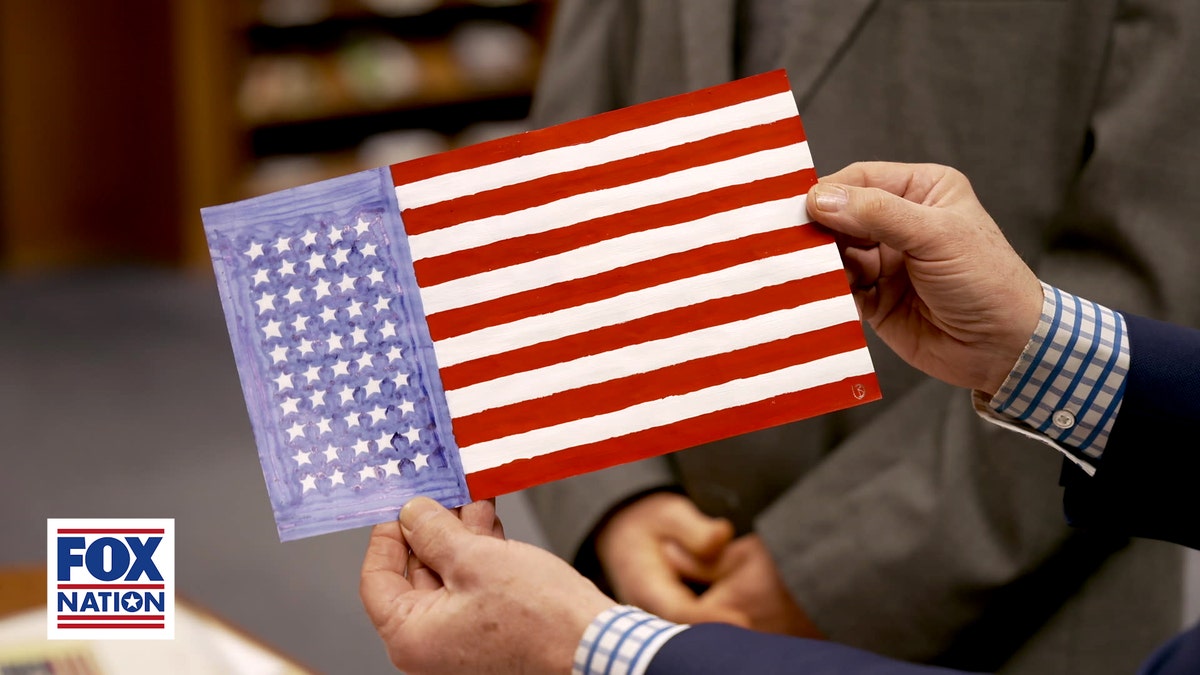
The American flag, a familiar symbol to many, could have been designed very differently in 1958. As discussions about adding two new states to the union took place, various designs for a new 50-star flag emerged. This surge of creativity occurred under President Dwight D. Eisenhower’s administration.
Dr. Jim Ginther, supervisory archivist at the Dwight D. Eisenhower Presidential Library and Museum in Abilene, Kansas, explains the public’s involvement. “People began sending in ideas for how the new flag should look,” he said, noting the widespread interest from across the United States and other countries. These submissions were preserved by the library.
“Suddenly there’s a massive public interest again in the design of the flag.” – Dr. Jim Ginther
When Alaska joined the union in January 1959, an additional star was added to the flag. The United States incorporated Hawaii as a state shortly after, bringing the current flag’s 50th star. The first display of this new flag at Fort McHenry in Baltimore took place on July 4, 1960. Fort McHenry is historically significant, having inspired Francis Scott Key to write “The Star-Spangled Banner” during the War of 1812.
Before President Eisenhower finalized the new Stars and Stripes design, there was a nationwide interest in flag redesign. Over 1,900 different concepts were submitted to the White House. Many designs came from school children, coordinated with their lessons in the classroom publication “My Weekly Reader.” Adults domestically and internationally also contributed designs.
The submissions varied greatly. Some were simple pencil drawings, while others were more elaborate, including draftsman quality illustrations and sewn cloth flags. Dr. Ginther noted the diversity, stating, “Some of them are as fancy as draftsman’s drawing. Some of them are crayon drawings.”
The Eisenhower administration used this opportunity to inform the public about the flag’s history. Every contributor received a letter, along with educational materials discussing flag history and etiquette.
The Continental Congress established the original flag on June 14, 1777, now known as Flag Day. The initial design credited to Betsy Ross featured 13 stars for the original colonies. While the flag’s alternating red and white stripes and the blue field for stars were specified, the star arrangement wasn’t.
Despite the creative input, the final design was practical. Dr. Ginther stressed, “The flag is symbolic… Radical change is going to be difficult.” Both sentimental and economic considerations played a role in maintaining the continuity of the flag.
“Radical change in it is going to be difficult. People are used to that symbol.” – Dr. Jim Ginther
Ultimately, President Eisenhower chose a design close to tradition. The two new stars were added in alternating rows of six and five stars on the blue field, now a familiar sight.
The Eisenhower Presidential Library’s website provides more details about the flag’s history during Eisenhower’s presidency. To learn more, you can visit the Eisenhower Library website.