
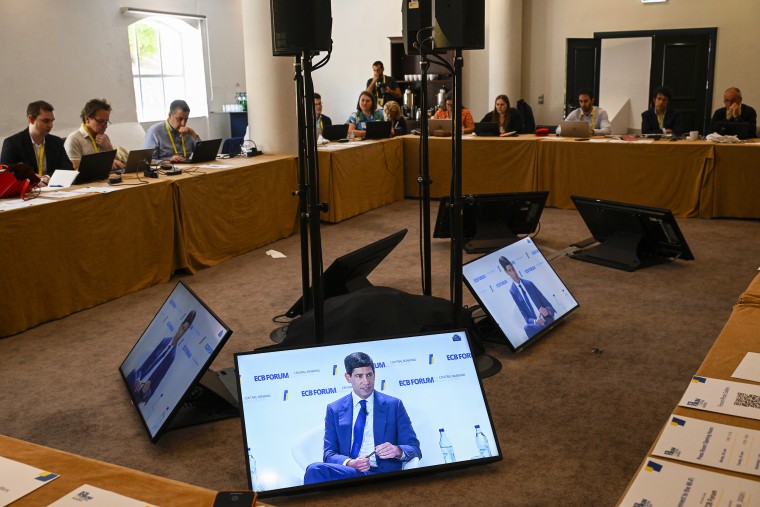
Federal Reserve Chairman Kevin Warsh discussed recent trends in inflation, mentioning a decrease in inflation risks but emphasizing that further efforts are necessary to control rising prices. He noted that energy prices have significantly decreased since the U.S. and Iran signed a memorandum of understanding to end the war last month. Although energy prices remain above pre-conflict levels, the decline is notable.
Inflation remains a primary concern for Americans, contributing to widespread dissatisfaction with the economy based on polls and consumer surveys. In May, the Consumer Price Index showed a 4.2% increase, marking the highest inflation rate since 2023. The Fed’s chosen measure for inflation also reflected high price growth, fueled by rising energy costs.
Warsh also spoke on artificial intelligence’s (AI) impact on the economy during a panel at the European Central Bank Forum on Central Banking in Sintra, Portugal. He acknowledged that the AI sector is causing a boom in capital expenditures and expressed optimism regarding AI’s long-term economic prospects. He noted increased demand and anticipated eventual growth in supply.
Despite these discussions, Warsh avoided offering predictions about potential interest rate changes, emphasizing the Fed’s commitment to maintaining its independence despite external pressures, including those from President Donald Trump. Trump has repeatedly urged the Fed to lower its key rate, criticizing Warsh’s predecessor, Jerome Powell, who was also appointed by Trump.
Warsh participated alongside European Central Bank President Christine Lagarde and other central bank leaders at the forum. Lagarde agreed that inflation risks and growth prospects have become more balanced recently due to shifts in energy prices. While the European Central Bank has raised rates since the onset of the conflict with Iran, the Federal Reserve has maintained current rates during its recent meetings.
Warsh highlighted the AI industry’s economic influence as major tech firms like Microsoft, Meta, Alphabet, and Amazon expand data centers worldwide to support new AI technologies. This has resulted in soaring prices for computer equipment and memory. Companies in the consumer electronics sector, including PlayStation and Xbox, have responded with price hikes. Notably, Apple increased prices for various products, excluding iPhones, Apple Watches, and AirPods, though analysts anticipate future adjustments.
Warsh stated that the AI boom is central to shaping economic policy, predicting that the U.S. will benefit significantly in the medium term. While some fear AI may lead to job losses, a study by Ramp indicates that companies investing in AI are expanding their workforce.
Following the Fed’s latest interest rate meeting, Warsh emphasized that labor markets remain stable and the economy’s demand side is robust. He reiterated the Fed’s commitment to ensuring price stability. During his first meeting as chairman, the Fed left rates unchanged. However, other policymakers suggested potential rate increases later in the year, a prospect Warsh played down in subsequent remarks. The Fed’s rate-setting committee plans its next meeting for July 28 and 29.