
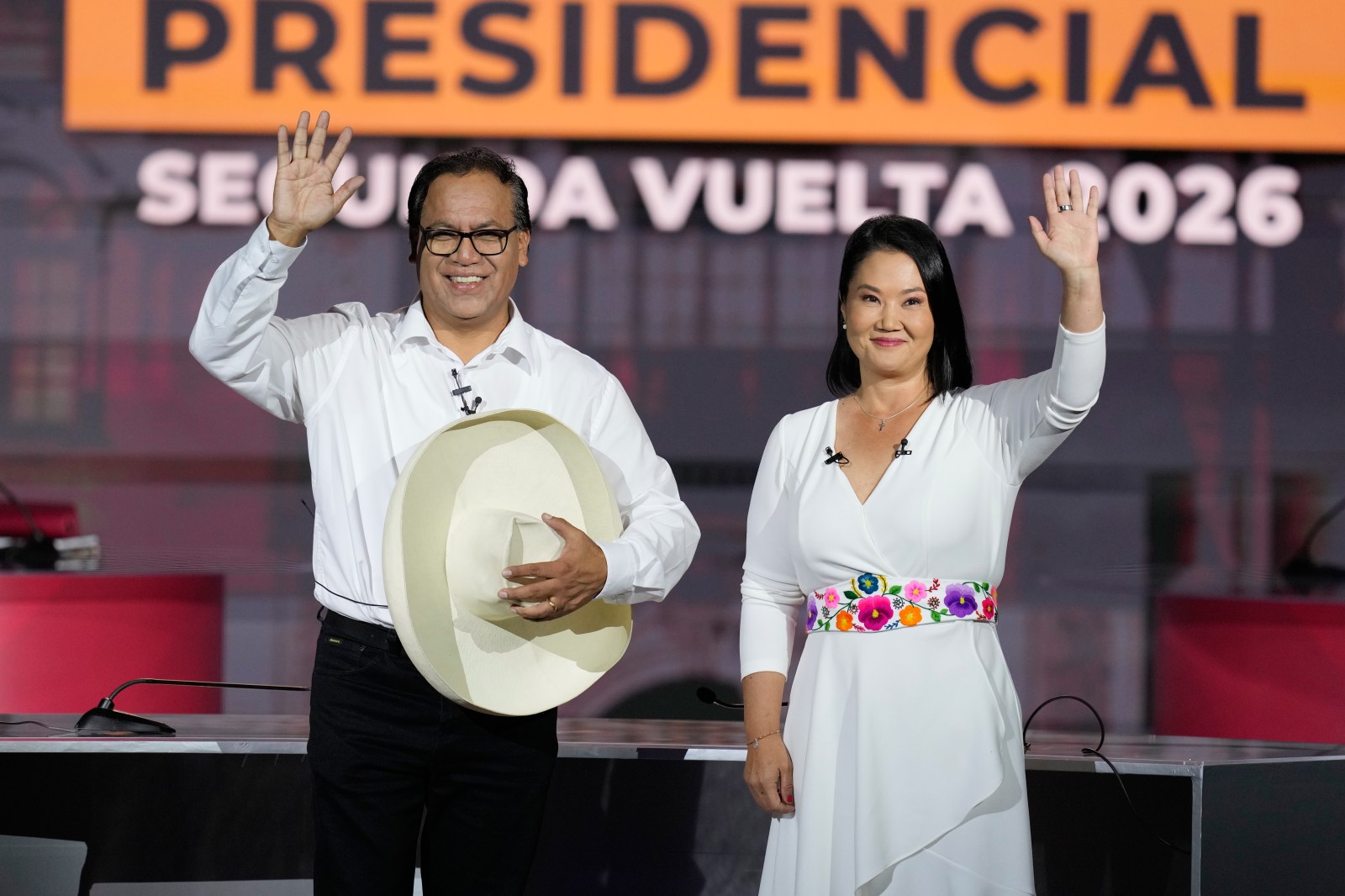
Peru’s presidential election remains tightly contested between right-wing Keiko Fujimori and left-wing Roberto Sánchez. With 97% of votes counted, the race is so close that overseas ballots, particularly from Florida, could be decisive. By Wednesday morning, Sánchez led narrowly with 50.05% of the vote, whereas Fujimori captured 49.94%. However, Sánchez’s lead could shift once all diaspora votes are counted, as many overseas voters support Fujimori.
According to political analyst Jeffrey Radzinsky, it’s possible for Sánchez to obtain more votes domestically but lose overall due to overseas ballots boosting Fujimori. At present, Peru’s National Office of Electoral Process reports 62.5% of votes from Peruvians abroad backing Fujimori, compared to 37.5% for Sánchez.
In the recent election, more than 1.2 million overseas Peruvians were eligible to vote. In the United States, which hosts the largest voting population of Peruvians outside Peru, Fujimori is favored with 76.56% of the vote against Sánchez’s 23.43%. Florida, in particular, shows strong support for Fujimori. In Miami, she secured 88.79% of the vote, while in Orlando, she received 86.60%.
Reasons for Diaspora Support
Many Peruvians fled to countries like the United States, Argentina, Chile, Spain, and Italy during the 1980s and 1990s due to political violence and economic crises. During Alberto Fujimori’s presidency (1990-2000), Peru experienced a shift toward free markets and social conservatism, contrasting with his controversial tenure marked by human rights violations.
Sánchez faces challenges as well. His alliance with former President Castillo, ousted in 2022 for attempting to impose a state of emergency, affects his reputation. In the 2021 election, despite strong diaspora support, Fujimori failed to win. Socialist Pedro Castillo emerged victorious with crucial backing from rural regions.
Implications of Overseas Votes
Overseas votes, although a small portion of the electorate, could influence a close race like this one. These votes are slow to count, but in such a tight contest, they might provide Fujimori a slight advantage.
In Miami, 99.09% of the vote is counted, and in Orlando, 80.95%. Only 67.47% of overseas votes have been tallied, adding to the potential for a margin shift. Comparatively, Sánchez maintains a slim lead within Peru, where 98.21% of the votes are counted.
Sánchez has expressed readiness to accept election results. Fujimori urges patience until all votes are tallied. Official results could be announced by mid-July, allowing time for disputed ballots and recounts. The inauguration is set for July 28.
Dr. Christopher Sabatini from Chatham House suggests political fragility for Peru regardless of the election outcome, citing challenges like congressional opposition and potential political retribution.