
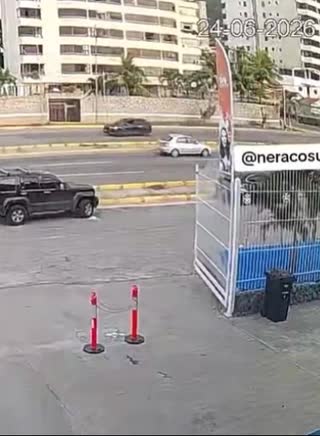
On June 24, the coastal region of Caraballeda, Venezuela, was struck by a devastating earthquake. Residents of Caracas and coastal cities like La Guaira and Catia La Mar experienced severe impacts due to several unfortunate circumstances. Key factors contributing to the disaster included the occurrence of a ‘doublet,’ the quake’s direction, ground shift, directivity effects, shallow depth, and the nature of the soil.
The Doublet Phenomenon
Unlike typical earthquakes, a ‘doublet’ occurred—two quakes in rapid succession, separated by just 39 seconds. The first measured 7.2 in magnitude, triggering the more powerful second quake at 7.5. Such prolonged chaotic shaking increased the stress on buildings far beyond normal earthquake endurance levels. David Oglesby of the University of California noted that the initial quake likely triggered the second one. The Venezuelan government reported over 2,200 fatalities, with more than 400 buildings destroyed and others damaged.
Eastward Rupture
Seismic energy from the initial quake radiated outward, reaching the San Sebastián fault, which was primed for movement. This activated the second quake, rupturing more than 100 miles east toward Caracas. William Barnhart from the United States Geological Survey explained that if the fault had ruptured westward instead of eastward, the disaster might have been less severe. The Boconó fault served as the starting point, with satellite imagery revealing the second quake’s eastward journey along the San Sebastián fault.
Significant Ground Shift
Pre- and post-quake satellite imagery showed ground displacement. In areas like La Guaira, the ground moved up to 1.5 feet to the west, indicating a horizontal shift along the strike-slip fault. The Simón Bolívar International Airport experienced noticeable displacement between its northern and southern halves, although the fault did not break the surface there.
Directivity Amplification
Dr. Oglesby outlined how directivity effects potentially reinforced the seismic waves moving east toward Caracas. This increased amplitude could elevate the shaking intensity, suggesting the difference between a damaged yet standing building and one that collapses entirely.
Shallow Depth Impact
Vitor Silva from the Global Earthquake Model Foundation emphasized the shallow depth of around six miles below ground. Such proximity caused stronger surface shaking, akin to a near-surface explosion. Additionally, sedimentary ground commonly found in populated regions like Caraballeda contributed to amplifying seismic waves.
Soft Soil Concerns
Seismic waves are amplified by softer, sedimentary surfaces, which tend to be flat and easier for construction. In Venezuela, buildings constructed on these surfaces experienced severe shaking. Resonance between amplified waves and buildings’ natural swaying frequencies resulted in high levels of structural damage.
Satellite data indicated destruction of at least 152 buildings in Caraballeda, with dozens more damaged along the low-lying coastline. High-rise collapses near Playa Grande followed similar patterns, with nearly 246 buildings destroyed.
Building Code and Construction Issues
Venezuelan seismic codes are considered among the best in Latin America, but their enforcement is questionable. The destruction suggests possible noncompliance or structural flaws. Experts plan thorough investigations once emergency responses are complete. Some buildings collapsed due to inadequate column reinforcement or were outdated.
In certain cases, structures technically remained standing, allowing residents to evacuate, aligning with codes focused on lives over structural preservation.