
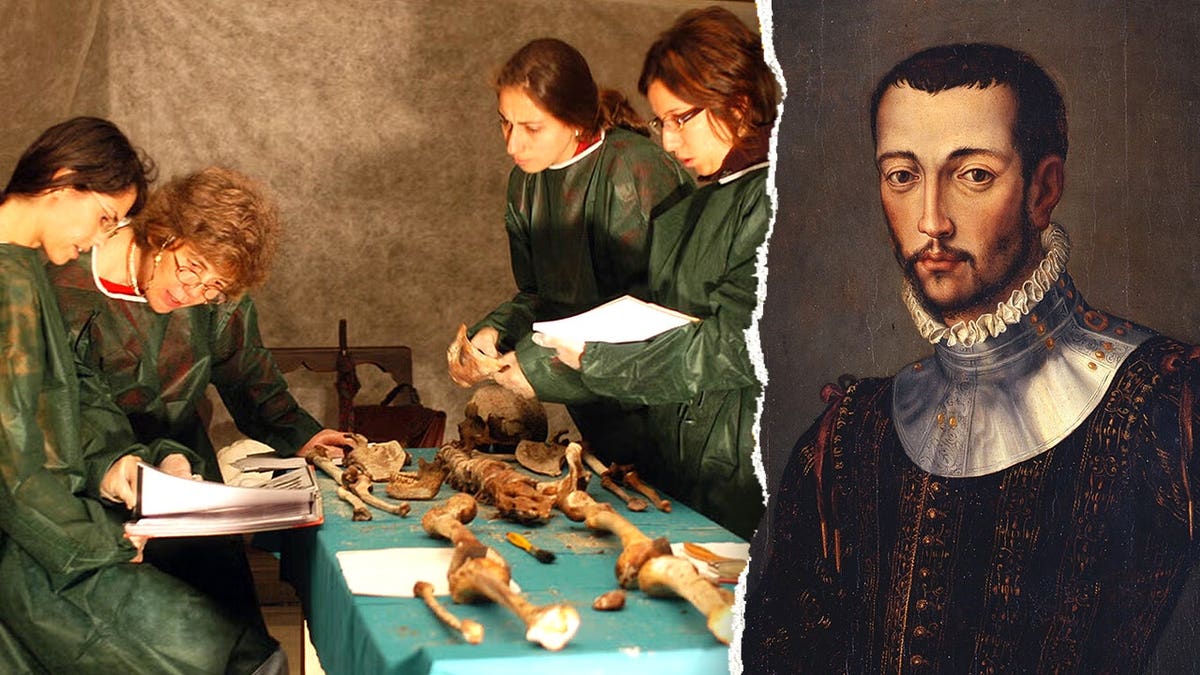
Researchers at Yale University have likely resolved a centuries-old mystery regarding the death of a prominent member of an illustrious Italian family. A study published in the journal iScience involved analyzing ancient DNA from Grand Duke Francesco I de’ Medici, a Renaissance ruler of Tuscany who died suddenly in 1587.
Francesco and his wife, Bianca Cappello, died within a day of each other after suffering from intermittent fevers following a stay at a mosquito-ridden villa. This prompted rumors that they were poisoned.
The study was conducted in collaboration with paleopathologists from the University of Pisa in Italy.
Researchers analyzed DNA extracted from the ribs of Francesco and his younger brother, Giovanni de’ Medici, who died of malaria 25 years prior. Led by Serena Tucci, an assistant professor of anthropology at Yale, the study found genetic traces of Plasmodium falciparum, the parasite causing the deadliest type of malaria, in Francesco’s remains. This finding challenges the longstanding theory that he was poisoned.
The team discovered molecular traces of both P. falciparum and P. malariae in Francesco’s remains. Malaria was common in central Italy during the Renaissance, but definite scientific evidence had been missing.
The rumors of poisoning were fueled by suspicions that Francesco’s brother, Cardinal Ferdinando de’ Medici, was involved.
This marks the first genetic analysis of the brothers’ skeletal remains, affirming earlier evidence of malaria. Historical records describe symptoms consistent with malaria, known as “febbre terzana” in Central Italy then.
The study provides scientific proof to dispel the speculation of poisoning. The records also mention treatments like bloodletting, which likely worsened patients’ conditions. Despite consistent descriptions of malaria-related symptoms, rumors of poisoning persisted.
Although the researchers cannot entirely discount the possibility of poisoning, they consider malaria the most likely cause of Francesco’s death. From a scientific viewpoint, poisoning seems speculative and unsupported.
The research could also aid in solving other historical mysteries, as noted by Gisella Caccone, a senior research scientist in Yale’s Department of Ecology & Evolutionary Biology. The historical data, combined with new DNA evidence, strengthens the case for a disease-caused death rather than poisoning.
The findings challenge the longstanding belief that Cardinal Ferdinando orchestrated the poisoning. The discovery of the malaria pathogen reinforces the theory of disease over foul play.
DNA analysis not only helps solve historical mysteries but also provides insights into how malaria parasites have evolved. Understanding these changes can improve methods and models for controlling such diseases.