
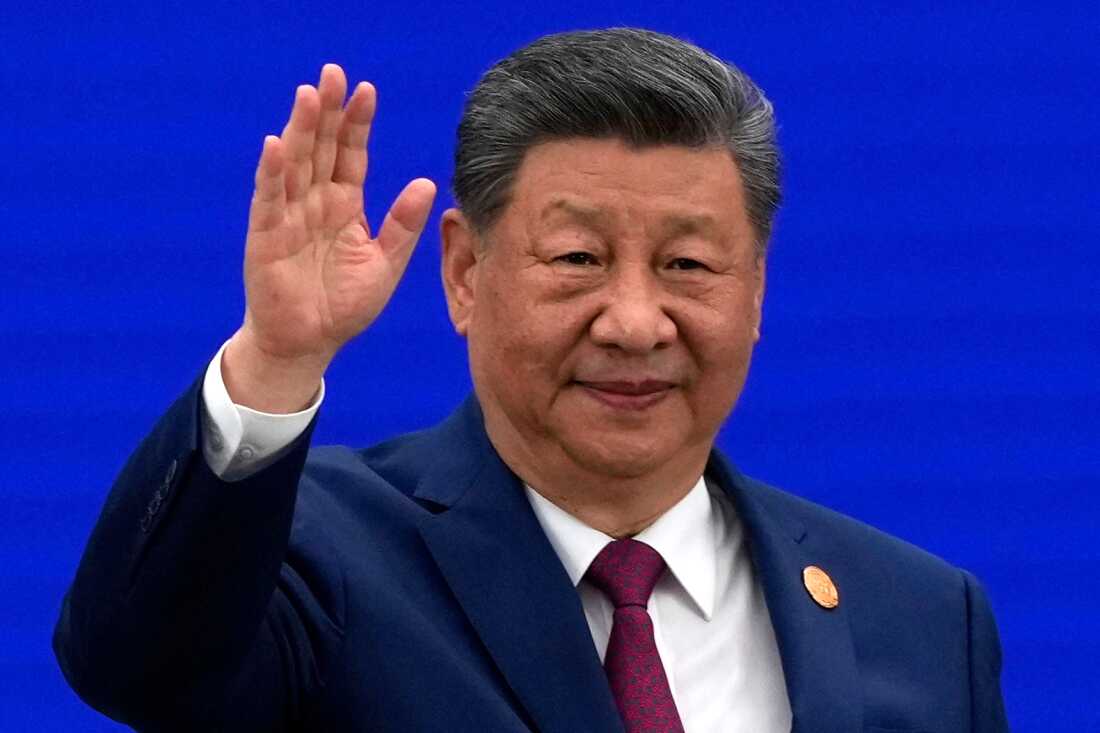
Chinese President Xi Jinping emphasized the need for global collaboration in the development and governance of artificial intelligence during the World AI Conference in Shanghai on July 17, 2026. He criticized the excessive focus on national security that has been limiting cooperation.
Xi stated that no single nation should dominate AI development, pointing to American restrictions blocking China’s access to advanced technologies. These measures have propelled China to enhance its tech capabilities, heightening competition between the two leading global economies.
“The development of artificial intelligence should not be a solo performance by any single country but rather a symphony of global cooperation,” Xi remarked.
Leaders from Kazakhstan, Cambodia, Thailand, and U.N. Secretary-General António Guterres were among those present at the conference.
Xi advocated against prioritizing one’s own security over others in AI development. He announced that over the next five years, China will offer 5,000 AI training opportunities to developing nations. He also pledged to expand AI partnerships with regional organizations such as the Association of Southeast Asian Nations and the African Union.
Xi committed to provide access to a Chinese-developed AI meteorological system for 30 countries, enhancing early warning capabilities.
The previous day, 29 countries, including Pakistan, Russia, and Kazakhstan, joined China in forming a World Artificial Intelligence Cooperation Organization. Described by Chinese state media as an intergovernmental body headquartered in Shanghai, the organization aims to promote global AI governance.
This year’s AI conference involves over 1,100 companies and 1,400 attendees. Huawei will demonstrate its advanced AI computing system, the Atlas 950 SuperPod.
Analysts now view China as an innovator in AI, no longer in a catch-up phase with the U.S. China’s focus on scientific and technological advancement, particularly in AI, forms a core part of its five-year plan through 2030.
China’s open-source AI models, like DeepSeek, are gaining traction globally, especially in developing regions. They are often seen as more accessible compared to the predominantly closed-source U.S. models.