
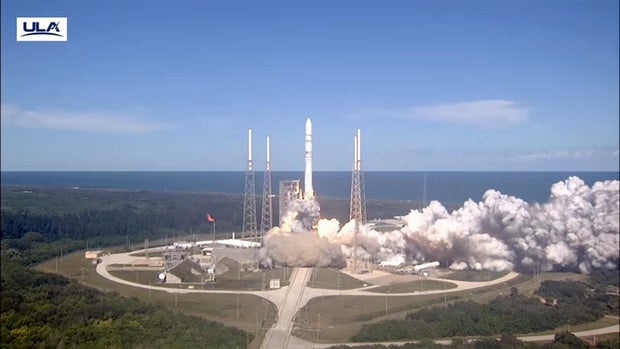
On Sunday, a critical failure struck United Launch Alliance (ULA) as their Vulcan rocket, carrying 40 Amazon Leo internet satellites, experienced a malfunction during ascent. The incident dealt a significant blow to both ULA’s and Amazon’s launch schedules.
According to ULA’s statement, the Vulcan vehicle, launched from Space Launch Complex 41 at Cape Canaveral Space Force Station, encountered an anomaly 10 minutes into the flight. As a result, the mission didn’t reach orbit. ULA emphasized their commitment to identifying the cause and implementing necessary corrections to resume launch operations promptly.
This was the first complete failure for a ULA rocket since its inception in 2006, when Boeing and Lockheed Martin established the alliance. The new Vulcan rocket, intended to replace the Atlas 5 fleet, now faces grounding while engineers investigate telemetry data and identify the underlying issue.
Sunday’s incident marked only the fifth Vulcan flight and followed a nine-month break while ULA and Northrop Grumman resolved strap-on booster nozzle issues from previous missions. Despite Sunday’s failure, the solid-fuel boosters appeared to perform as expected, aiding the rocket’s climb initially.
Additional challenges arose after the rocket’s methane-burning BE-4 engines, which powered the first stage, seemed to operate longer than ULA’s pre-launch expectations. After stage separation, the Centaur upper stage engines, fueled by hydrogen, were supposed to burn for 12 minutes and 15 seconds. However, ULA confirmed an issue during this phase without providing specifics.
Amazon had planned 38 Vulcan flights to deploy their Leo satellites, aimed at competing with services like Elon Musk’s Starlink. Such flights are crucial for establishing a considerable network of over 3,300 satellites. Sunday’s planned mission would have increased the total launched to 436.
The delay isn’t limited to Vulcan challenges; Amazon also awaits the relaunch of the New Glenn rocket by Jeff Bezos’ Blue Origin, which faced a setback due to an oxygen valve failure in one of its BE-4 engines. Despite retrofitting the engines used in Sunday’s mission, the attempt failed.
ULA assured transparency and readiness to collaborate with partners during the investigation. NASA Administrator Jared Isaacman expressed support, affirming NASA’s availability for assistance if required.
The Vulcan launched at 12:40 p.m. ET, displaying its power propelled by six solid-fuel boosters and two BE-4 engines. Delays occurred earlier due to non-associated technical issues and a malfunction in systems providing gaseous nitrogen, affecting multiple launches.
Before Sunday’s failure, ULA endeavored to resolve previous issues with the strap-on booster nozzles. CEO Mark Peller detailed measures undertaken to address and mitigate the problem. Blue Origin also applied a “design improvement” to fix BE-4 engine valve issues and worked with ULA to retrofit these engines.