
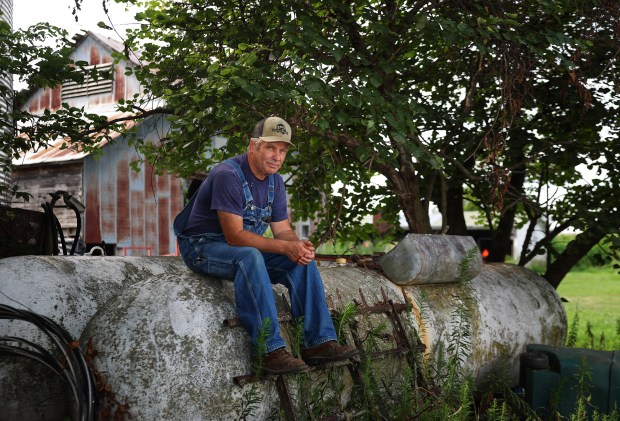
Reagan Hoskin, a rule follower by nature, started working with her father after finishing high school in 2018. She was tasked with monitoring and inspecting crops on the family farm in Pike County, Illinois. Her duties involved scanning soybean fields and identifying any irregularities. One day, she spotted an unusual patch of yellow plants near the farm’s edge.
Reagan had learned about soybean diseases and suspected sudden death syndrome. However, she noticed an unusual pattern on the leaves. Despite her findings, it took eight years and ongoing research for experts to fully understand the fungus she discovered. This was the first confirmed case of red crown rot in the Midwest.
The disease, capable of reducing soybean yields by up to 60% in severe cases, gained interest as it spread across Illinois and other Midwest states. By 2024, it affected numerous farms. Illinois, Missouri, and Indiana report multiple cases as illustrated by the Crop Protection Network map. Even northern states including Minnesota and Wisconsin are now affected.
Ron Hoskin, Reagan’s father, witnessed the disease spread on their farm over the years. He sought expertise from Matt Montgomery, an agronomist, for assistance. Montgomery visited various infected farms, noting the unprecedented impact red crown rot had on affected soybean plants.
In 2026, Ron Hoskin remains hopeful about a new seed treatment. However, he is prepared to switch to corn if necessary. Historically a problem in the South since the 1970s, red crown rot’s origin in the Midwest remains unclear, as genetic research suggests importation from the South is unlikely.
Reagan Hoskin, continuing in her father’s professional footsteps, works in his law firm while maintaining an interest in the family farm. Despite challenges, both Ron and Reagan Hoskin remain committed to adapting and overcoming the hurdles posed by red crown rot.
While Illinois was initially thought to be the primary source, by 2025, red crown rot expanded significantly. Damon Smith from the University of Wisconsin-Madison noted that changing climate conditions could be contributing to the disease’s rise.
Red crown rot symptoms appear around August, but heavy rains caused earlier manifestation this year. The fungus infects the soybean plants’ roots, often leading to plant death. Surviving plants produce fewer soybeans.
Smith identified the first case in Wisconsin by 2025. The disease’s spread prompted him and others to document and study it rigorously. Despite challenges, Montgomery remains optimistic about finding effective treatments and prevention methods.
Strategies for managing red crown rot include seed treatments and seeking disease-resistant soybean varieties. Understanding the fungus’s transmission methods, such as potential wind carriage, is also crucial.
For farmers like Ron Hoskin, adapting to red crown rot involves weighing options such as full-time corn farming, which would require strategies like strip tilling. The latter involves disturbing only part of the soil but is expensive and challenging due to conservation requirements.
In recent trials, the Victrato seed treatment showed promise in delaying symptoms. Researchers aim to refine such strategies and use technology like satellite imagery to monitor affected fields accurately.
Farmers like Calvin Koeller have noticed the economic toll of red crown rot, prompting considerations of treatments like Victrato for future crops. While cautious not to panic, Montgomery advises proper identification and management if red crown rot appears on a farm.
Despite the challenges, Ron Hoskin remains hopeful that with careful management, his farm may still grow soybeans next season. His current outlook is cautiously optimistic, with plans under constant evaluation.