
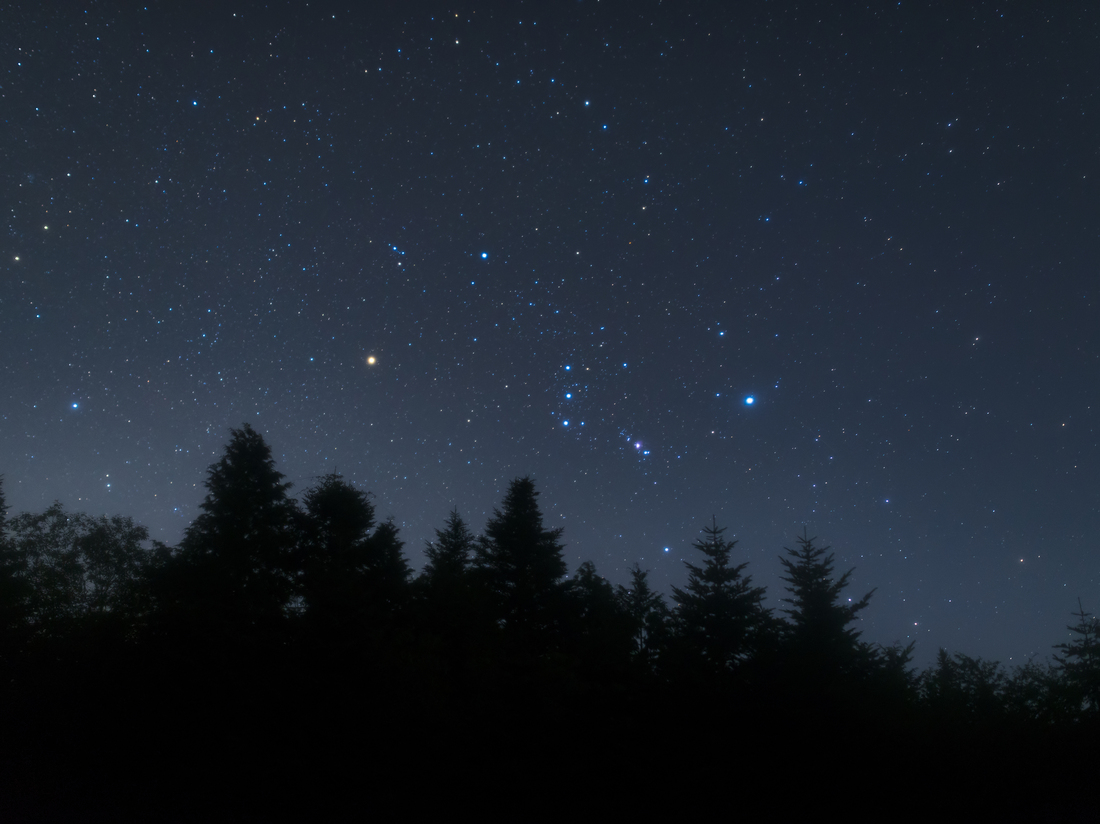
As the sun sets on winter nights in the northern hemisphere, you can observe the Orion constellation near the eastern horizon. Orion, a legendary hunter in Greek mythology, is known for tales of boastfulness and punishment. One story tells of his eternal chase with hunting dogs after Taurus the bull and the Pleiades sisters. Another recounts how the goddess Artemis was deceived into killing him, placing his image among the stars.
To recognize Orion, look for the three stars forming his belt. Astrophysicist Sarafina El-Badry Nance has a particular interest in Betelgeuse, a red supergiant in Orion’s shoulder. This star is nearing the end of its life, poised to explode as a supernova. But what phases did Betelgeuse, or any star, experience before reaching this point?
A Star is Born
Stars are born in vast clouds of dust spread throughout galaxies. El-Badry Nance explains that these are gas and dust regions pulled together by gravity. As density increases, they collapse under their own weight, forming a protostar, a star in its earliest stage.
Protostars gradually fuse hydrogen into helium. This fusion releases energy and light, preventing collapse. Our sun is a typical middle-aged star, burning hydrogen steadily. It is estimated to continue this process for another five billion years.
A Star Dies
As a star exhausts its hydrogen fuel, its core collapses, entering its final life stage. The exterior expands and cools, creating a swollen star. Betelgeuse exemplifies a star nearing its dramatic end. El-Badry Nance notes its eventual supernova event, visible from Earth, though the timing is uncertain.
The life and death of stars teach valuable lessons. Change is constant, despite appearing static due to immense timescales. Periods of chaos and turbulence can lead to beautiful transformations.
Have questions about the night sky? Reach out via email at [email protected]. You can also listen to Short Wave on Spotify, Apple Podcasts, and Google Podcasts. This episode was produced by Rachel Carlson, edited by Rebecca Ramirez, with fact-checking by Brit Hanson. Ko Takasugi-Czernowin was the audio engineer.