
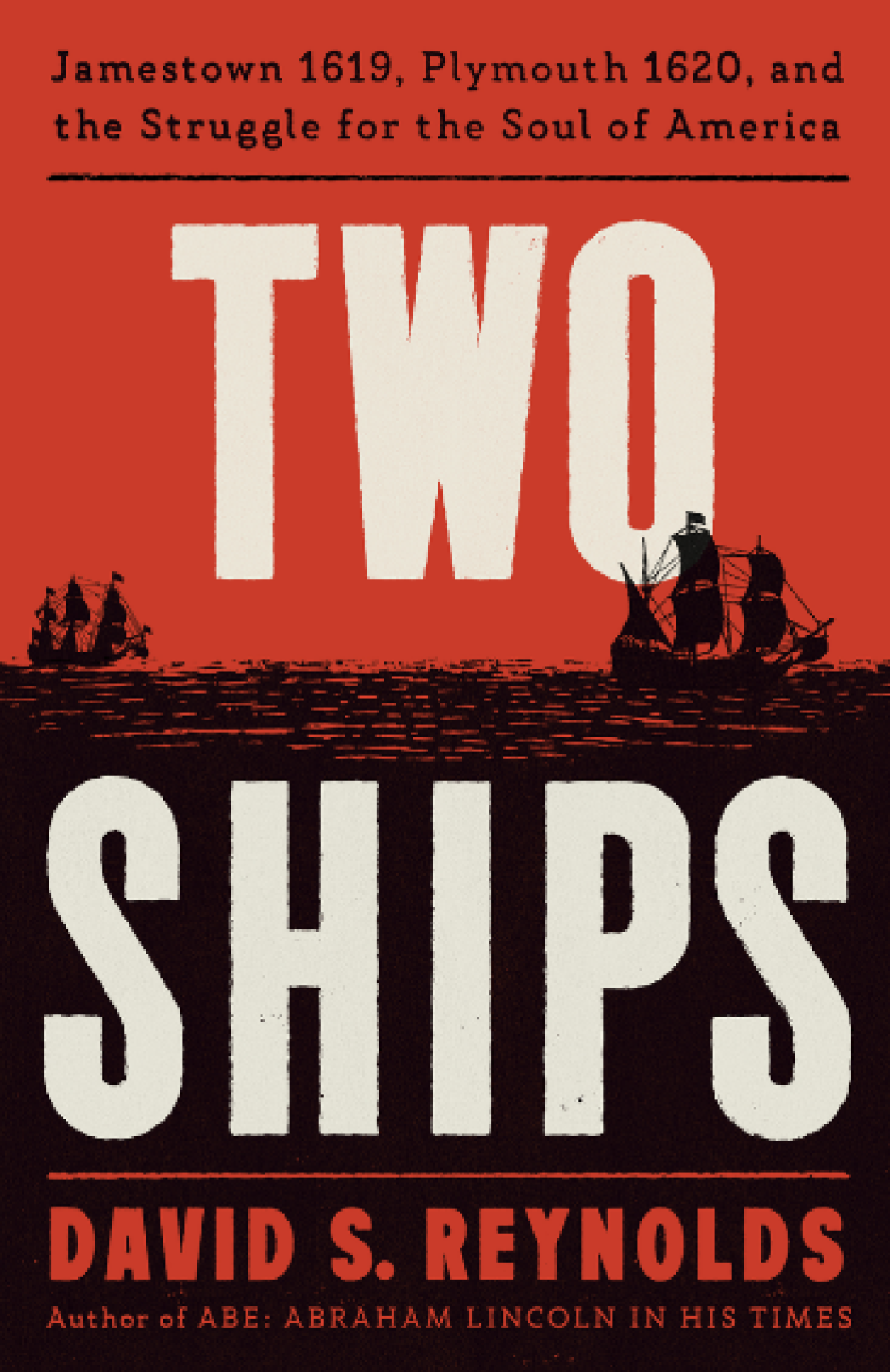
David S. Reynolds’ new book, Two Ships, arrives as the United States approaches its 250th anniversary. This work explores how conflicting interpretations of historical events contribute to contemporary divisions.
Two Ships delves into the intertwined legacies of two significant voyages: the Mayflower in 1620 and the White Lion a year earlier. The Mayflower, known for carrying Puritans to Plymouth, Massachusetts, became a symbol of democracy. The White Lion, arriving with enslaved Africans in Virginia, represented the onset of slavery.
Reynolds argues that the symbolic meaning of these voyages, and not merely the events themselves, shaped competing visions of American identity. Passengers on the Mayflower were separatist Puritans who defied the English monarchy. They symbolized democratic ideals, although these were not uniformly applied at the time.
In contrast, Jamestown settlers were loyal to the English crown. They followed a hierarchical societal structure. The perception of these ships has changed over time based on the political and social context. During the Civil War, these distinctions became more pronounced.
“The White Lion was frequently referenced in abolitionist discourse as the ‘Slave-Ship’,” Reynolds notes, highlighting its perceived role in spreading slavery.
Figures like Frederick Douglass used the metaphor of two ships often, whereas Abraham Lincoln avoided it to maintain national cohesion. Southerners of the time invoked the Mayflower to criticize the North’s Puritanical origins, despite the north evolving religiously and socially.
Reynolds touches on the influence of literature, noting the South’s affinity for Nathaniel Hawthorne’s The Scarlet Letter and Sir Walter Scott’s romances. Mark Twain criticized Scott’s work for its nostalgic portrayal of a mythical feudal society that some in the South romanticized.
By the late 19th century, interpretations of these historical events shifted again. Fears of racial and cultural change led to a consolidation of racial identity among whites, bolstered by Mayflower celebrations.
In the 20th century, the Mayflower’s image was stripped of its political resonance, becoming a commercialized symbol. However, the 1619 Project recently reignited discussions about the White Lion, placing it at the heart of national debates on the legacy of slavery.
Despite critiques of its historiography, Reynolds acknowledges that the 1619 Project’s impact cannot be ignored. In-depth reading of Two Ships offers valuable insights into how history is interpreted and often oversimplified through cultural lenses.
“Understanding how we have perceived our history can help us navigate our present,” Hemingway might have cynically noted.