
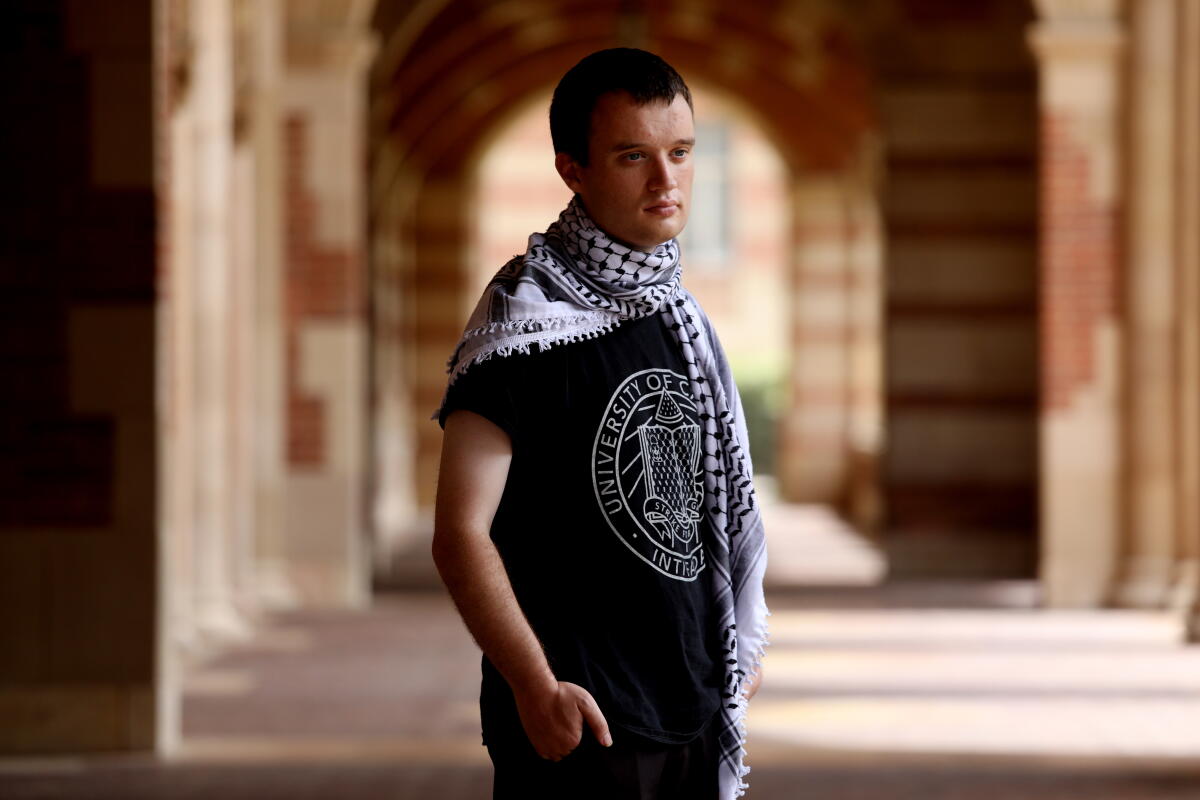
A UCLA computer science doctoral candidate is embroiled in a lawsuit against the University of California. He aims to reverse his suspended status and gain his withheld master’s degree. His suspension spans two quarters and has lasted over 600 days.
The Context Behind the Legal Battle
The lawsuit highlights a significant period in UCLA’s history—the 2024 pro-Palestinian protests. The demonstrations led to violent confrontations at a campus encampment. These events triggered Trump’s administration to scrutinize UCLA’s and other universities’ handling of antisemitism allegations.
The protests split opinions. Some Jewish students and faculty viewed them as antisemitic, while others supported the movement calling for divestment from companies linked to the Israeli military in Gaza.
Student at the Forefront
Dylan Kupsh, a 27-year-old, became a prominent figure at these rallies. Unlike many involved in similar disciplinary cases, he chose public exposure over anonymity.
Kupsh has filed a lawsuit against the UC Board of Regents, UCLA administrators, and a police captain. He also has legal support from the American-Arab Anti-Discrimination Committee. His suit claims viewpoint discrimination and due process violations, with inadequate notification about the charges he faced. A UCLA spokesperson stated that the university would appropriately respond in court.
Development of the Case
Kupsh’s legal troubles stem from ongoing protests following the initial encampment. Some pro-Israel students believed the encampment restricted their campus movements. This complaint led UC to pay $6.45 million in a settlement, preceding a Justice Department lawsuit.
Kupsh faced 14 campus citations from August 2024 to June 2025 related to disrupting campus activities and defying orders during protests. The charges were adjusted twice, most recently in April 2026. Importantly, these allegations are university conduct violations, not criminal acts.
In June 2025, authorities issued an interim suspension, barring Kupsh from campus for nearly a year. Although he was arrested, he faced no criminal charges. Nonetheless, campus police pushed for university action.
Emails revealed in the lawsuit showcased communication urging immediate action against Kupsh. During the administrative proceedings, UCLA’s decision-making process remains unclear in court documents.
Challenges in the Disciplinary Process
The lawsuit claims Kupsh lacked awareness of evidence against him before the suspension was enforced. According to university policy, a student can be restricted from campus upon a conduct case opening, without any ruling on whether rules were violated.
Upon interim suspension implementation, UCLA cited Kupsh for additional incidents from the May 2025 protest. While teaching online, he was allowed limited campus access.
Student conduct decisions typically occur behind closed doors, considered under a “more likely than not” standard—less rigorous than criminal proceedings. Kupsh faced several hearings, leading to dismissal of most charges except two minor infractions.
The Fight for Justice
Kupsh denies organizing protests or blocking campus routes. He asserts political bias influenced disciplinary actions.
The suspension prevents Kupsh from academic duties, resulting in withheld pay exceeding $17,000. UCLA’s policies stopped him from directly resuming his doctorate studies after the suspension ends. The lawsuit requests unspecified damages, punitive measures against the university personnel involved, and attorney’s fees.
Statistics and Campus Response
In previous years, authorities refrained from prosecuting most arrested during similar protests. UC campuses faced internal discipline cases numbering over 400 from spring 2024 alone.
Reports show universities issuing 14,231 sanctions in 2023-24, with suspensions representing 3% of cases. Interim suspensions, imposed without hearings, reached 131 instances.
The protests subsided over time due to strict enforcement of campus rules. UCLA encountered financial and administrative penalties under Trump’s leadership. Some faculty commend UCLA’s refusal to settle on these terms, while others criticize free speech limitations.
Diverse Views on University Policies
Various faculty and community groups accuse UCLA of unequal enforcement of protest rules. The AMCHA Initiative believes campuses remain lenient towards pro-Palestinian activists.
Pro-Palestinian advocates rebuff antisemitism accusations, while Jewish faculty groups call for stricter adherence to regulations.
An open letter signed by numerous faculty members criticizes narratives framing activists as antisemitic. Concerns suggest external influences limit free speech and academic freedoms.
Kupsh views legal action as his last resort, expressing determination to continue pursuing his PhD despite obstacles.