
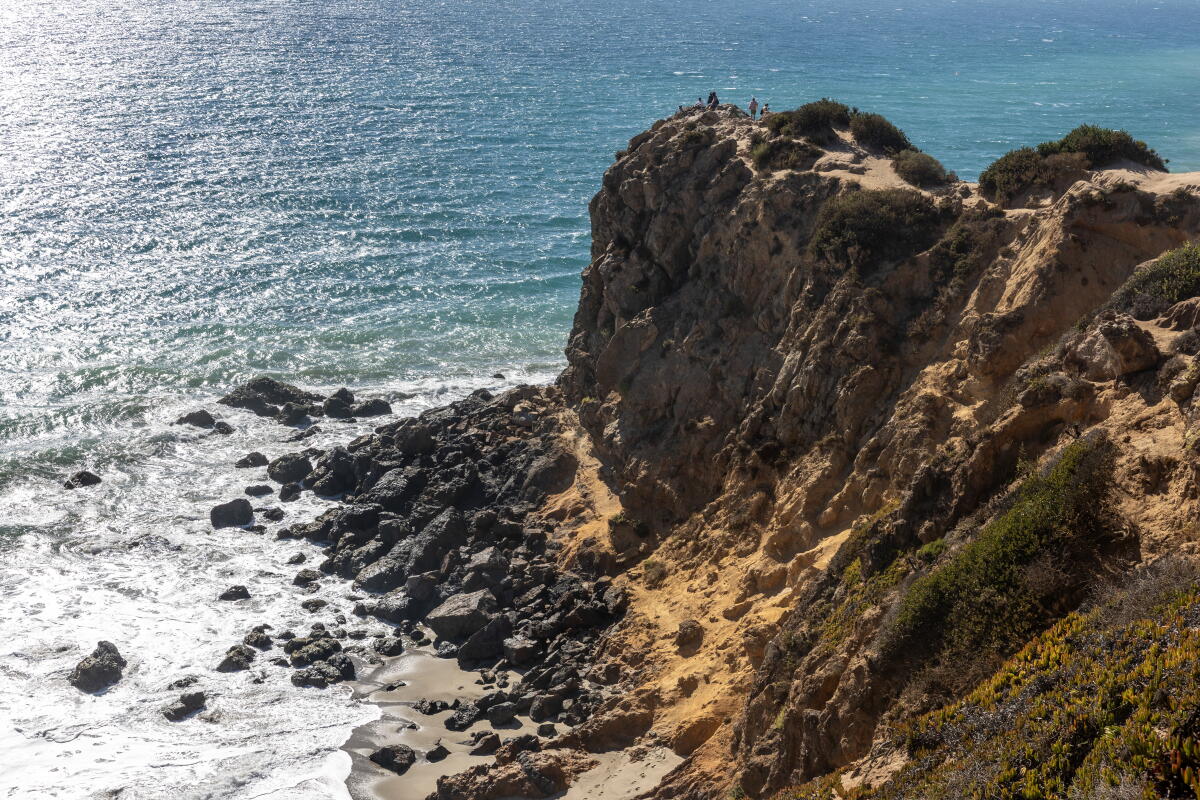
California’s coastline is experiencing severe erosion, and the arrival of El Niño is likely to exacerbate the issue. Warmer ocean waters are causing higher tide lines. Powerful hurricanes in the Pacific are intensifying wave actions that erode shorelines. The upcoming El Niño winter is expected to worsen the situation from Carlsbad to Malibu to Santa Cruz, reshaping popular beaches significantly.
Erosion Threatens Key Infrastructure
At Point Dume Beach in Malibu, erosion is severe enough to threaten a key roadway. Warren Ontiveros from the L.A. County Department of Beaches and Harbors reported that ocean forces have removed up to 60 feet of sand, endangering the road’s stability. Emergency construction efforts are underway to protect this essential access point.
“The ocean has been taking sand from this area for decades, and there’s been a shrinking buffer to protect that roadway,” Ontiveros said.
The road is crucial for emergency services like law enforcement and lifeguards who rely on it due to high tide conditions preventing beach access.
Widespread Coastal Impact
Jonathan Warrick, a research geologist with the U.S. Geological Survey, warns of potential severe wave action this winter, likely resulting in further coastal damage. Historical data shows that past strong El Niños, such as those in 1982-83 and 2015-16, have caused significant damage, including to infrastructure like piers and fairgrounds.
A study by the U.S. Geological Survey suggests that without interventions, up to 75% of California’s beaches might erode by 2100 due to rising sea levels.
El Niño’s Role in Coastal Changes
El Niño refers to a warming of the central and eastern Pacific Ocean that alters weather patterns. Typically, it brings increased precipitation to Southern California. The current precursors of El Niño have already led to increased hurricane activity, exacerbating erosion along southern California beaches.
In regions like San Diego County, erosion has led to closures of beach sections and interruptions to train services. In some areas of Laguna Beach, erosion is severe enough that lifeguard stations are at risk of being swept away.
Challenges of Climate Change
Human-induced climate change is adding to the crisis. Sea levels have risen significantly since the 20th century, and a marine heatwave unrelated to El Niño has been affecting the coast. This heatwave is contributing to higher sea levels and making tides higher than forecasts predict.
“That kind of warming will significantly raise the sea level,” said Andrew Leising of the NOAA Southwest Fisheries Science Center.
Impacts on Coastal Infrastructure
Coastal infrastructure in California has faced severe challenges from both El Niño and La Niña weather patterns in recent years. Damage to structures like the Ventura Pier and the Santa Cruz Wharf signifies the financial impact on these communities.
Coastal flooding poses a significant risk to infrastructure this winter. Roads such as Highway 1 and Highway 101 could face flooding, and cities like Long Beach are assessing the resilience of aging seawalls.
Preparation and Long-term Solutions
Officials are preparing by reinforcing infrastructure and maintaining essential systems. In Ventura, Orange, and L.A. Counties, public works agencies are actively safeguarding vulnerable areas. For example, Long Beach is focused on clearing storm drains, while Seal Beach is training volunteers for sandbagging exercises.
Coastal advocates emphasize the need for long-term solutions, such as relocating infrastructure inland instead of only relying on short-term protective measures.
“We could have looked at alternative solutions of realignment that would have been a lot cheaper,” said Zach Plopper of the Surfrider Foundation.
The threat of erosion requires urgent and comprehensive planning as California faces the dual challenges of climate change and natural weather patterns like El Niño.