
The U.S. Treasury Department has issued sanctions against three far-left international organizations as part of the Trump administration’s measures against politically motivated violence. The Treasury’s Office of Foreign Assets Control targeted Autistici Inventati, an Italy-based nonprofit; Palestine Action, a U.K.-based organization now classified as a terrorist group; and Masar Badil, a Spain-based entity linked to the Samidoun Palestinian Prisoner Solidarity Network, already on the U.S. sanctions list.
Treasury Secretary Scott Bessent emphasized the government’s firm stance on combating political terrorism by cutting financial resources of such groups. Bessent stated, “Far-left extremists, their fronts and their enablers should be on notice: We will bring the full weight of our economic tools to bear. Political terrorism has no place in our society, and we will continue to cut the financial lifelines of these groups until they are eliminated.”
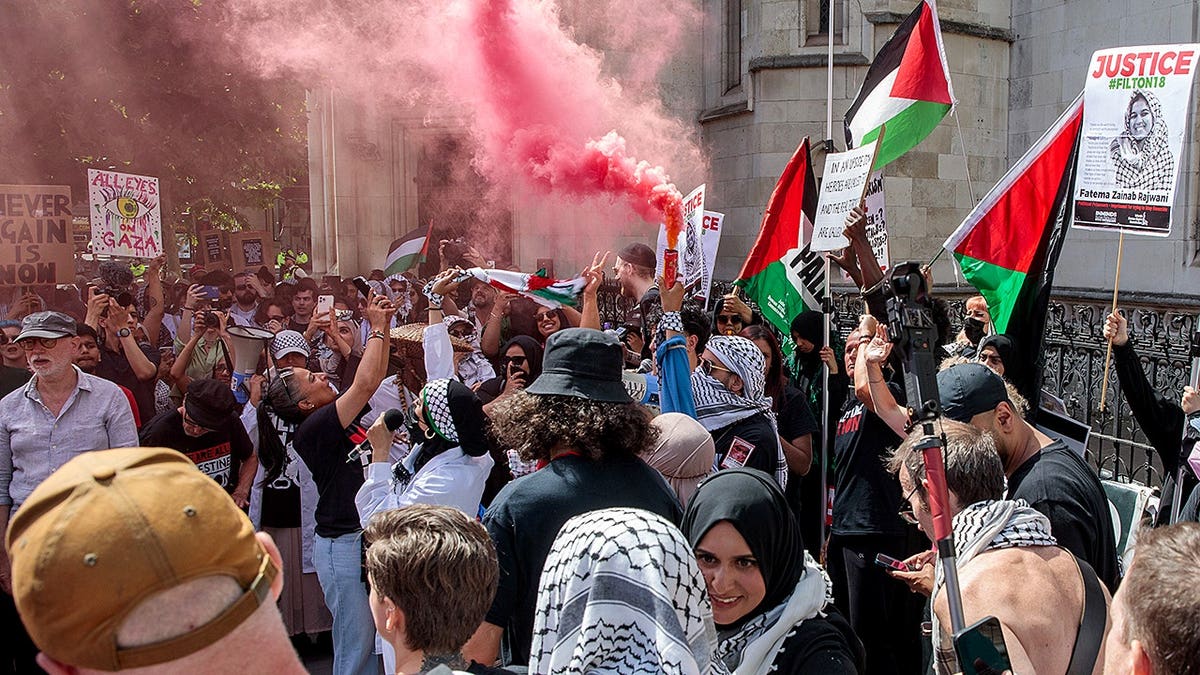
A gathering of pro-Palestinian activists took place outside the Royal Courts of Justice during a hearing concerning Huda Ammori, the co-founder of Palestine Action. The hearing aimed at determining whether a temporary halt should be placed on proscribing Palestine Action under the Terrorism Act 2000.
In recent actions, Treasury officials have used the Office of Foreign Assets Control to investigate prominent leftist figures and entities, including Marxist influencer Hasan Piker, and CodePink co-founders Medea Benjamin and Jodie Evans. These individuals denied any misconduct and have not faced charges.
Moreover, the State Department reported that Autistici Inventati collaborated with overseas terrorist groups and violent far-left agitators, contributing to disorder in U.S. cities. The report unveiled that U.S.-based Rose City Antifa utilized services provided by Autistici Inventati for actions of disruption and property damage.
This summer in Spain, authorities arrested Fergie Cox, an affluent financier linked to far-left activities, for extradition to the U.S. as part of an investigation into financing organizations like Palestine Action. Cox refuted accusations and is contesting the extradition.
Beyond territorial boundaries, sanctions now block and freeze any assets these organizations hold in the U.S. American citizens are forbidden from financial transactions with them.
Last year, the U.K. government imposed sanctions on Palestine Action, condemning any association or support for the group. Founded in 2020, Palestine Action engages aggressively against defense companies backing Israel, resulting in significant damage to establishments such as Elbit Systems.
Responding to the sanctions, Ammori criticized the move, viewing it as hypocritical, especially given her heritage. She expressed her discontent publicly and labelled Trump as antagonistic to the principles upheld by her organization.
The Treasury asserts that Masar Badil operates as a front for Samidoun Palestinian Prisoner Solidarity Network, deemed to be a financing channel for the Popular Front for the Liberation of Palestine, another U.S.-designated Foreign Terrorist Organization.
Organizations like Samidoun are portrayed as humanitarian and charitable outfits despite diverting funds for terrorism support, according to the Treasury insights shared previously.
Charlotte Kates from Samidoun defended the targeted organizations on social media, expressing that sanctions won’t curtail resistance.
Khaled Barakat from Masar Badil criticized U.S. actions as attempts for pro-Palestinian activism suppression. He stressed that sanctions won’t silence Palestinian voices advocating for freedom.
Research published by George Washington University’s Program on Extremism suggested that Masar Badil played disruptive roles on campuses during heightened tensions post-Hamas attacks.
In addition to Palestine Action and Masar Badil, Autistici Inventati faces sanctions for provisioning digital services to violent extremist factions, including Kurdistan Workers’ Party.
Ex-FBI agent Lara Burns explained that these groups justify acts of violence as legitimate resistance, spreading dangerous ideologies. Burns emphasizes the necessity for governmental intervention against nonprofits promoting terror agendas.