
The United States military has temporarily halted its airstrikes on Iran. This decision comes after two weeks of intense bombing, while diplomatic initiatives aim to prevent a descent into full-scale war. There is uncertainty over whether the U.S. and Iran have reached a turning point in this volatile conflict, which will mark five months on Tuesday. President Donald Trump has both threatened further strikes and indicated ongoing discussions. He has dismissed concerns that rising gas prices linked to the conflict could harm Republicans in the upcoming midterm elections.
Further complicating the situation is the scheduled visit of Israeli Prime Minister Benjamin Netanyahu with Trump in Washington next week. Israel, which joined the U.S. in launching the war on February 28, has stayed out of the latest American airstrikes in response to Iran’s strategic closure of the Strait of Hormuz. This waterway is crucial, as it facilitates the flow of 20% of the world’s oil. According to Michael Singh, managing director at the Washington Institute for Near East Policy, Iran may perceive potential escalation if Israel enters the conflict. Conversely, Israel’s current restraint might suggest a desire to contain the conflict.
Singh, who previously served as senior Middle East director on the National Security Council during the George W. Bush administration, urged caution in interpreting this pause in hostilities. He noted that if the cessation of fighting extends over several days, it could indicate significant developments. The lull could be an operational pause or an opportunity for behind-the-scenes diplomacy.
Mediation Efforts Intensify
A regional official involved in mediation efforts reports ongoing diplomatic activities. The pause in U.S. and Iranian strikes on neighboring countries hosting American forces is viewed as a positive signal for de-escalation. Both the U.S. and Iran seek to return to an interim ceasefire deal. Current negotiations focus on allowing Iran to manage vessel transit through the Strait of Hormuz with fewer restrictions. The official requested anonymity, as they are not authorized to speak on the matter.
Iran has restricted the crucial Persian Gulf passage by targeting tankers and freighters. As a result, oil prices have surged, causing discontent among Americans and potentially affecting Republican lawmakers in November. Despite the interim ceasefire agreement reached in June, Iran demanded vessels navigate using a northern route along its coastline, proposing fees. In response, traffic shifted to a southern route along Oman’s coast, under U.S. protection, causing renewed Iranian attacks. The U.S. retaliated by targeting Iran’s coastal defenses to limit Tehran’s capacity to threaten vessels.
Singh indicates these strikes aim to persuade Iran to negotiate. He questions what messages Iran sends through diplomatic channels and whether there is increased willingness to engage in talks. The U.S. faces challenges with Iran’s fractured leadership, which may view compromise as a sign of weakness, potentially undermining their control.
Reopening the strait is critical for both nations’ economies, though they differ on terms and control. Singh suggests that only through achieving balanced conditions can sustained peace be realized. The negotiation involves both diplomatic and military dimensions until stability is secured.
Trump’s Dual Approach: Threats and Diplomacy
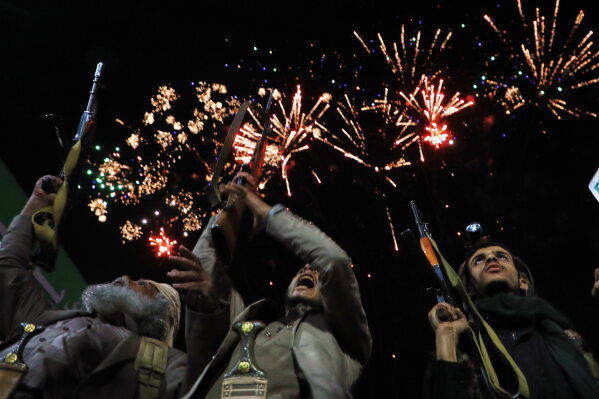
Despite the temporary ceasefire, regional tensions remain elevated. Yemen’s Houthi rebels claimed missile and drone attacks on Saudi Arabia in retaliation for Saudi strikes on Hodeida. Iran-backed rebels also claim to have closed the Bab el-Mandeb Strait, crucial for Saudi oil exports amid the disruption of the Strait of Hormuz.
The U.S. military continues enforcing a naval blockade on Iranian ports, recently disabling a ship in the Gulf of Oman that attempted to breach the blockade and ignored warnings.
Trump emphasizes ongoing threats against Iran while highlighting diplomatic efforts. He outlined two possible exit strategies: continuing the current approach of dismantling Iran’s defenses incrementally or engaging in negotiations. Although Trump feels Iran is not yet ready to make a deal, he sees increasing Iranian seriousness over time.
After meeting with top national security aides, Trump considered options for maintaining the current strategy or escalating military actions against Iran. No further U.S. strikes occurred overnight after 13 consecutive days. Trump expressed no urgency to resolve the situation before elections, despite voters’ economic frustrations potentially impacting Republican congressional control. He emphasized the importance of handling the conflict correctly, asserting that elections will resolve independently.