
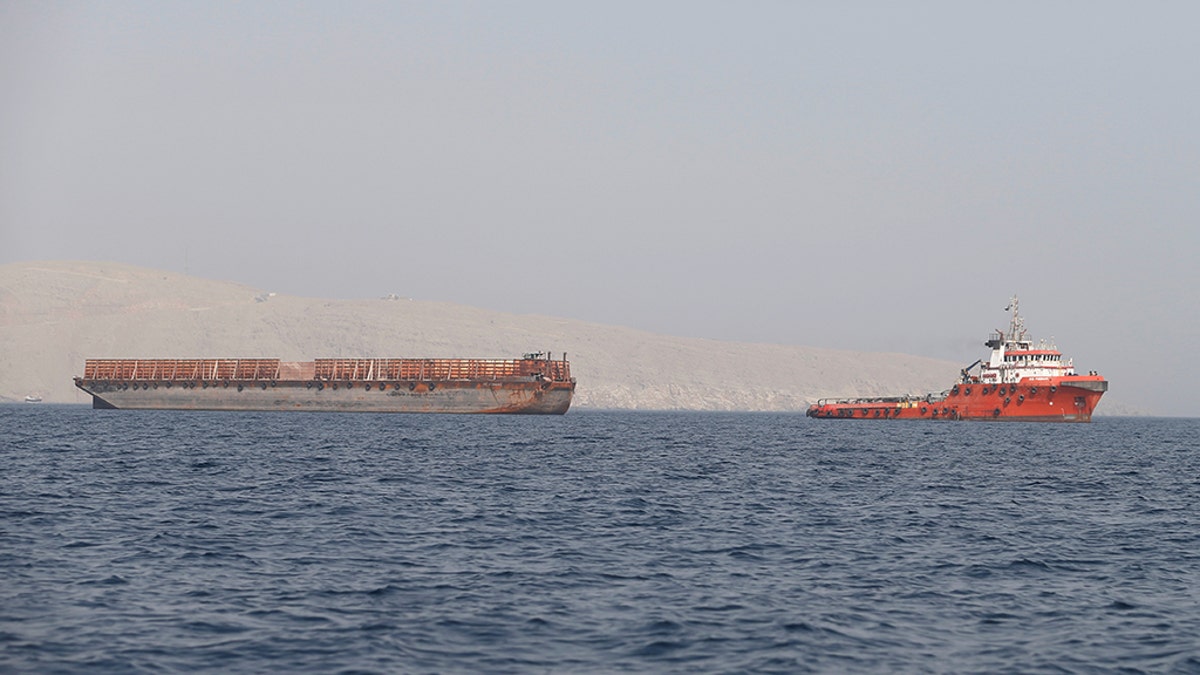
Last week, President Donald Trump announced that the United States had tackled the mine threats in international waters of the Strait of Hormuz. The commander of U.S. Central Command has now provided a detailed account of the operation that led to this declaration.
Adm. Brad Cooper revealed the months-long secret operation by U.S. forces that aimed to clear sea mines placed by Iran’s Islamic Revolutionary Guard Corps from international shipping lanes. Despite successful mine removal, the area remains at a ‘SEVERE’ threat level, with other dangers persisting.
“We have successfully cleared sea mines in the Strait’s international shipping lanes that were laid months ago,” Cooper explained.
The Strait of Hormuz is narrow, spanning only 21 miles at its shortest point. It serves as the sole marine channel for major oil producers to reach the Indian Ocean. The threat level remains severe due to recent attacks near Oman.
Cooper identified the area cleared as the Strait’s Traffic Separation Scheme, a system of opposite lanes for commercial vessels. The operation required precision and utilized various military resources: Navy divers, SEAL teams, and air power from different branches. Cooper emphasized the significance of the operation, stating,
“Bottom line, today international shipping lanes are open and momentum is building.”
The Navy’s approach to mine warfare has evolved, transitioning from Bahrain-based ships to advanced systems. Defense analyst Bryan Clark previously critiqued the Navy’s mine-clearing capabilities. Retired Vice Adm. Kevin Donegan added context, explaining how newer technology locates and disarms mines.
The operation combined Navy divers, SEALs, and air power to secure shipping lanes. However, CENTCOM hasn’t detailed how specific capabilities contributed.
Donegan noted the Navy’s meticulous process for mine-clearance, involving surface and subsurface vessels identifying potential threats. Subsequent steps involve neutralizing identified mines via autonomous systems and skilled personnel.
Throughout the operation, ongoing scans ensured no mines remained unchecked. Detection models meticulously calculate the probability of mine presence, considering detection system efficiency, waterway features, and seabed type.
The Strait continues to hold risk, with current advisories from the Joint Maritime Information Center maintaining a severe threat level. Commercial traffic remains below pre-conflict numbers, and areas of mine danger stay active.
Tankers near Oman recently suffered attacks. Crews managed to put out fires, and no casualties were reported. The threat of drifting mines persists but is historically low due to local currents affecting drift paths.
Oil throughput as of Monday was 5 million barrels per day, significantly lower than pre-war figures. Seven commodity vessels passed through the Strait on Thursday, based on preliminary data. Iran and Oman announced potential joint efforts involving navigation and mine clearance.
Adm. Cooper’s update clarifies the operation behind Trump’s comments and indicates progress toward safer passage. Though U.S. forces report secured lanes, ongoing threats and disruptions underscore challenges in the Strait of Hormuz.