
The U.S. Army recently announced it tested a new system overseas aimed at disrupting navigation signals used by enemy weapons. This technology makes it difficult for adversaries to strike precise targets from long distances without being detected.
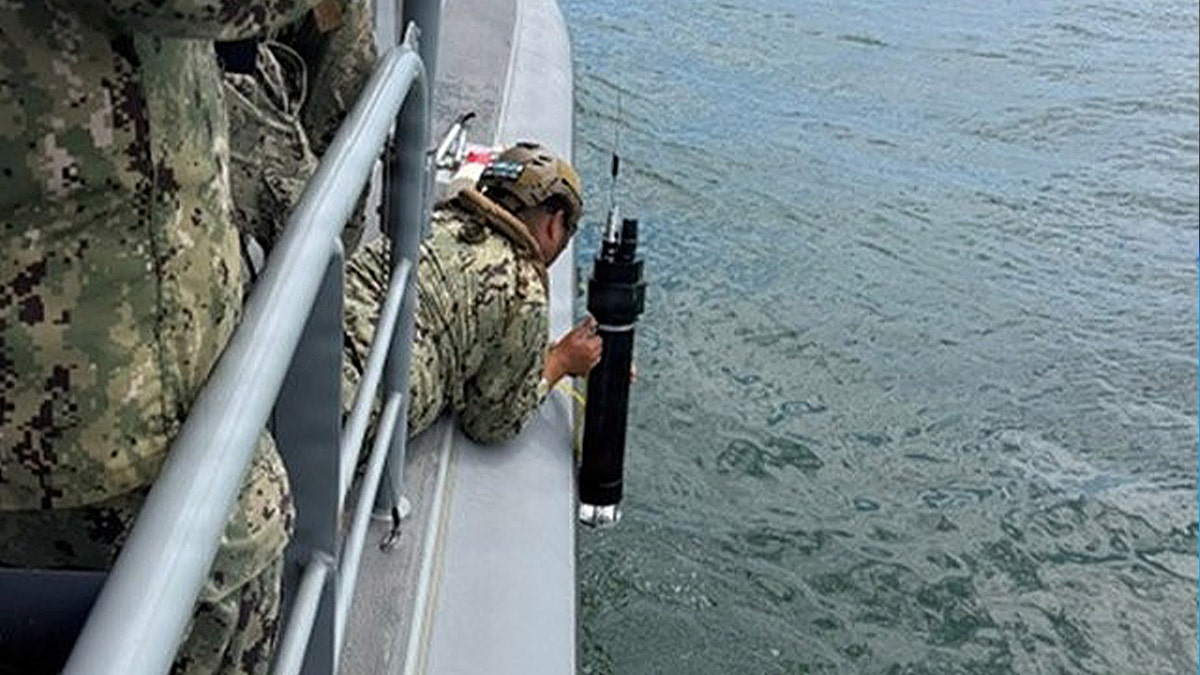
Named ‘Hammer of the Gods’, this electronic system was first trialed at sea off the U.S. West Coast in mid-July during the Project Convergence Capstone 6 experiment.
While land-based versions have been showcased over the last two years, this exercise marked the first official trial of the maritime version.
The portable disruptor can reportedly render several precision-guided weapons ineffective, such as long-range artillery and guided missiles.
The primary function of the ‘Hammer of the Gods’ is to jam positioning, navigation, and timing signals, including GPS data. These signals are crucial for the precision navigation of enemy weapons.
Without accurate data, the effectiveness of weapons declines significantly, leading to potential delays and missed targets.
Additionally, the system establishes a robust communication network, enabling allied forces to maintain connections, despite intense electronic jamming.
The Army highlighted that the test showed the signal disruptor’s ability to function effectively in real-world maritime settings.
The exercise, which involved collaboration among the U.S. Army, Navy, Space Force, U.S. Space Forces Pacific, Naval Base San Diego, and the U.S. Army Space and Missile Defense Command, aimed to integrate space, cyber, and conventional capabilities.