
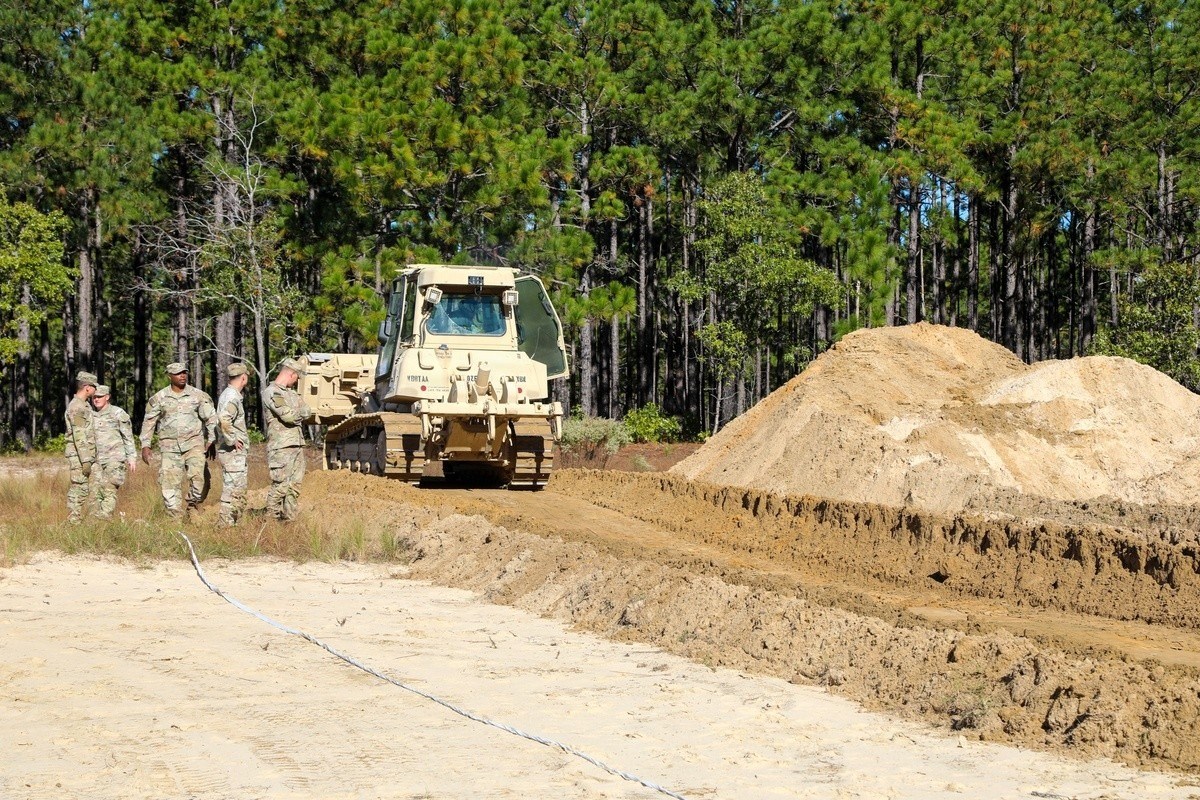
U.S. Army soldiers are currently undertaking training exercises to manage large-scale temporary graves in response to potential high casualty scenarios during active conflict. This initiative, led by soldiers from the 3rd Corps Sustainment Command and the 20th Engineer Brigade at Fort Bragg, North Carolina, is the first of its kind in several decades. Personnel involved include those responsible for religious support, such as military chaplains. They utilized heavy machinery, including diggers and excavators, to ensure bodies are preserved intact for future identification and repatriation.
The endeavor marks a significant change from past operations wherein the U.S. military has not needed to manage bodies at this scale since the Korean War. During the wars in Iraq and Afghanistan, deceased personnel were quickly evacuated rather than interred temporarily. The Korean War, which lasted from 1950 to 1953, saw nearly 37,000 U.S. personnel fall, establishing historical context for the current preparation.
The preparation underscores the challenge faced by military teams tasked with caring for remains during ongoing combat operations. These teams are unable to provide individual burials or religious rituals when casualties are numerous and combat continues.
Military regulations dictate that commanders are accountable for handling deceased soldiers’ remains and ensuring identification is possible later on. Standard temporary burial plots consist of five trenches, accommodating up to 100 casualties each. The North Carolina drills effectively used bulldozers and excavators to prepare burial spaces, with each plot being completed in an average of one hour and 15 minutes. The capacity exists to bury up to 2,400 soldiers within 24 hours using multiple pieces of heavy machinery.
Sergeant 1st Class Delbert Ruede from the 3rd Corps Sustainment Command highlighted the necessity of the exercise for systematically managing fallen soldiers in high-intensity conflicts. “If we went to war tomorrow, we would be making this up as we went along,” Ruede explained, emphasizing the aim to maintain positive control and respectful care of the deceased through scientific, field-tested methods.
This training exercise also marks the first instance in over twenty years that U.S. Army chaplains and religious affairs personnel have received instruction on contributing to battlefield grave-digging efforts.