
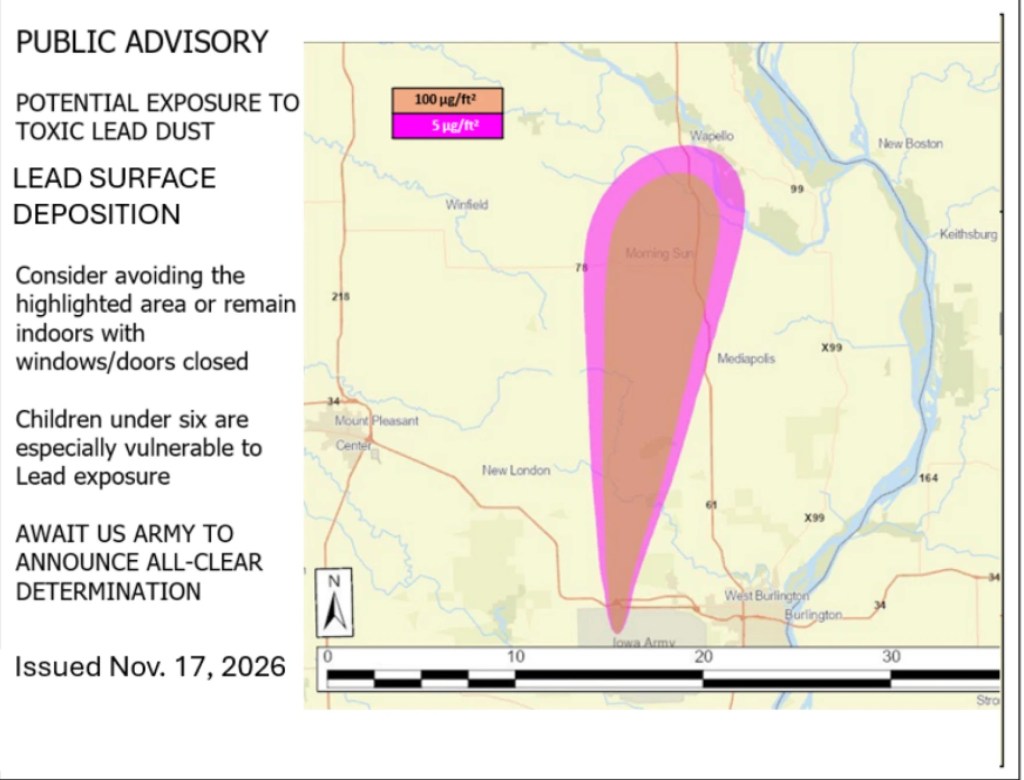
The U.S. Army postponed the detonation of bomb-making chemicals in southeast Iowa, responding to public worries about potential environmental pollution and health risks from lead dust. Initially scheduled for Friday, the detonation will occur on Monday.
Iowa Governor Kim Reynolds advocated for the delay, discussing the issue with Acting Secretary of the Army, Adam Telle. Environmental groups sought emergency legal action to prevent the planned blast, filing a lawsuit earlier that day. The delay comes as officials handle unstable lead azide at the Iowa Army Ammunition Plant. The degradation of barrels containing the compound created a dangerous situation, prompting the U.S. Environmental Protection Agency to issue an emergency permit.
The cold weather poses a heightened risk of accidental detonation. Acting Secretary Telle informed the delay aimed to avoid destabilizing the material with expected temperature drops, as shared on a recent social media post. Preparations included advising Middletown residents to temporarily relocate. About 400 individuals live in Middletown, about 160 miles southeast of Des Moines. The situation affected a broader region, with potential impacts reaching up to 100 miles away.
The Army had engaged with local communities, holding an October public meeting. Still, many learned of the risk from a Sunday advisory. The EPA’s permit required modeling to predict how detonation could disperse lead particles. Communicating with the public was deemed vital for trust, Telle stated.
Schools and businesses in the region planned closures on the initial date. The superintendent of Danville schools, Pat Wallace, opted for closure amid uncertainties surrounding conditions post-detonation. In Mediapolis, schools and the public library closed, and local efforts included cleaning playgrounds potentially affected by lead dust.
The blast’s vibrations could damage older structures, and officials predicted any lead dust would linger under an hour, subject to wind conditions. Modeling indicated lead levels might rise but would remain below EPA safety thresholds. However, residents voiced concerns about whether cleaning recommendations would be sufficient.
Middletown residents were initially informed in March about the degraded lead azide barrels discovered during a plant review. The Army emphasized safety, consulting experts in munitions chemistry and safety for the disposal plan. Relocating the barrels presented unacceptable detonation risks, officials noted.
Patrick O’Shaughnessy from the University of Iowa highlighted the uncertainty regarding contamination impact. Lead toxicity poses significant health risks. Residents expressed concerns, especially regarding health impact on children and home safety.
As the local Iowa State Extension office fielded anxious resident inquiries, a lawsuit filed Thursday claimed the EPA and Army did not consider safer disposal alternatives. The EPA documentation showed neutralizing the chemical contents was considered, but handling risks outweighed perceived benefits.