
In the intensifying competition between the United States and China to advance artificial intelligence, the focus has pivoted to hardware and computing power. Chinese companies like Huawei are usurping major industry players like Nvidia within their home market.
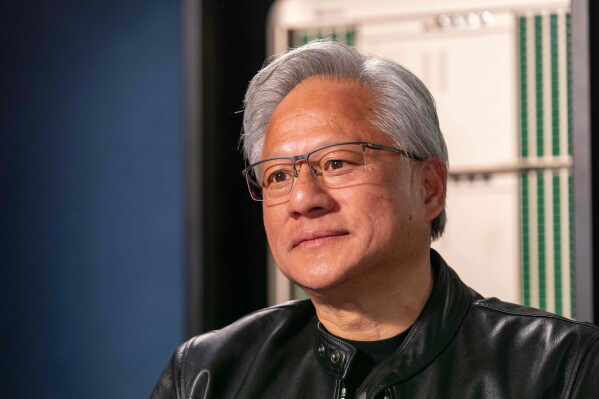
During the May summit in Beijing between U.S. President Donald Trump and Chinese leader Xi Jinping, Nvidia’s CEO Jensen Huang grabbed attention on the streets but struggled to replicate that success in selling high-tech chips in China. Although Trump agreed to ease export controls, enabling the sale of Nvidia’s advanced H200 AI chips, Beijing had already shifted toward supporting domestically produced chips from firms like Huawei.
“We were in China for 30 years, and before the export controls banned Nvidia, we held a 95% market share. We were competing well,” Huang told The Associated Press, underlining the loss of American dominance in China’s AI chips sector.
U.S. restrictions in 2019 prevented Chinese access to top-tier chips, prompting local semiconductor producers to accelerate self-reliance efforts. While Nvidia and Advanced Micro Devices (AMD) are foremost providers in the U.S. AI chip industry, Huawei has captured China’s market with enhancements in chip performance and cost-effectiveness.
A report by Bernstein estimated Nvidia’s market share in China’s AI chips market would dwindle to 8% this year, with Huawei potentially expanding to 50%. Huawei’s most sophisticated AI chips, the Ascend 950 series, are assessed by analysts as comparable to Nvidia’s H200.
Huawei declared plans to distribute one of the world’s most potent AI computing clusters, utilizing thousands of locally made chips, further advancing their technology amid U.S. export limitations. However, China continues depending on global supply chains, with Nvidia AI chips still desired for complex tasks and research.
The global demand for Nvidia’s AI chips persists, despite the constraints. It projects revenues of approximately $91 billion from May to July, demonstrating sustained growth beyond the restrictions.
The collaboration efforts between DeepSeek, a budding competitor to OpenAI’s ChatGPT, and Huawei indicate a strategic move to integrate domestically-produced chips into future models. Yet, analysts forecast only a gradual adoption of Huawei’s Ascend chips.
To navigate export constraints, Nvidia modified its H20 chips for Chinese markets without breaching U.S. guidelines, but shipments have seen a decline. Though Nvidia’s potential revenue generation in China is uncertain, its global operations and ambitions persist.
On a broader scale, Huawei, while a telecommunications giant, aims to expand its chip business internationally. Although demand may exist outside China, domestic production capacity remains insufficient to meet local demand. However, this capacity is expected to grow, potentially capturing market segments in Southeast Asia.
China’s pursuit of technological independence and global export of its technologies will persist, regardless of Nvidia’s capabilities to market its chips in China.