
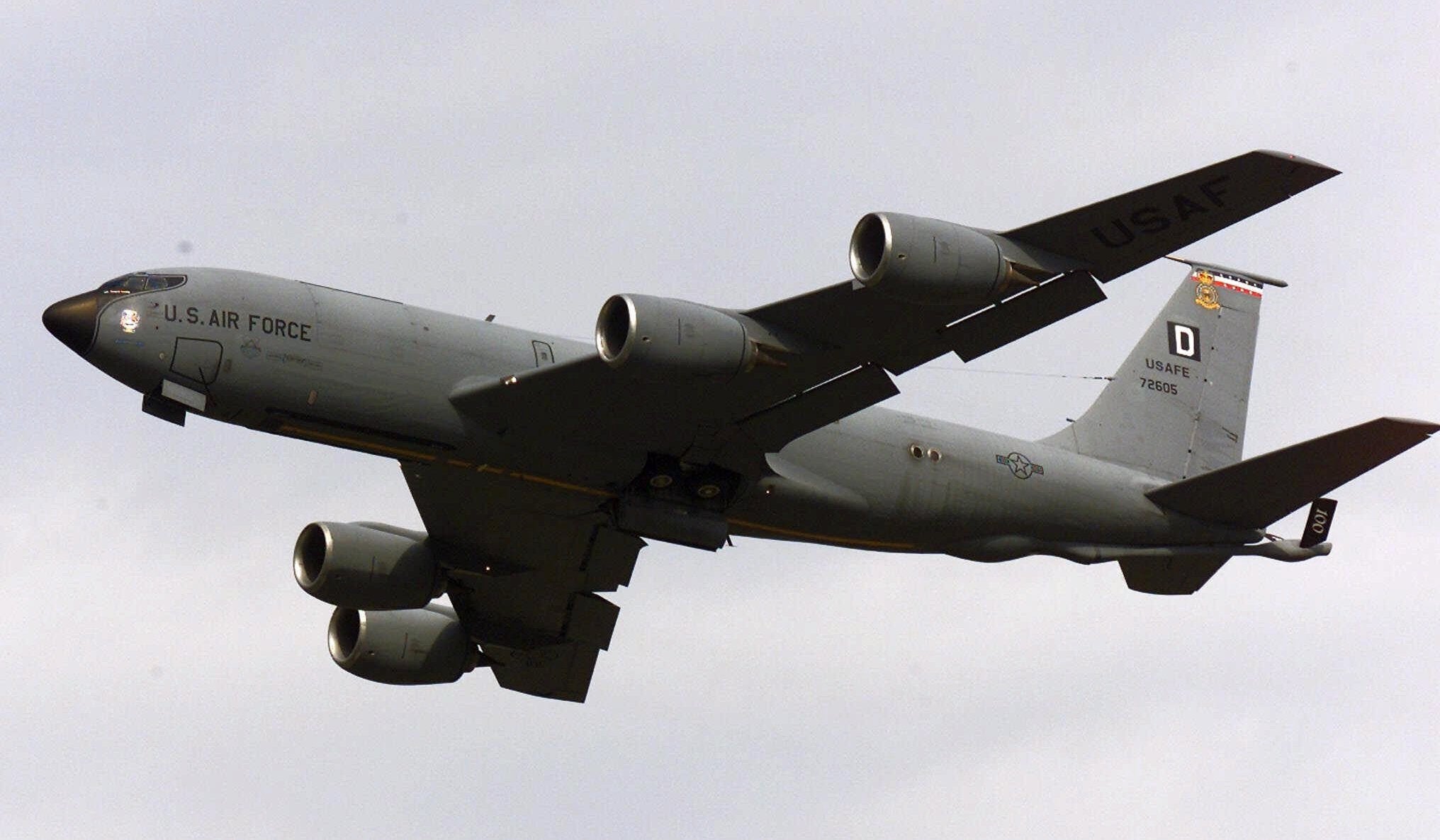
The U.S. Air Force has relocated aircraft from a base in eastern England due to a perceived threat, according to officials. The Military Air Tracking Alliance, a group of 30 analysts, noted 13 U.S. aircraft departed from RAF Mildenhall to bases in Scotland, Spain, and Germany. This move follows a report suggesting the threat is linked to Iran, as cited by The Wall Street Journal.
This relocation took place less than two months after U.S. bombers were withdrawn from RAF Fairford, as authorities probed a suspected terror plot connected to Iran. Bombers from this base had been involved in operations during the Middle East conflict, targeting Iran.
The aircraft moved include both those permanently stationed at RAF Mildenhall and others present on rotation, consisting of Osprey aircraft and midair refueling tankers. The base increased its alert level to FPCON Charlie, indicating a likely threat to personnel or facilities.
A proactive decision to move aircraft was made, giving the U.S. military flexibility against potential threats, according to a U.S. official. Some planes were temporarily in transit while others were permanently stationed at the base and may return. The source and nature of the threat were not disclosed.
U.S. Secretary of State Marco Rubio highlighted the ongoing repositioning of forces globally for various reasons. He referred queries to the Pentagon, which has not immediately commented. An official from the U.S. Air Force in Europe stated that coordinated actions are taken to ensure the safety of personnel, with aircraft rotations happening for training and real-world requirements.
British Prime Minister’s office maintains that U.K. air bases are secure, with constant communication and intelligence sharing with the U.S.
RAF Mildenhall is notable for hosting the 100th refueling wing, operating the KC-135 Stratotanker, capable of carrying significant payloads.
Recent security incidents included the detention of five men near RAF Fairford after suspicious activity. Additional arrests have been made, with charges under the National Security Act.
The U.K. Defense Ministry did not comment on these maneuvers, noting such movements occur regularly based on operational needs.