
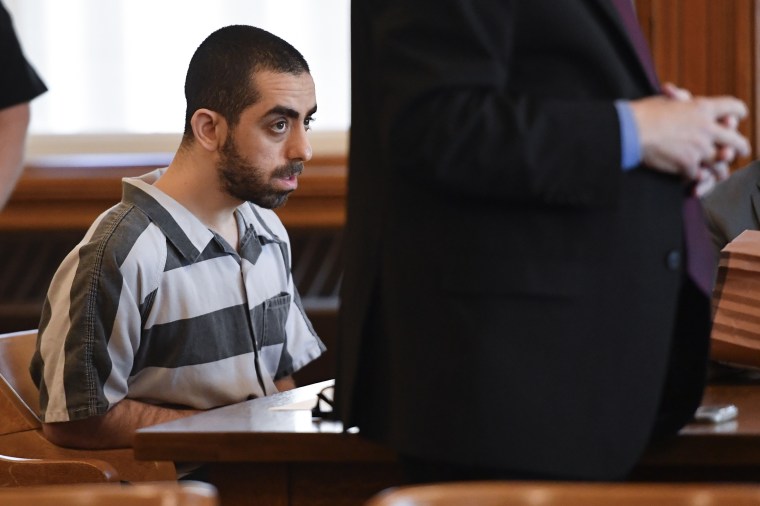
A man was convicted on Wednesday of federal terrorism charges related to the 2022 stabbing of author Salman Rushdie. Rushdie has long been targeted because of a death threat linked to his novel The Satanic Verses. Hadi Matar was found guilty on all charges, including engaging in transnational terrorism. Efforts to get comments from Matar’s attorneys were unsuccessful.
Matar, 28, is already serving a 25-year sentence in New York state for attempted murder for the attack on an amphitheater stage in August 2022. The federal conviction could lead to a life sentence. The incident left Rushdie, who was about to speak about writers’ safety, with severe injuries and blindness in his right eye.
Matar’s Defense and Prosecutor’s Arguments
Prosecutors argued that Matar was inspired by the late Iranian Supreme Leader Ayatollah Ruhollah Khomeini’s 1989 fatwa demanding Rushdie’s death for writing The Satanic Verses. Defense attorney Nathaniel Barone argued there was no evidence of Matar’s mindset. Matar chose not to testify, while Rushdie, taking the stand, said, “I can’t say what his ambitions or his aim was, but the wounds were dispersed across my body.”
Rushdie, a recipient of Britain’s prestigious Booker Prize, faced global protests over The Satanic Verses. Some Muslims found parts of the book blasphemous. The controversy led to worldwide riots with at least 45 fatalities, and attacks on translators and publishers.
Rushdie’s Testimony and the Ongoing Threat
Rushdie, born into a Muslim family, maintained that the controversial sequence was fictional. After Iran’s government distanced itself from the fatwa in 1998, he emerged from hiding. Still, the fatwa was never officially revoked. The late Ayatollah Ali Khamenei affirmed in 2017 it was still in effect, with an Iranian foundation offering over $3 million for Rushdie’s death.
Hadi Matar appeared in Chautauqua County court in May 2025. During the trial, prosecutors revealed Matar’s communications repeatedly referenced the fatwa. His conversations indicated anger at Rushdie for surviving and believing he had emboldened others to criticize Islam. Matar also quoted a 2006 comment from a Hezbollah leader to that effect.
Matar’s Intentions and the Attack
Born in the U.S. but holding Lebanese citizenship, where Hezbollah is active, Matar showed support for the group through photos found in his home. Prosecutors said Matar aimed to meet the fatwa’s call and wanted recognition for doing so on behalf of Hezbollah. Assistant U.S. Attorney Timothy Lynch reported Matar’s intention in a July 22 opening statement.
Matar’s electronic messages revealed discussions of wanting to “expose” and ultimately harm Rushdie. He had written a private note urging Rushdie’s murder and considered it part of a jihad, according to Lynch. By spring 2022, Matar’s chats showed he had found Rushdie’s home and monitored his public engagements, including the scheduled August 2022 speech at the Chautauqua Institution in New York.
As Rushdie was introduced, Matar attacked him on stage, stabbing him 15 times. Audience members and fellow speaker Henry Reese helped rush to his aid. Law enforcement officers at the event apprehended Matar after bystanders restrained him.
Following the attack, Rushdie published a memoir in 2024 and returned to fiction with The Eleventh Hour last year. He has been knighted by Queen Elizabeth II and received a Dayton Literary Peace Prize lifetime achievement award in November.