
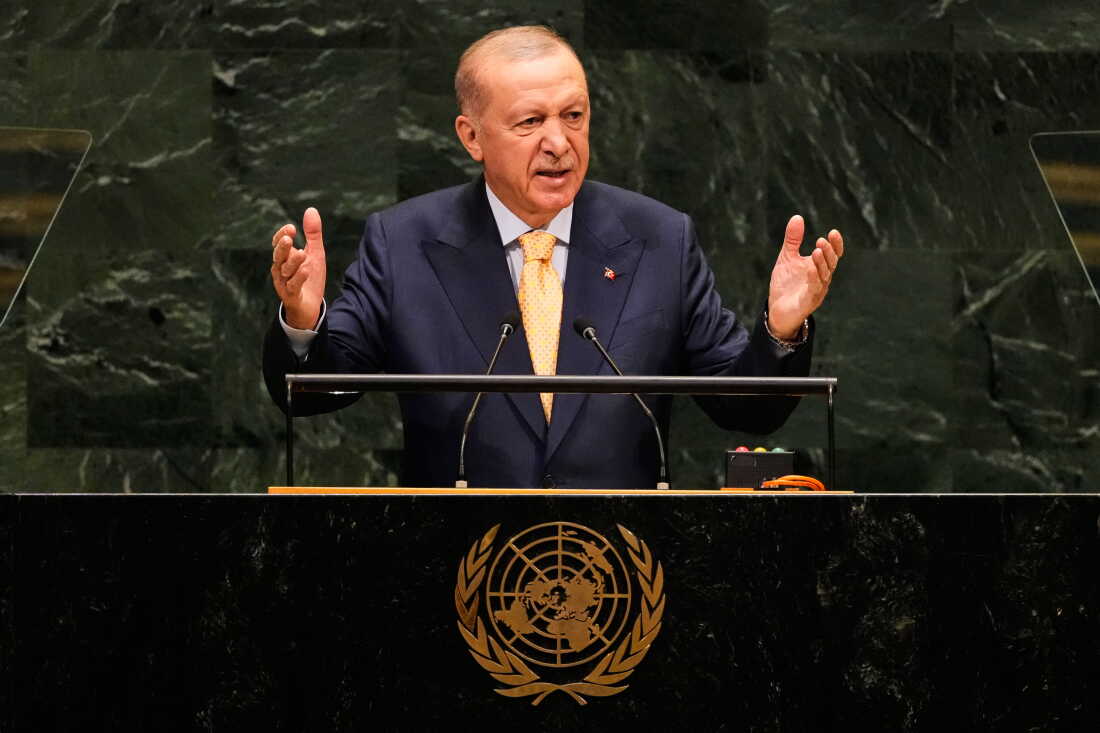
Turkey’s President Recep Tayyip Erdogan recently spoke at the United Nations General Assembly in New York. This event marked a significant milestone as leaders from Saudi Arabia, Turkey, and Pakistan convened in Mecca to sign the Mecca Joint Defense Agreement. This agreement is seen as the birth of a ‘Sunni Security Triad,’ combining Saudi Arabia’s oil wealth, Turkey’s defense capabilities, and Pakistan’s nuclear resources. The pact includes a mutual defense clause similar to NATO’s Article 5, which considers an attack on one as an attack on all, alongside commitments to share intelligence and defense technologies.
The agreement symbolizes Turkey’s strategy to become a central figure in the Middle Eastern geopolitical landscape. Turkish Foreign Minister, Hakan Fidan, highlighted Turkey’s role in driving these discussions over three years. Analysts suggest Ankara’s vision aims to position Turkey as a key player amidst shifting power dynamics in the region.
Turkey’s expanding defense-industrial base reduces dependency on Western military supplies, although Turkey still seeks F-35 jets from Washington. The country has established military bases in Somalia, Qatar, and Libya, and plays a pivotal role in post-civil war Syria. Additionally, cultural influence through popular TV shows and humanitarian efforts adds to Turkey’s regional presence.
This push for influence comes at a time of regional instability, with the attack led by Hamas on Israel on October 7, 2023, and ongoing conflicts involving the U.S. and Iran. These events have rattled power structures and reduced Iran’s influence, raising questions in Washington about the future of U.S. security commitments in the Middle East.
Turkey’s ambitions face economic hurdles, such as high inflation and rising energy costs. Aydintasbas from the Brookings Institution remarks that Turkey’s regional aspirations surpass its current economic capabilities, yet this does not weaken Turkey’s military stature. Ankara aims to protect national interests without pushing for a neo-Ottoman empire.
The historical backdrop includes the Ottoman Empire’s long control over the region. There is an ideological belief among Turkey’s leadership about a Turkish role in regional governance, grounded in civilizational terms. Ankara is playing a strategic long game, assuming U.S. influence will decline in a post-U.S. phase.
Recent U.S. policy in the region under President Trump has included troop withdrawals from Syria and Iraq. The U.S. appears to support the Mecca Joint Defense Agreement. Asli Aydintasbas states that regional stability is prioritized over democratic transitions due to past suffering.
Syria has been a focal point for Turkey, capitalizing on post-Assad reconstruction opportunities while clashing with Israel’s regional vision. Ankara’s involvement challenges Israel’s strategies of maintaining military dominance. The potential for conflict between Turkey and Israel arises as Syria’s dynamics evolve.
Turkey-Israel relations have historically been strained yet maintained interactions, demonstrated by Erdogan’s stark comments against Israel, resulting in diplomatic tensions. Israeli rhetoric, partially driven by upcoming elections, has included provocative statements against Turkey.
Despite these tensions, there is potential for positively leveraging Trump-Erdogan relations during times of heightened Israeli-Turkish antagonism. The Brookings Institution suggests that the U.S. could mediate to rebuild ties, though Trump’s unpredictable policy style complicates long-term planning.