
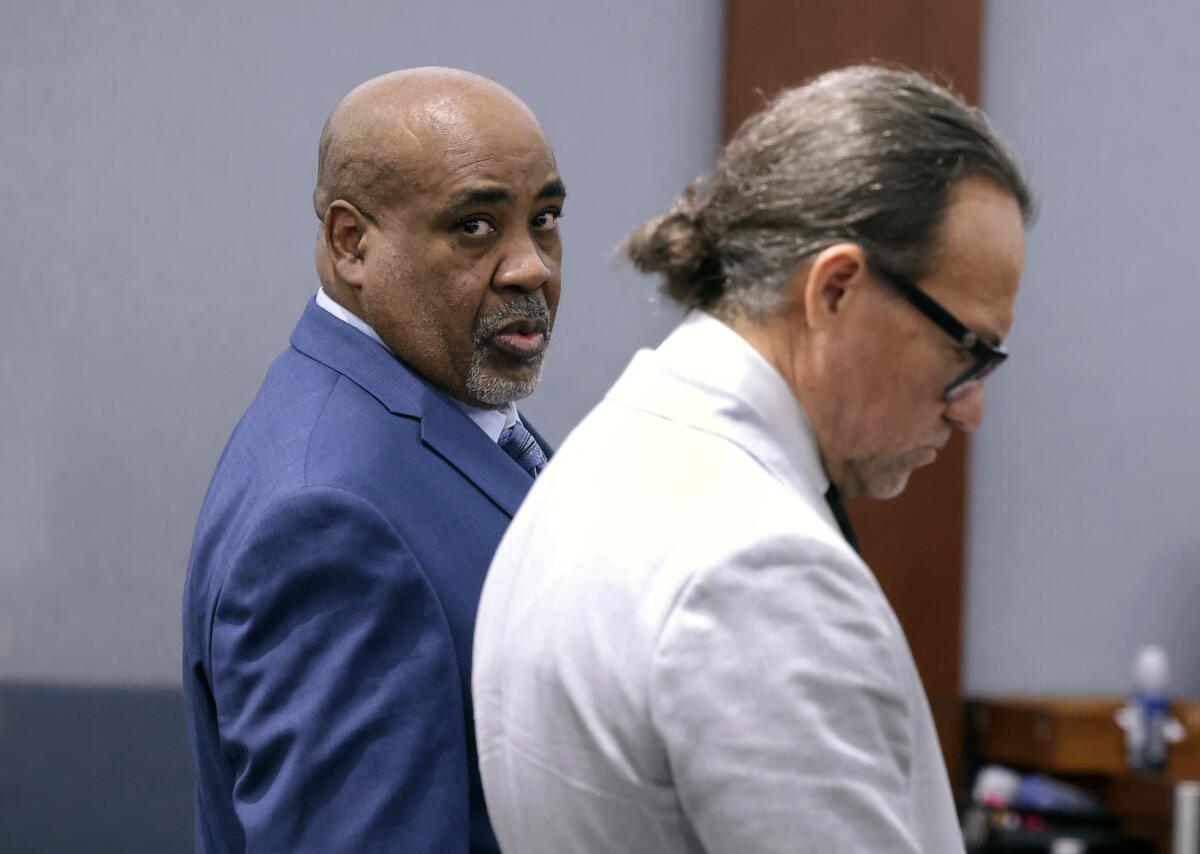
In a Las Vegas courtroom, aging men revisit events from three decades ago when they were part of a violent gang war that cost many lives, including rapper Tupac Shakur’s. These men survived the turmoil, but now relive those times as a murder trial unfolds, exposing the complex dynamics between the Crips and Bloods, and the East Coast and West Coast rapper feuds of the early 1990s.
Duane “Keffe D” Davis faces charges in the 1996 killing of Tupac Shakur, an event that intensified these tensions. Despite the case being unsolved for years, Las Vegas prosecutors now pursue Davis, a former Compton gang leader, using his and others’ words for their case.
Any time you deal with gang life, violence can erupt at any moment,
stated James McDonald, also known as Mob James, a former associate of Suge Knight, who was with Shakur when he was killed. The prosecution accuses Davis of orchestrating the murder, though he denies the charges.
The shooting on September 7, 1996, allegedly resulted from a conflict between the Southside Crips-Burris Street, led by Davis, and Mob Piru, linked with Death Row Records, the label Shakur was associated with. Events escalated after a brawl at a Mike Tyson fight, where Shakur’s entourage attacked Orlando Anderson, Davis’ nephew.
The altercation’s aftermath triggered a gang war in Compton, leading to several deaths, including innocent victims, and widespread violence.
McDonald testified that although deeply embroiled in past conflicts, he harbors no hostility towards Davis now. He stresses his transformation, focusing on raising his grandchildren and distancing from his past. However, McDonald admitted unease during testimony, worried about unintended consequences for Davis.
Prosecutors, calling McDonald a hostile witness, aimed to demonstrate the atmosphere of conflict preceding the killing. He acknowledged the inevitable retaliation following Anderson’s beating, a breach of gang code.
In previous statements, Davis admitted acquiring the weapon used in Shakur’s killing. Facing unrelated charges, he had revealed these details to authorities, claiming his nephew fired the lethal shots. Davis maintained he was willing to take the shot himself if positioned differently in the vehicle.
Reggie Wright Jr., former chief of security for Death Row and ex-Compton police officer, provided insight, describing tensions between Shakur, Suge Knight, and rapper Christopher Wallace, also known as Biggie Smalls. A confrontation at the Soul Train Music Awards in 1996 escalated to a near-violent exchange involving firearms.
Wright, testifying from a mobility scooter due to COVID, expressed his concern post-shooting, updating his father, then a Compton police lieutenant overseeing gang units, on the brewing trouble due to Shakur’s and Knight’s actions.
Davis’s defense, led by attorney Michael Sanft, claims insufficient evidence ties his client to the incident, highlighting past investigations that dismissed Davis’s statements as unreliable.